
Pool Deck Coatings, from Spartan Coatings in St. Augustine, FL
Pool Deck Coatings Made for Bare Feet and Pool Water
A coated deck that grips when it’s wet, stays cooler in a light finish and keeps chlorine and salt out of the concrete. Old cracked spray texture comes off first.
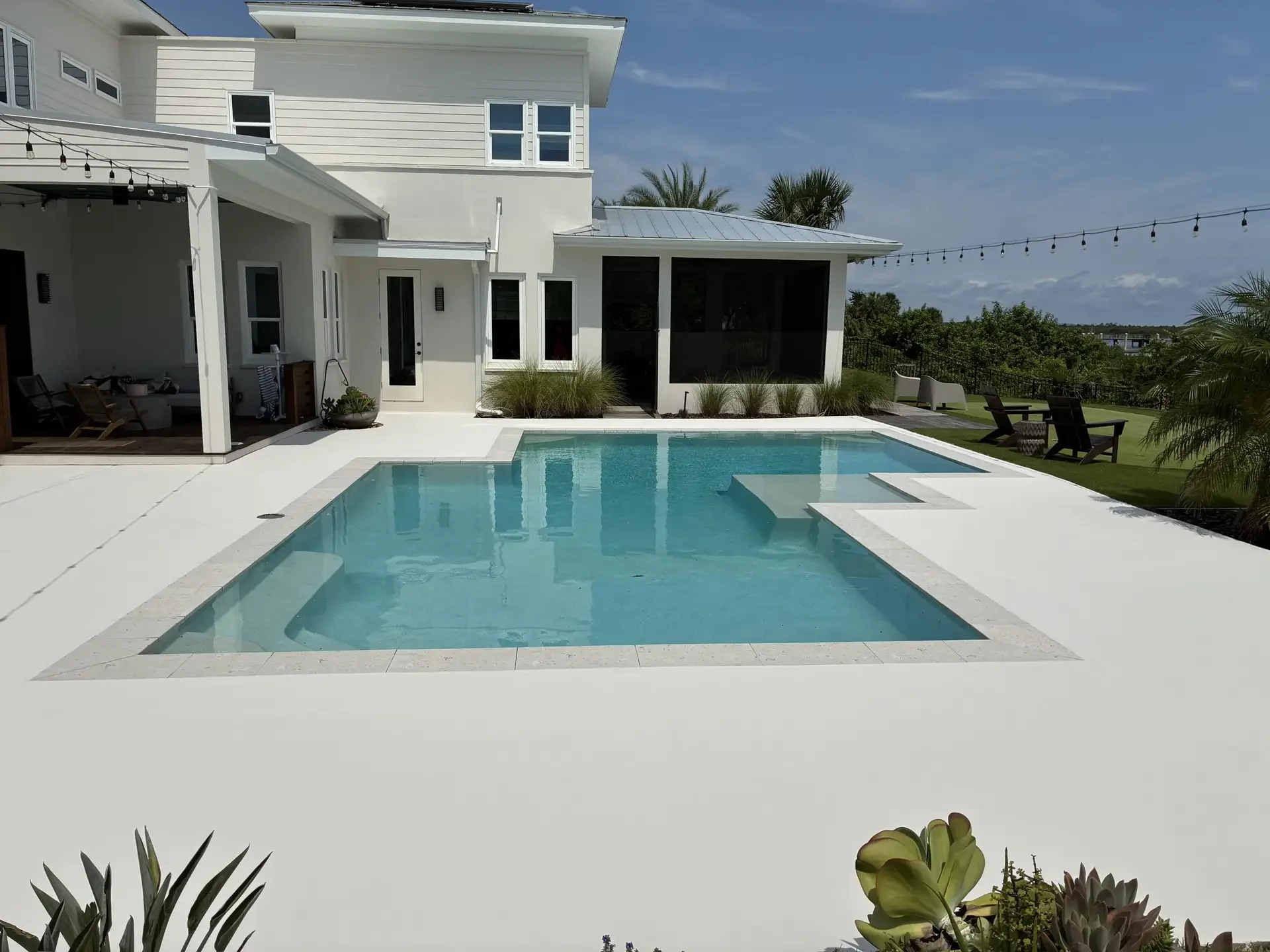
A pool deck takes more punishment than any other slab at the house. It sits in full sun all day, it gets splashed with treated water every time somebody cannonballs, and it’s the one floor everybody crosses barefoot and dripping. Bare concrete gets hot, turns slick wherever algae gets a start, and the edge along the pool slowly pits and stains.
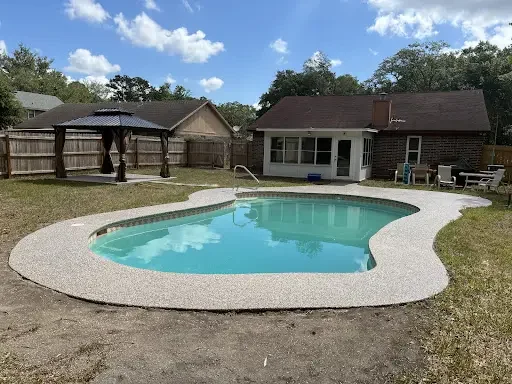
A lot of older decks wear a spray texture, the knockdown finish troweled over the concrete in light tan or white. It did its job for years. Now it’s cracked, hollow in spots and lifting along the coping, and a can of deck paint over it buys you one season. We grind that layer off, fix what’s underneath and build a coating that’s meant to be wet.
From there you have two directions. A light solid color reflects the sun and stays the most comfortable to stand on, and on a modern house a crisp white deck looks like part of the architecture. A flake deck hides leaves, sand and wet footprints and has a little more natural grip. Matt will walk your deck with you and tell you which one fits the yard and the way your family actually uses the pool.
We grind that layer off, fix what’s underneath and build a coating that’s meant to be wet.
Light solid color or flake, and when a coating is the wrong fix
Go with a light solid color if the deck is open to the afternoon sun and the kids live out there all summer. It’s the coolest finish we put down and it gives the yard a clean, modern look. The tradeoff is that it shows what lands on it: wet leaves, rust from a chair foot, a muddy pawprint. Go with flake if the deck sits under oaks, if the dog swims too, or if you’d rather sweep once a week than every day. Keep the blend light and it stays far cooler than a dark one.
A coating won’t fix a deck that’s sinking or heaving. When sand washes out from under a slab, the deck cracks along new lines and tips toward the pool or away from it, and any coating will crack right along with it. That needs slab work first. Brick and stone paver decks are another case. The joints between the pavers move on their own, so a coating laid across them breaks up. If your deck is pavers, Matt will tell you so and save you the money.
Building a deck that’s supposed to get wet
Sound it out
Matt walks the deck, taps the old texture for hollow spots, checks the slab for moisture and looks for cracks that are still moving. A pool deck sits on damp sand next to a hole full of water, so the test is never skipped.
Grind it down
Old spray texture, paint and sealer come off with diamond grinders until we’re standing on sound concrete. The waterline tile and the coping get protected first so nothing ends up in the pool.
Repair and joints
Cracks and spalls are filled. The joint at the coping and any expansion joints stay working joints, because a deck moves in the heat and a hard coating laid over a moving joint will split.
Base coat
A polyurea base coat bonds into the ground concrete. On a flake deck the chips are broadcast into it while it’s wet; on a solid deck it’s built up in the color you picked.
Grip topcoat
A UV-stable polyaspartic top goes over everything with grit worked in. We set the texture for bare feet: enough to hold a wet heel, short of the kind that chews up a knee.
Salt cells, splash-out and an August afternoon
Pool water is hard on bare concrete. Chlorine and the acid used to balance it splash over the edge every day, and saltwater systems leave a crust that soaks into the open pores, dries into crystals and slowly pops the surface off. That’s the pitting you see along the edge of an old deck. A sealed polyaspartic top keeps the water and the salt on the surface, where a hose carries them away. It also holds its color in the sun, which plain epoxy won’t do outdoors.
Heat is the other fight. In July a dark deck in full sun can be too hot to stand on, which is the whole reason the light finishes exist. A pool cage cuts some of the sun and keeps the leaves out, but it does nothing about splash or humidity. And with the water table as high as it is across much of Northeast Florida, a deck can have moisture pushing up from below while the pool soaks it from above. That’s why we test it, and why a moisture vapor barrier primer goes down when the test calls for one.
A sealed polyaspartic top keeps the water and the salt on the surface, where a hose carries them away.
Keeping a coated deck clean and cool
Hose it off. That’s most of the upkeep. A soft broom and a mild cleaner handle sunscreen, tanning oil and footprints, and a quick rinse after you shock the pool keeps the strong stuff from sitting on the surface. Keep the pencil tip off the pressure washer. Put rubber feet under metal chairs and tables so they don’t leave rust rings on a light deck.
Over the years the busiest lanes, the steps and the path from the back door, wear their texture down a little. When that happens a deck can often be cleaned, scuffed and given a fresh topcoat without starting over. Dale T. wrote about theirs: "Our pool deck turned out wonderful. The crew did a great job installing the new deck, and we will enjoy this for many years to come."
Want to see finished floors before you decide? See all of Matt’s floors.
Next to pool deck coatings on the list
Matt puts this down across all six counties we cover, including Ormond-by-the-Sea, St. Augustine Shores, Fruit Cove and Oakleaf Plantation. Most jobs start with a look at the slab, then a choice between systems like these.
Patios, lanais and screened porches get a UV-stable system meant to hold its color in the sun and keep its grip after an afternoon storm.
For the two or three car garage that has to handle hot tires, oil drips and a workbench, picked by people tired of a stained gray slab.
Heavy builds for warehouses and plants running carts, pallet jacks and chemicals over the same slab, specified by people who count every hour of downtime.
Questions people ask about pool deck coatings
Can you coat right over our old cracked spray texture?
No. That layer is the part that’s failing, and a new coating is only as strong as what it’s stuck to. If the texture is hollow or loose in one spot, it’s usually weak across the whole deck. We grind it off down to concrete, repair the cracks underneath and build the new deck on a sound slab. It takes longer than painting over it, and it lasts.
Do we have to drain the pool?
No. The water stays in. We protect the waterline tile and the coping edge and keep grinding dust and coating out of the pool. Run the pump as usual, and keep everyone out of the water and off the deck until Matt says the topcoat is ready. If the pool is due for a shock treatment, do it a few days before we arrive.
We have a saltwater pool. Does that change the coating?
It changes how much the coating matters. Salt water splashed onto bare concrete soaks in, dries into crystals and slowly flakes the surface, which is why older saltwater decks pit along the edge. A sealed polyaspartic top keeps the salt out of the concrete altogether. Rinse the splash zone with fresh water now and then and the deck stays in good shape.
Will the texture scrape my kids’ knees and feet?
Not if it’s set right. The grit goes into the topcoat, and how coarse it ends up is a choice we make with you. Around a pool we aim for enough grip to hold a wet foot at a run, well short of sandpaper. Ask Matt for samples, then stand on them barefoot and wet before you pick. Your kids will tell you fast which one they like.
What do you do where the deck meets the coping?
That’s the joint that moves the most, because the pool shell and the deck expand differently in the sun. We keep it a working joint and never lock it shut under a hard coating. The coping itself gets masked and left alone, or coated to match, depending on what it’s made of. Matt looks at yours and tells you which makes sense.
Won’t a white deck show every stain?
It shows more than flake does, and it’s better to know that going in. Leaves left wet after a storm, rusty chair feet and spilled drinks will show on a light solid color until you rinse them. Because the surface is sealed, they come off with a hose and a brush instead of soaking in. If your deck sits under oaks, a light flake blend is easier to live with.
Show Matt your floor
Tell Matt what the room has to handle. He will come out, test the slab and tell you straight whether pool deck coatings is the right call.
Want to see more first? See all of Matt’s floors.