
Flagler Estates, FL, in St. Johns County
Flagler Estates Workshops and the Floors Under Them
Out past Hastings the lots are big, and most of them hold a workshop or an outbuilding. Matt sizes each floor to what happens inside that building.
Rural lots southwest of Hastings
Lots are big in Flagler Estates. The area sits southwest of Hastings, on the rural side of St. Johns County, and all that room tends to fill up with buildings: a workshop behind the house, a detached shop, an outbuilding or two that started as storage and turned into something else.
A slab in one of those buildings sees things a subdivision garage rarely does. Welding spatter. Dropped engine parts. A riding mower tracking in wet grass and sand. Gas cans, oil changes and a parts washer leaking in the corner. Bare concrete takes all of it in and keeps it, and a thin garage kit from a big box store will not last long under that kind of use.
The slabs vary more out here, too. A workshop might have been poured by the owner, by a builder, or in two separate pours years apart with a seam between them. Some sit low and take a little water during summer storms. Matt looks for all of that, and he tests every slab for moisture before choosing a system, because the sandy, damp ground under Flagler Estates is the same ground found everywhere else in the county.
Shops, outbuildings and the house in front of them
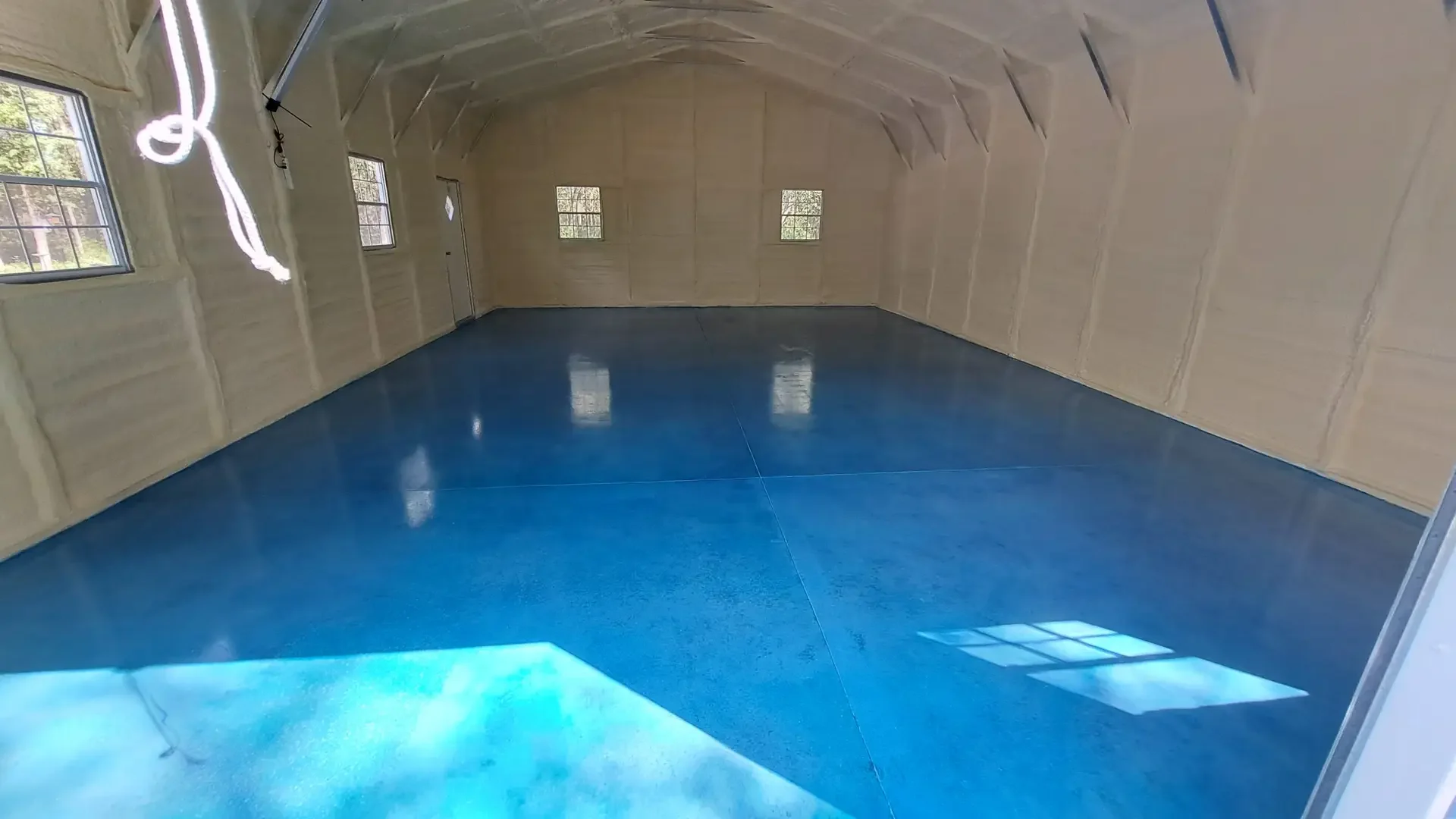
The workshop is usually the first floor people here ask about, and the question is practical: what will stand up to the way I work? In a shop where trucks and equipment get fixed, that often means a solid color floor that shows every dropped bolt. In a woodworking or hobby shop, a sealed or lightly coated slab may be plenty. Some people run a business out of the shop, and that floor gets treated like a commercial one.
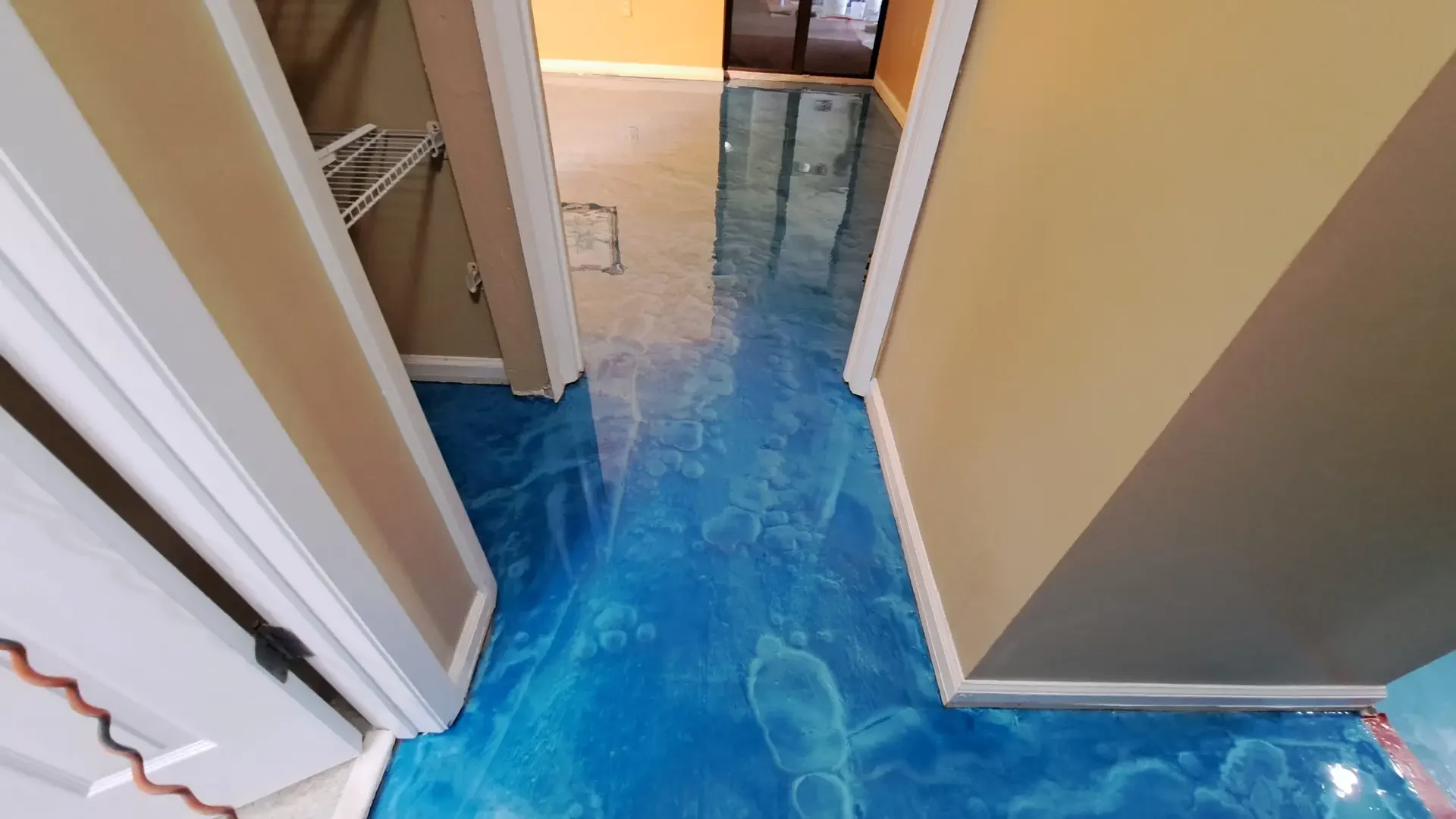
Then come the other buildings: an outbuilding that holds a camper or a trailer, a storage building that just needs to stop shedding dust, and the house garage, which usually gets a flake floor like any garage closer to town. Matt will tell you honestly where a lighter treatment is enough, so the money goes into the floors you work on.
In a woodworking or hobby shop, a sealed or lightly coated slab may be plenty.
What we’d put down, building by building
What Matt reaches for most on Flagler Estates slabs, and why. See all of Matt’s floors.
A shop where you turn wrenches needs a floor that wipes clean of oil and coolant and makes small parts easy to find. Solid color epoxy over a ground slab does both.
If the shop sees welding, hot parts or harsh cleaners, urethane cement handles heat and chemicals that a standard epoxy floor should not be asked to. It takes longer to install than a garage system.
Two pours with a seam, old paint, a rough owner-poured slab: grinding levels the surface and opens it up so whatever goes on top actually bonds.
A storage outbuilding that only needs to stop dusting and resist stains may need nothing more than a cleaned slab and a good sealer.
The house garage gets a full flake broadcast, which hides sand and grass clippings between sweeps and copes with hot tires.
One trip, every building on the lot
Bigger properties mean more to look at, so plan on Matt walking each building you might want done. He tests each slab for moisture and checks the seams and cracks. Then comes the question that matters most: what actually happens in the shop on a normal weekend? If there is a camper or tractor parked on the slab, it helps to know where it can go during the job.
Then you get a plan that can be done in pieces. Doing the shop now and the garage next year works fine. A flake garage can often go down in a day, while urethane cement or a heavier shop floor takes longer, and you will know which before we book it. Have Matt look at your slab before you decide anything, or call Matt directly at (904) 671-3930.
Or email spartancoatingsfl@gmail.com with the town and a photo of the floor.
Matt answers this phone himself
Based in St. Augustine, FL, working in Flagler Estates.
Finished floors first? See all of Matt’s floors.
Other St. Johns County towns on our route
West of I-95 at SR-16, the golf-course neighborhoods date from the late 1990s on, and three-car garages over younger slabs are the norm.
Long known for potatoes, Hastings has barns, workshops and equipment sheds whose slabs carry tractors and dirt instead of a family car.
Near Julington Creek on the St. Johns River, these settled neighborhoods have plenty of garages that have sat as bare concrete for years.
Most homes here are older single-story block houses on slab along the Matanzas, which makes the garage and back porch the usual candidates for a new floor.
This stretch of Anastasia Island carries Frank Butler’s name, from the days his beach was the one African American beach in the area, and its slabs get the same salt and blowing sand as the rest of the island.
Building since the late 2000s, Nocatee is mostly new construction, and the first question on a new garage is whether the slab has cured long enough.
Everything in the county: St. Johns County.
Questions from Flagler Estates
My shop slab was poured in two sections. Will the seam show through a coating?
A seam between two pours is a joint, and the concrete on either side can move a little on its own. We clean it out, fill it and grind it flush, so it will not catch tires or tool carts. Because the slabs can still shift, a fine line may come back over time. Matt will tell you what to expect on yours.
I weld in my shop. Will sparks burn an epoxy floor?
Hot spatter can mark a standard epoxy or polyaspartic finish. If you weld or cut metal regularly, urethane cement handles heat far better and is worth the longer install. A welding blanket under the work area helps with any floor. Matt will ask how often you weld and where before he recommends anything.
Is it worth coating an outbuilding we only use for storage?
Sometimes it is not, and Matt will say so. A storage building that needs to stop dusting and keep stains out may only need a cleaning, a grind where it is rough and a sealer. Save the full coating for the floors you work on and walk across every day.
Our workshop takes a little water in heavy storms. Can the floor still be coated?
It can, but the water has to be dealt with first or it will find the weak spot. A coating does not fix grading or a low threshold. Once water is kept out, a moisture test on the slab tells us whether a vapor barrier primer is needed. Matt will point out what he sees around the door and the slab edges.
Do you really come all the way out to Flagler Estates?
Yes. It is in St. Johns County, which is close to home for us, and Matt comes out to look at the slab the same way he would in town. A property with several buildings is worth the trip, and so is a single shop floor. Call Matt at (904) 671-3930 to set up a time.