
Commercial Epoxy, from Spartan Coatings in St. Augustine, FL
Commercial Epoxy Floors That Clean Up Every Night
Showrooms, offices, gyms, restrooms and the clean end of a warehouse. One coated floor with no grout lines, put down on a schedule built around when your doors are open.
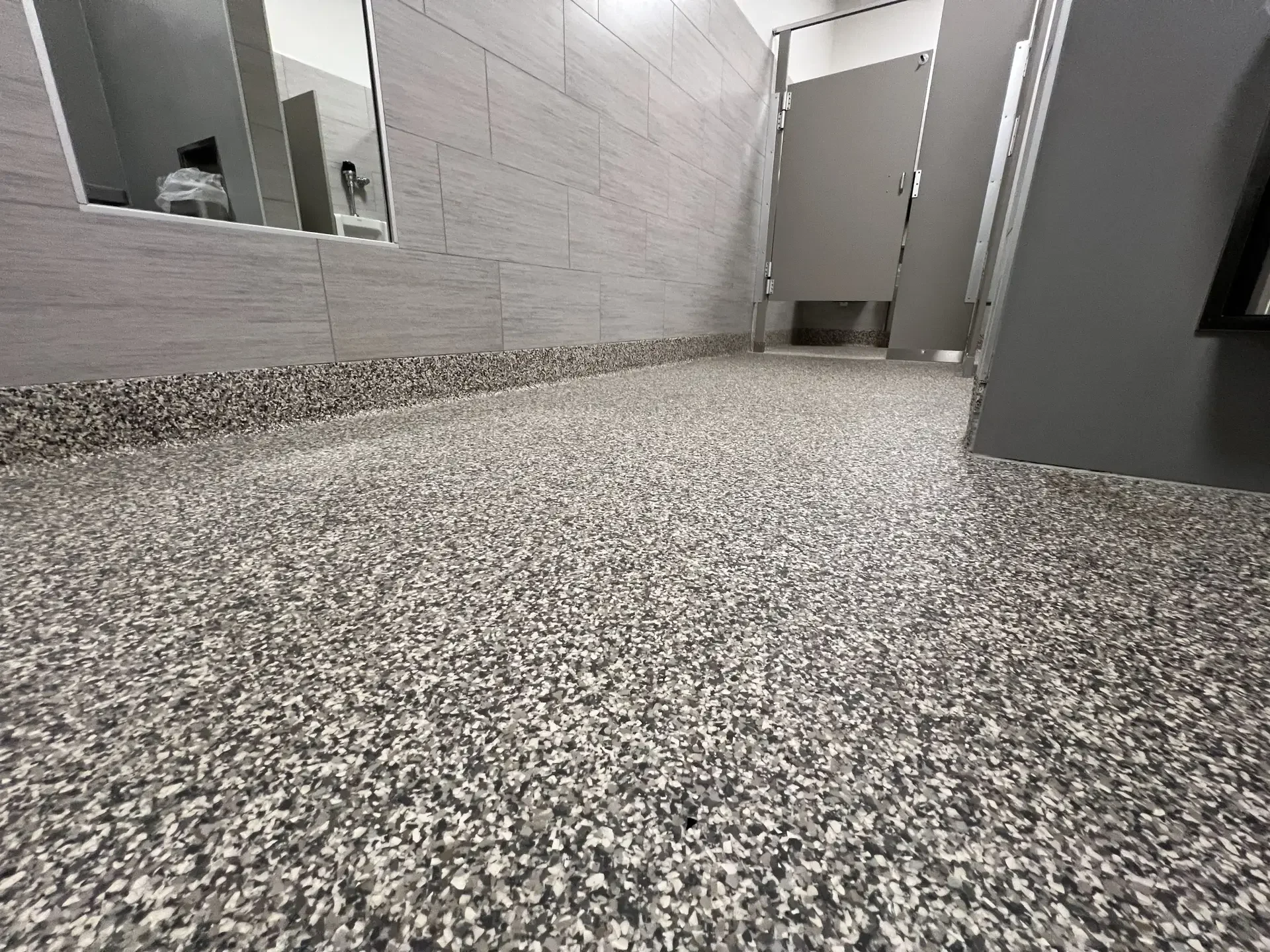
A business floor gets judged twice a day: when the first customer walks in, and when whoever closes has to clean it. Bare concrete stains and sheds dust. Tile gives you grout lines that turn gray and a cracked tile every few months. Vinyl tile needs stripping and waxing on a schedule nobody keeps. A coated floor is one continuous surface, ground into the slab and sealed, so a mop does the job and dirt has nowhere to hide.
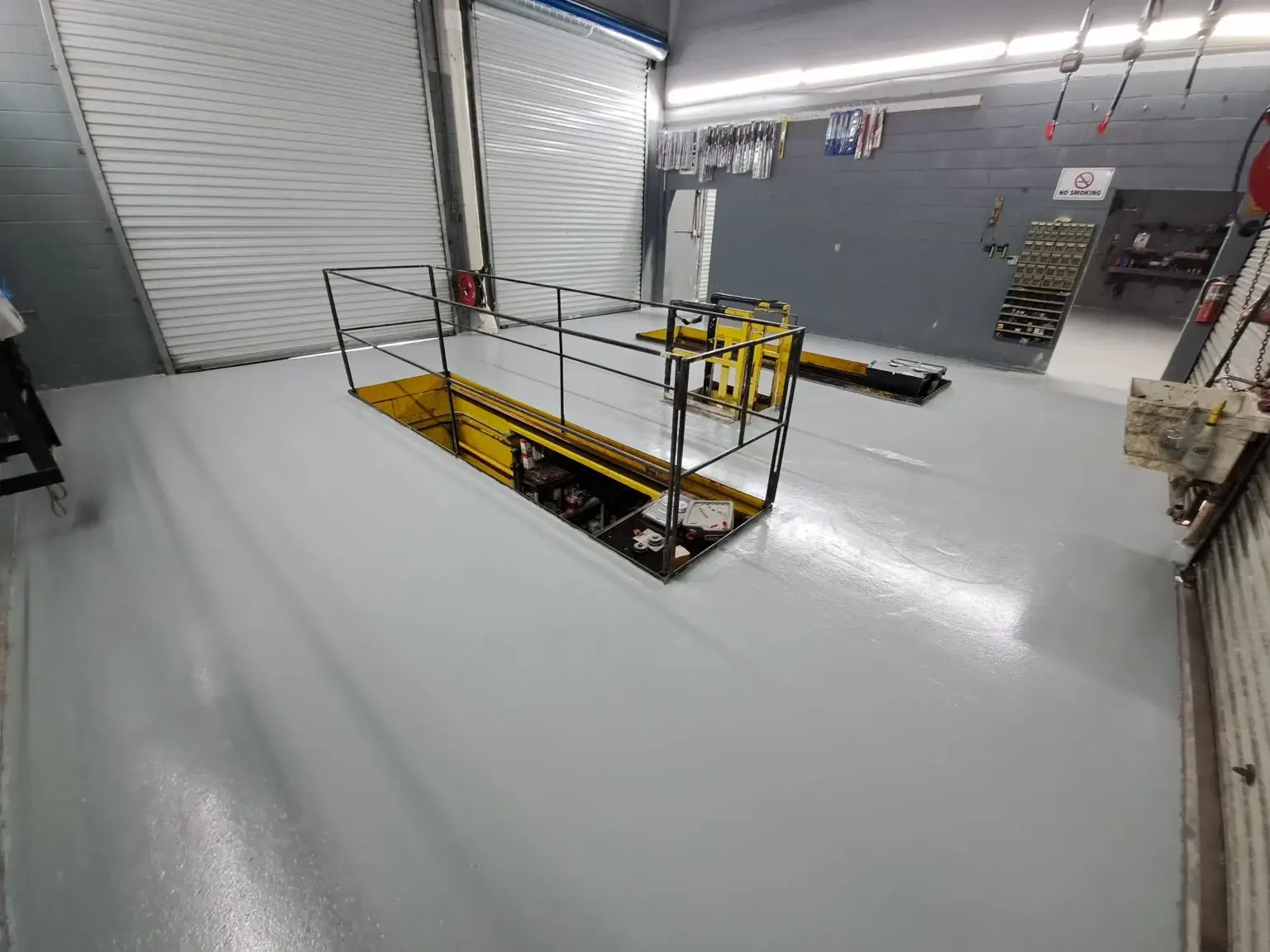
We coat showrooms and retail floors, offices and break rooms, gyms, restrooms and locker rooms, and the packing and assembly side of a warehouse where forklifts don’t run. The system changes with the room. Flake goes in a restroom for grip and to hide water spots. Solid color suits a back office or a stockroom. A showroom can carry a metallic finish, or your logo cut into the floor at the entrance. The prep stays the same everywhere: Matt tests the slab for moisture, we diamond-grind it, and every crack gets repaired before any coating goes down.
Business owners who call us usually aren’t shopping for the cheapest floor. They already had that one, and it’s peeling by the front door. If you want it done once and done right, have Matt look at your slab. He’ll walk the space with you, ask how the business runs day to day, and tell you straight what belongs on that floor.
Business owners who call us usually aren’t shopping for the cheapest floor.
Front of house, back office, locker room: what goes where
Restrooms and locker rooms get the most out of a coating. Water, urine and strong cleaners eat at grout and soak into bare concrete, and the smell stays behind. A flake floor gives wet feet some grip and hides water spots between cleanings, and a cove base carries the coating up onto the wall in a rounded curve so mop water can’t sit in the corner. Showrooms and retail floors want looks first, usually a solid color, a metallic or scored lines. Offices, break rooms and the packing side of a warehouse want something plain that a dust mop keeps tidy. Gyms do well with a coated floor in the cardio area and the locker rooms.
Some floors need something else, and we’ll say so. Where loaded barbells hit the ground, put down thick rubber mats and coat the slab around them. Forklift aisles, pallet racking and heavy rolling loads are industrial work and need a thicker build than a showroom ever will. The hottest washdown areas of a commercial kitchen belong in urethane cement. If a landlord, a franchise standard or your plans call for a specific floor, bring that paper to the walkthrough. Matt will look at the space and the requirements with you before anyone talks about color.
Under a business floor, layer by layer
Strip and grind
Old tile, carpet glue and vinyl tile mastic come up first. Then the diamond grinder opens the concrete, because adhesive left on a slab is a bond waiting to fail.
Test and fill
Every slab gets a moisture test. Cracks, spalls and old anchor holes from shelving and fixtures get filled and ground flush, and control joints are filled or carried through depending on whether that slab still moves.
Primer and cove
A moisture vapor barrier primer where the test calls for it. In restrooms and locker rooms the cove base gets troweled up the wall at this stage so it bonds as part of the floor.
Body coat
100% solids epoxy or a polyurea base, in a solid color or broadcast with flake. This layer gives the floor its thickness and its look.
Lines and logos
Safety striping, walkway lanes and logo work go in here, under the clear coat, where shoes and carts can’t wear them off.
Topcoat
A polyaspartic or epoxy clear chosen for the room, with grip added where the floor gets wet. Anywhere sun comes through glass gets polyaspartic.
Glass storefronts, wet shoes and a slab that sweats
A storefront with a wall of glass bakes the first few feet of floor every afternoon, and an epoxy topcoat in that sun yellows over time. That’s why showrooms and lobbies here get a polyaspartic clear. Summer storms send customers in with wet shoes and dripping umbrellas, so the entry is where we add grip, along with the restrooms and anywhere near an ice machine or a water fountain.
Under all of it is a slab poured on sand over a high water table. Commercial buildings are often older, and many slabs never had a vapor barrier under them. A strip mall bay that sat empty with the air conditioning off can be pushing moisture you’d never guess from looking at it. We test before we pick a system. Near the beaches and the Intracoastal, salt air and sand ride in on every pair of shoes, and a coated floor takes that grit without the dull, scratched look a waxed vinyl floor gets.
Commercial buildings are often older, and many slabs never had a vapor barrier under them.
Keeping it clean on a closing shift
Daily care is a dust mop, or an auto scrubber with a neutral cleaner. Skip the strong acids and harsh strippers, and don’t wax it. A coated floor has no use for wax, and wax just gives you something to strip later. Walk-off mats at the doors catch sand before it gets onto the floor.
Over the years the clear coat wears in the paths people take most, from the front door to the register and down the hall to the restrooms. When it starts to dull there, the fix is a light scuff and a fresh topcoat over a slow stretch, with the color layer underneath left alone. Matt will tell you what to watch for at the walkthrough.
Want to see finished floors before you decide? See all of Matt’s floors.
Next to commercial epoxy on the list
Matt puts this down across all six counties we cover, including Fruit Cove, Oakleaf Plantation, Marineland and Holly Hill. Most jobs start with a look at the slab, then a choice between systems like these.
Built for working bays with brake fluid, antifreeze, dropped tools and the point loads under a lift, and picked by shop owners who are done patching.
Kitchens and back of house see hot water, grease and a scrub every night, and owners pick this so the floor still looks clean after a Saturday rush.
Heavy builds for warehouses and plants running carts, pallet jacks and chemicals over the same slab, specified by people who count every hour of downtime.
When the floor sees boiling water, thermal shock or standing wet all shift, urethane cement is the system that stays put.
Questions people ask about commercial epoxy
Can you coat the floor in sections so we stay open?
Often, yes. In a larger space we split the floor into sections and coat one while the rest of the business keeps running, with the work area closed off. A restroom or an office usually goes in one go. Every section needs its cure time with nobody on it. We work around your hours as far as the floor allows, and Matt plans the order with you.
Is there a smell while the coating cures?
Some, depending on the product. 100% solids epoxy has no solvent in it to evaporate, so it’s milder than most people expect, while some fast-curing topcoats smell stronger for the first few hours. We ventilate the space while we work. In a shared building, we’ll talk through the neighbors and the air handling with you before the job starts.
Can you coat right over the vinyl tile in my store?
It has to come up. Tile flexes and pops loose, and a coating is only as strong as what’s under it. We pull the tile, grind off the old glue and coat the concrete itself. In an older building, old tile and adhesive can need testing before anyone disturbs them, so Matt asks about the building’s age when he looks at the space.
Can you add safety lines and walkway markings?
Yes. The lines go in before the clear topcoat, so shoes and carts wear on the clear instead of the paint. We can mark walkways, door swings, the clear space in front of an electrical panel, loading spots and anything else you need called out. If a landlord or an insurer gave you a layout to follow, bring it and we’ll work from that.
Do the toilets come out for a restroom floor?
Usually, yes. The toilets come up so the coating runs under them and there’s no ring of bare concrete around the base. Partition posts and other fixtures bolted to the floor get loosened or coated around, depending on how they’re mounted. The toilets go back once the floor has cured. Matt will go over who handles the plumbing and when.
How does a coated floor compare to polished concrete for a showroom?
Both are easy to clean and neither has grout lines. Polished concrete is the slab itself, ground and densified, so it shows that concrete’s character, stains and patches included. A coating covers the slab with a color you choose and holds out spills better. If your slab is in good shape and you like raw concrete, polish can be the better pick.
Show Matt your floor
Tell Matt what the room has to handle. He will come out, test the slab and tell you straight whether commercial epoxy is the right call.
Want to see more first? See all of Matt’s floors.