
Flake Epoxy, from Spartan Coatings in St. Augustine, FL
Full Broadcast Flake Floors That Hide Sand and Dust
Colored vinyl chips thrown to full coverage over a base coat and locked under a clear topcoat. It is the most forgiving floor we put down.
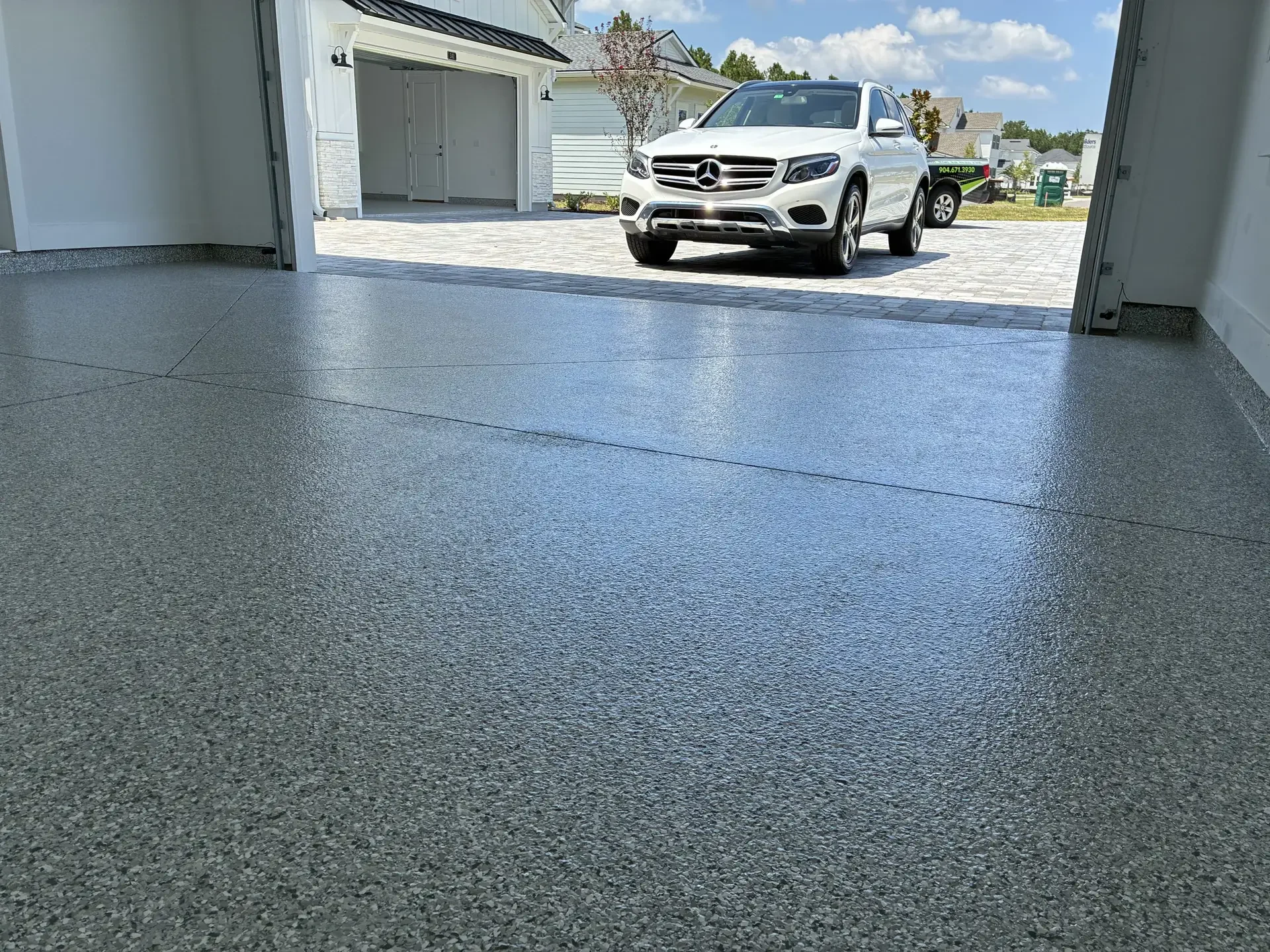
A flake floor starts with a colored base coat. While that coat is still wet, we throw vinyl chips across the whole floor by hand until the base disappears and the chips stop sticking. That is a full broadcast. After it cures we scrape off the loose chips, vacuum the floor and seal everything under a clear topcoat. From standing height it reads a lot like granite, and underfoot it has a slight texture you notice more with bare feet than with shoes.

We put down more flake than anything else for a simple reason: it forgives. Sand off the beach, pollen through the screen door, dog hair, a dropped bolt. All of it disappears into the pattern. Homeowners pick it for garages, lanais and patios. Business owners pick it for shops and back rooms that need to look clean between moppings without anybody babying the floor.
Chips come in sizes from about a quarter inch down to a sixteenth, mixed in blends of several colors. Bigger chips read bolder and hide more. Smaller chips look finer, closer to stone, and leave a tighter texture. The blends that go down most around here lean gray, tan or blue, with darker mixes for people who want the floor to disappear under a car. Look at a sample in the actual room before you choose, because a blend under garage lights looks different from the same blend on a sunny patio.
We put down more flake than anything else for a simple reason: it forgives.
Flake past the garage door, and the few places it loses
Garages are only the start. Flake goes on screened lanais under pool cages, patios with outdoor kitchens, walkways out to a hot tub, pool decks, laundry rooms, mudrooms and workshops. The same build moves from room to room with small changes. Outdoors it gets a UV-stable polyaspartic topcoat because epoxy yellows in the sun, and around water we leave more texture or add grit to the topcoat so bare feet have something to hold.
Flake is the wrong pick in a few places. In a living room or an open interior where you want the floor to look like poured stone, metallic or polished concrete suits the room better. In the back of a restaurant, where hot water and grease hit the floor every shift, we would build quartz or urethane cement. And on a pool deck that bakes all afternoon, a dark chip blend gets hot enough to make people hop, so we steer you toward a lighter one.
What goes into a full broadcast
Test and grind
A moisture test first, then a diamond grind that opens the concrete and takes off old sealer, paint and the smooth trowel finish so the base coat can bite.
Patch and slope
Cracks and spalls get filled and ground flat. On a patio or lanai we also check the pitch, so rain still runs off once the coating is on.
Base coat
A pigmented polyurea or 100% solids epoxy base, tinted close to the main color in the chip blend, over a vapor barrier primer when the test calls for one.
Broadcast
Chips go on by hand, tossed up and out so they land flat, until the base will not take another one. A box kit sprinkles chips. We bury the floor in them.
Scrape and vacuum
Once the base cures, a long blade knocks down any chip standing on its edge, then the floor gets vacuumed twice so nothing gets trapped in the clear.
Clear topcoat
Polyaspartic, rolled to the texture you want. One coat leaves more grip. A second coat fills the valleys and makes the floor smoother and easier to mop.
Sand, oak stains and storm water on a flake floor
Near the beaches, sand comes in on feet, towels, coolers and dogs. On a smooth floor it grinds like sandpaper and shows everywhere. On flake it hides, and the texture keeps the grit from skating around under your shoes. Under live oaks the trouble is tannin: wet leaves sit on a bare concrete patio after a storm and leave brown prints behind. A sealed flake floor wipes clean of them, and the pattern swallows any faint shadow left on a light blend.
Outside, the sun is the real test. A patio or lanai sits in heat and UV for hours, which is why the topcoat out there is polyaspartic, a clear coat that keeps its color in the sun far better than epoxy. Then the afternoon storm puts a sheet of water across it, so the texture stays on the grippy side. Underneath, humidity works on every slab in Florida, and a patio poured straight onto sand gets the same moisture test a garage does.
A sealed flake floor wipes clean of them, and the pattern swallows any faint shadow left on a light blend.

Keeping a flake floor looking right
Sweep it, blow it off or hose it down. For real grime, a mop and a mild cleaner do the job. Skip harsh acids, and keep tire shine overspray off the floor. The texture holds a little dirt in its low spots, so a soft deck brush every few weeks does more than any mop will.
Over the years, wear happens in the clear topcoat while the chips underneath stay put. If a busy path starts to look flat, we can scuff it and roll on a fresh clear without touching the chips. Since the same pattern that hides dust also hides small scuffs, a flake floor tends to look good for a long time before anyone notices it needs attention. On a lanai or patio, the outdoor topcoat is what you are maintaining, and a fresh coat is a short job.
Want to see finished floors before you decide? See all of Matt’s floors.
Next to flake epoxy on the list
Matt puts this down across all six counties we cover, including East Palatka, Port Orange, Nocatee and Atlantic Beach. Most jobs start with a look at the slab, then a choice between systems like these.
For the two or three car garage that has to handle hot tires, oil drips and a workbench, picked by people tired of a stained gray slab.
Colored quartz sand broadcast in layers for a heavy, textured floor, chosen where grip and wear count for more than a mirror shine.
When the floor sees boiling water, thermal shock or standing wet all shift, urethane cement is the system that stays put.
Retail floors, offices and showrooms where the owner needs something that looks sharp, cleans fast and takes steady foot traffic for years.
Questions people ask about flake epoxy
What is the difference between full broadcast and a light flake sprinkle?
A sprinkle scatters chips over a colored base so you still see the base between them. It looks thin, and the floor is only as thick as one coat. A full broadcast covers the base completely, adds body to the floor and gives the topcoat something to grip. It takes more chips and more labor, and it looks and wears like a finished floor.
Which chip size should I pick?
For a garage, a quarter inch chip is the common choice because it hides the most and reads clearly from across the room. An eighth inch looks finer and suits laundry rooms, mudrooms and lanais where you see the floor up close. The smallest sizes look almost like stone. Size changes the texture too, so think about bare feet as well as looks.
Is a flake floor slippery when it is wet?
Less than most people expect. The chips leave a slight texture under the clear coat, so a wet flake floor grips better than a smooth solid color. Outdoors and around pools we leave more texture or add grit to the topcoat. Anything wet can still be slick, so for a shower area or a ramp we would talk with you about quartz.
Can flake go on a lanai or patio that gets full sun?
Yes, and it is one of the best uses for it. The difference outside is the topcoat. Epoxy turns yellow in the sun, so outdoor flake gets a polyaspartic clear that stays clear. We also lean toward a lighter blend for spots that bake all afternoon, because dark chips hold heat, and we keep the slope so rain still drains off.
Can my patio match my garage floor?
It can, as long as both slabs are ground and built the same way. Using the same chip blend inside and out gives you a matching look from the driveway to the back door. Expect the outdoor floor to read a shade different, partly from sunlight and partly from the extra texture in its topcoat. Seen together, they still read as one design.
Can you put flake over concrete that was painted or sealed before?
Yes. The old paint or sealer comes off in the diamond grind, because a new coating bonded to an old one is only as strong as whatever is underneath. Where old paint has soaked in deep or flaked badly, we grind longer. Glossy sealer over stamped concrete is a different job, and Matt will talk through the options with you on site.
Show Matt your floor
Tell Matt what the room has to handle. He will come out, test the slab and tell you straight whether flake epoxy is the right call.
Want to see more first? See all of Matt’s floors.