

Matt Casey’s floors, out of St. Augustine, FL
Epoxy floors built to be looked at and lived on
Spartan Coatings grinds, tests and coats concrete across Northeast Florida. Matt Casey has spent 15 years in this trade and he is still on every job.
Show Matt your floor
Four quick answers. Matt calls back to set up a look at the slab.
Matt calls you back himself. Rather talk now? (904) 671-3930
Eight floors off our own jobs
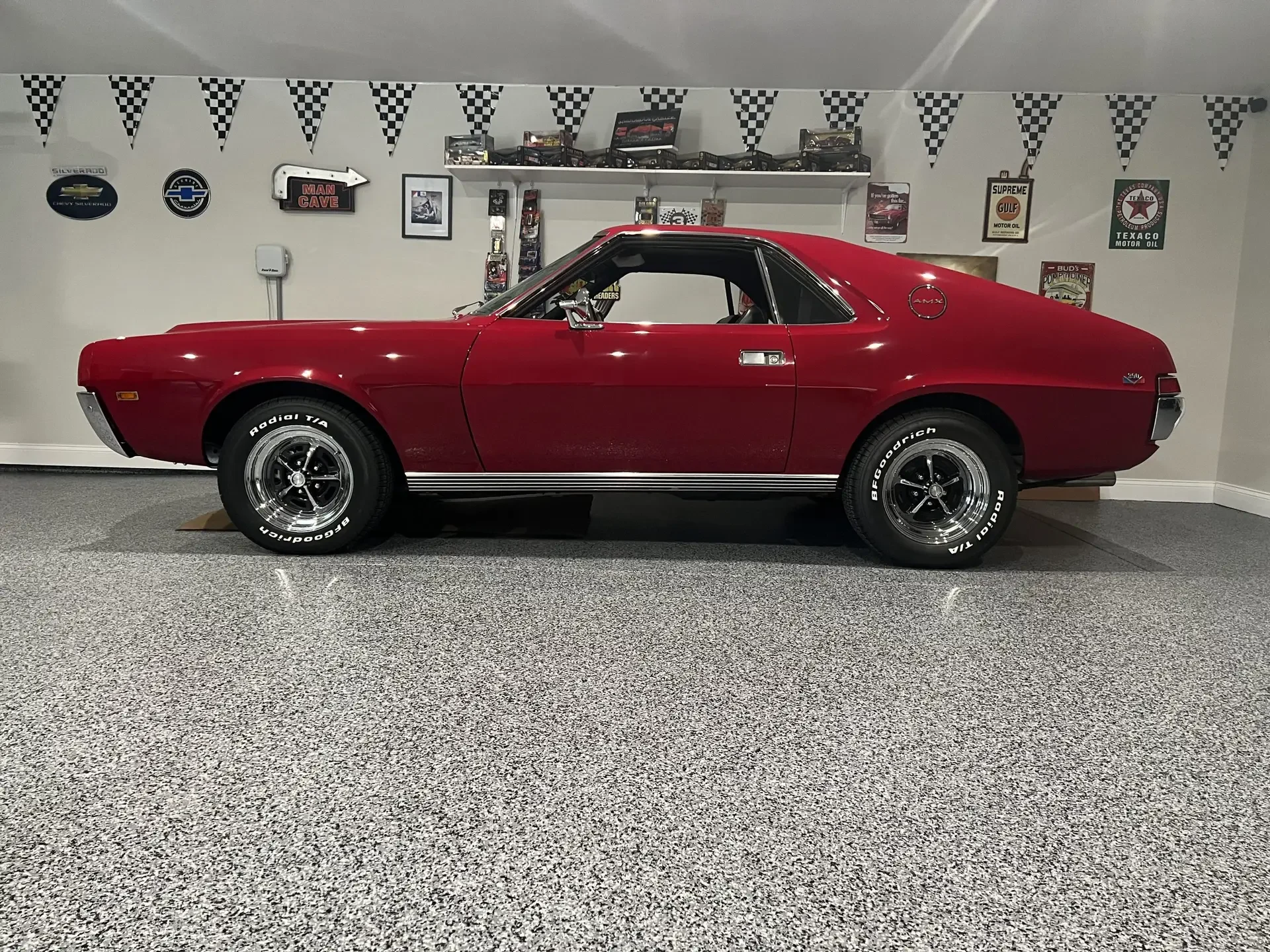
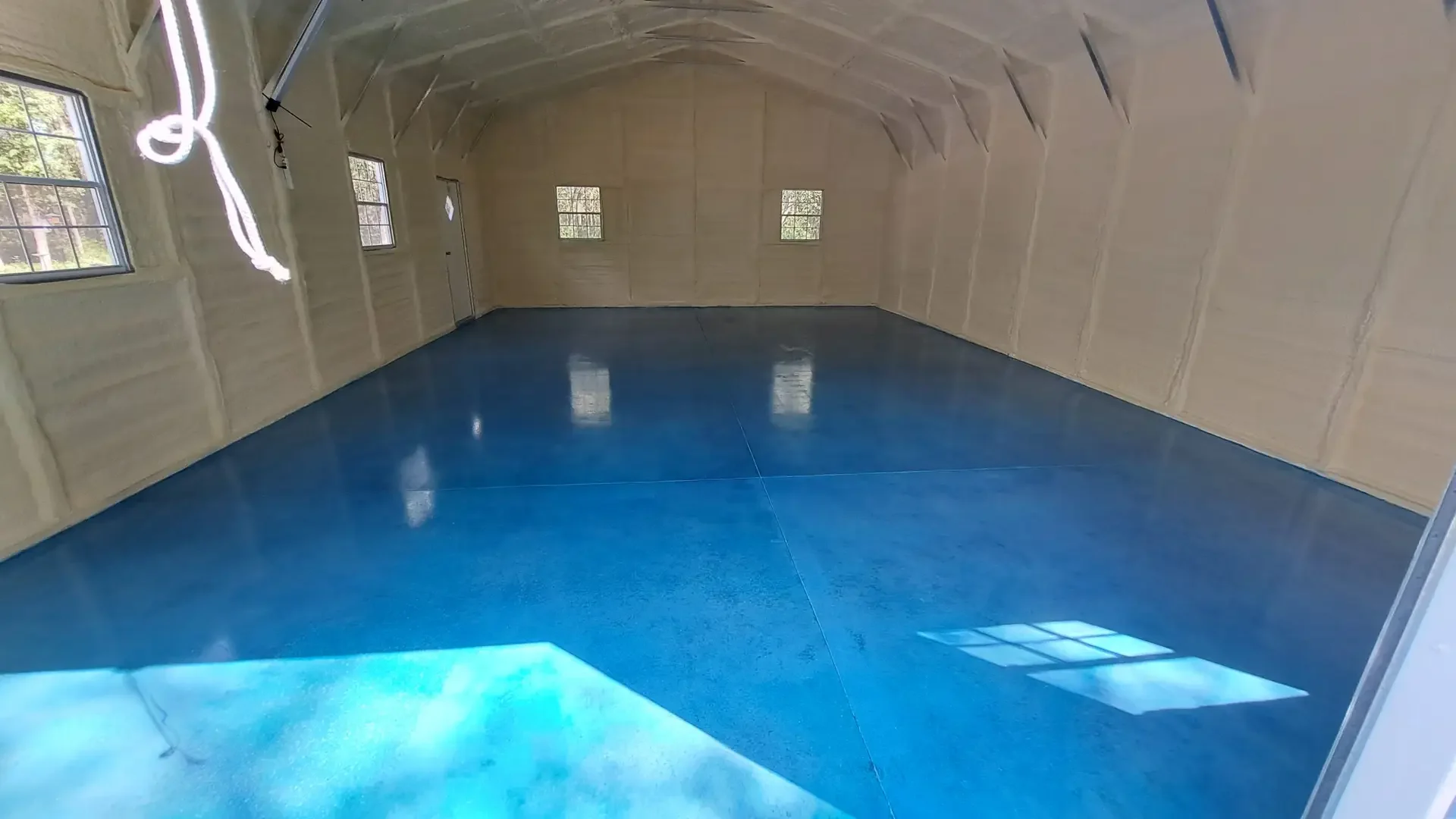
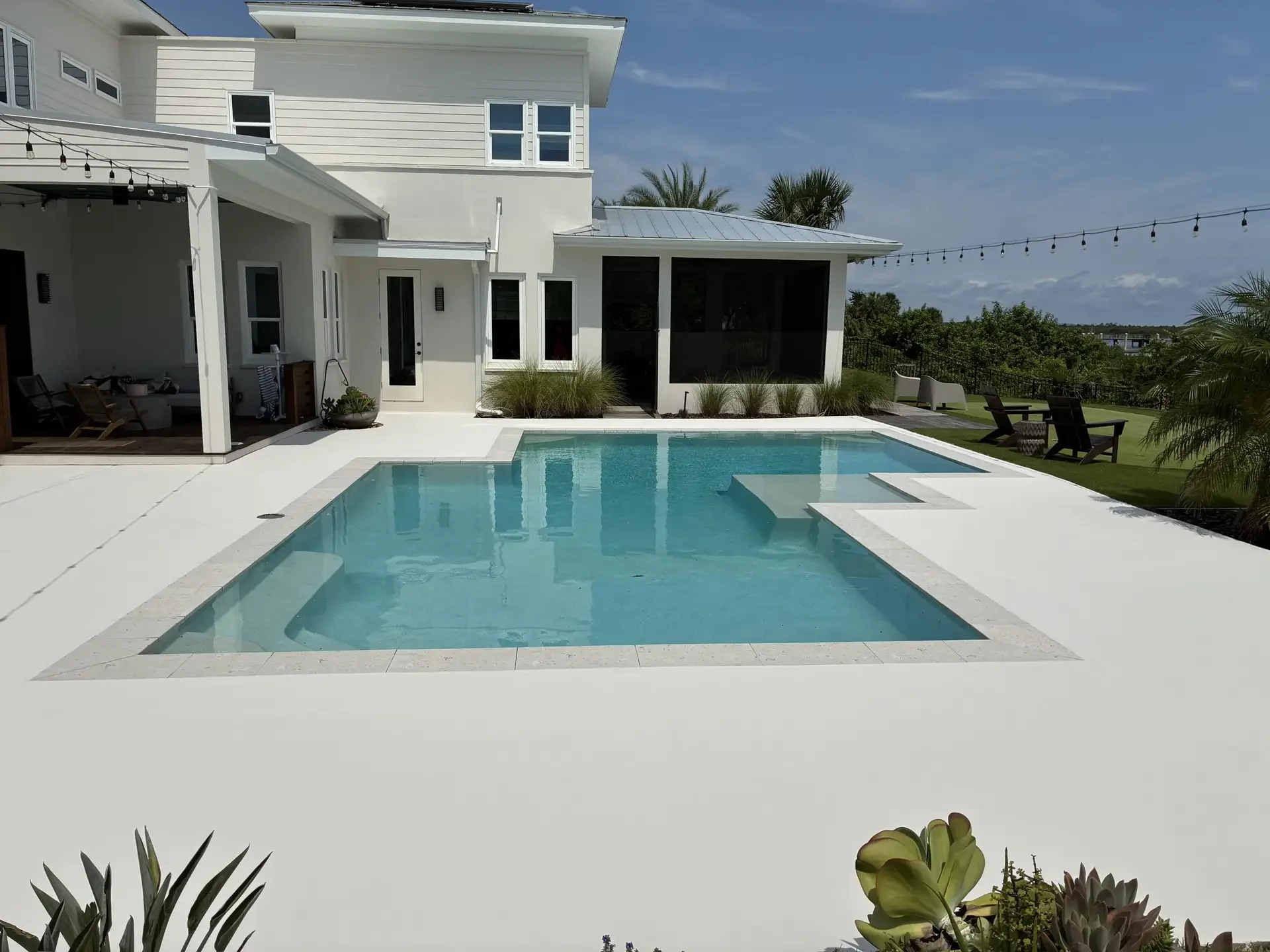
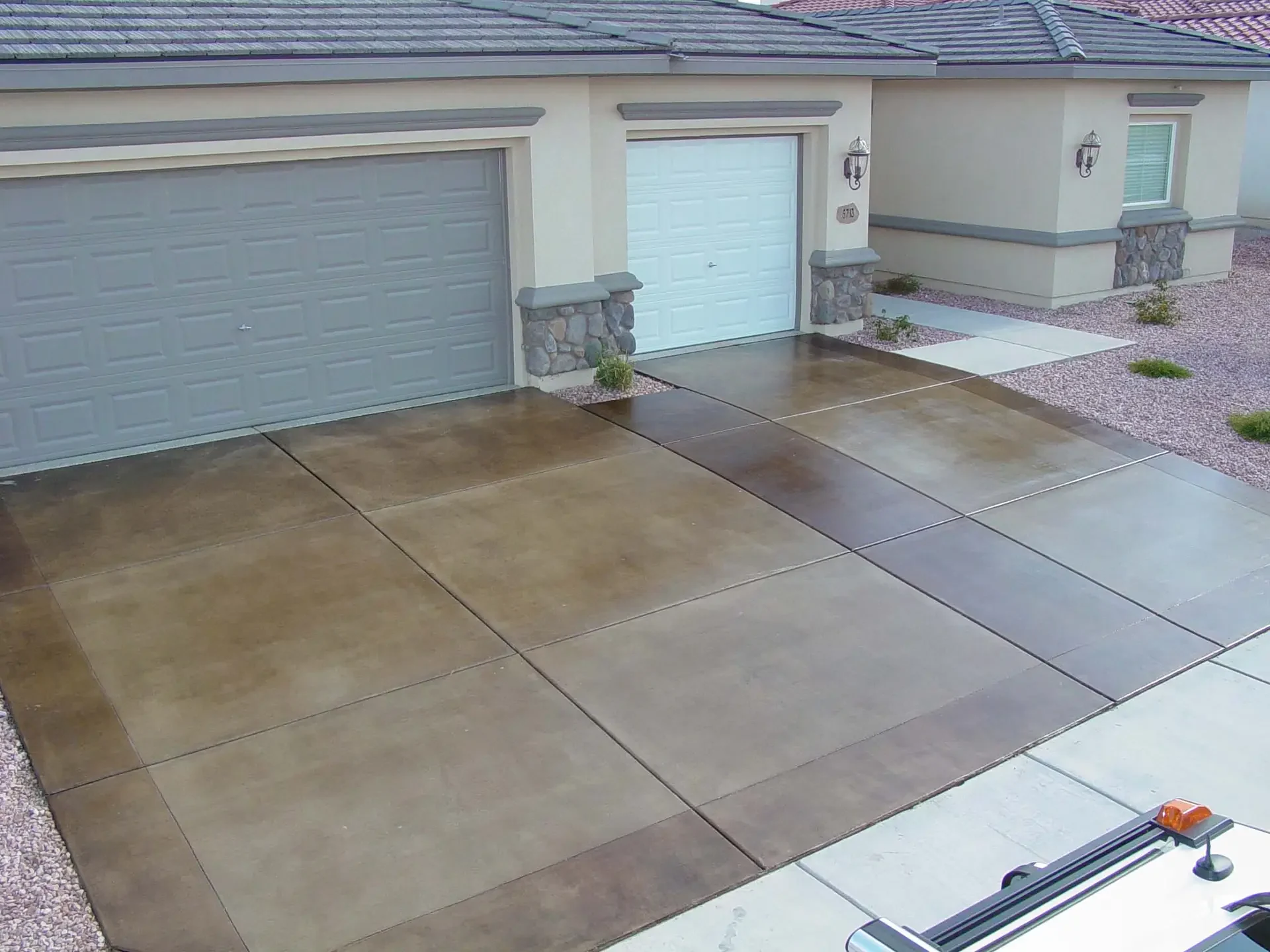
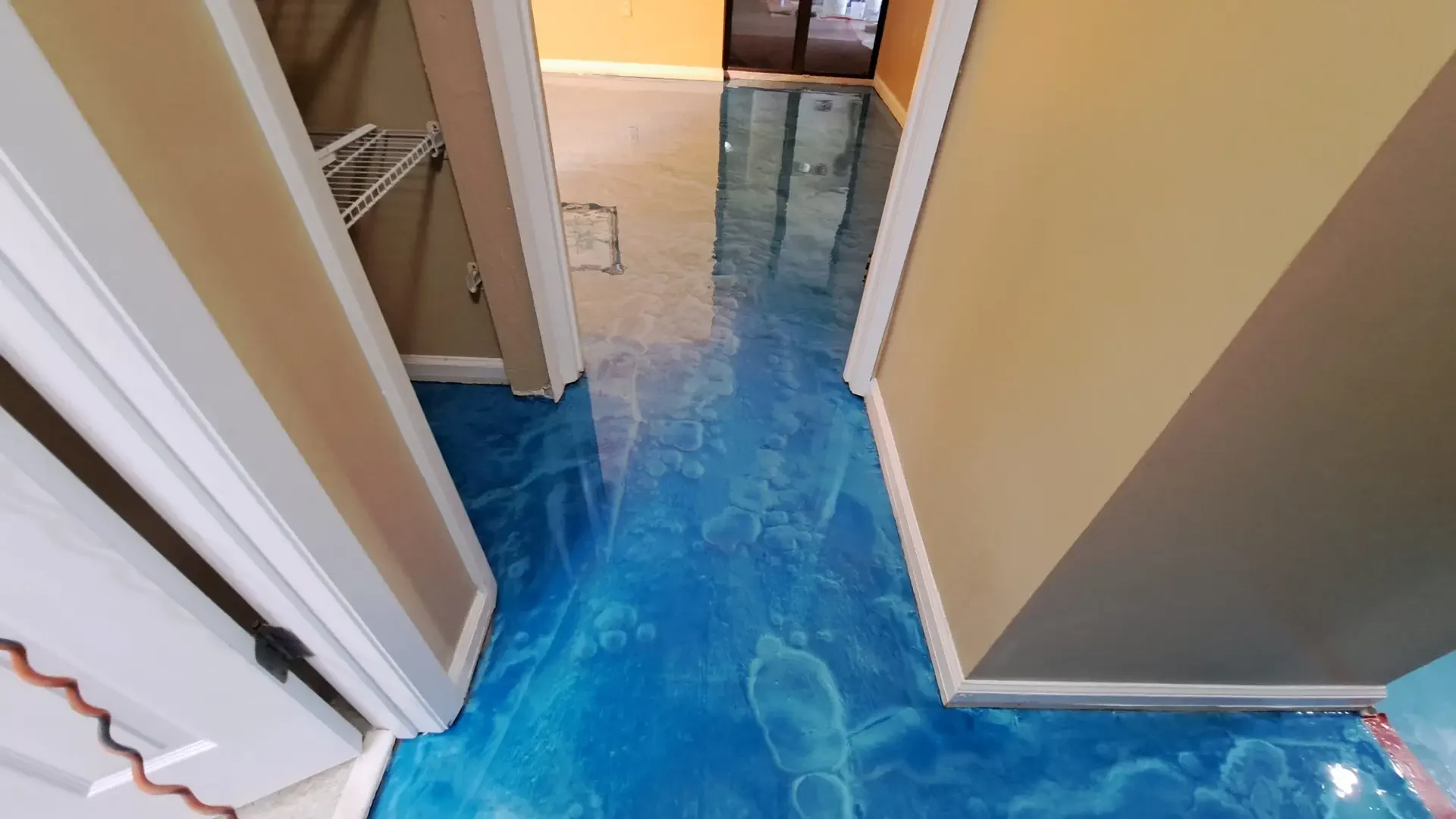
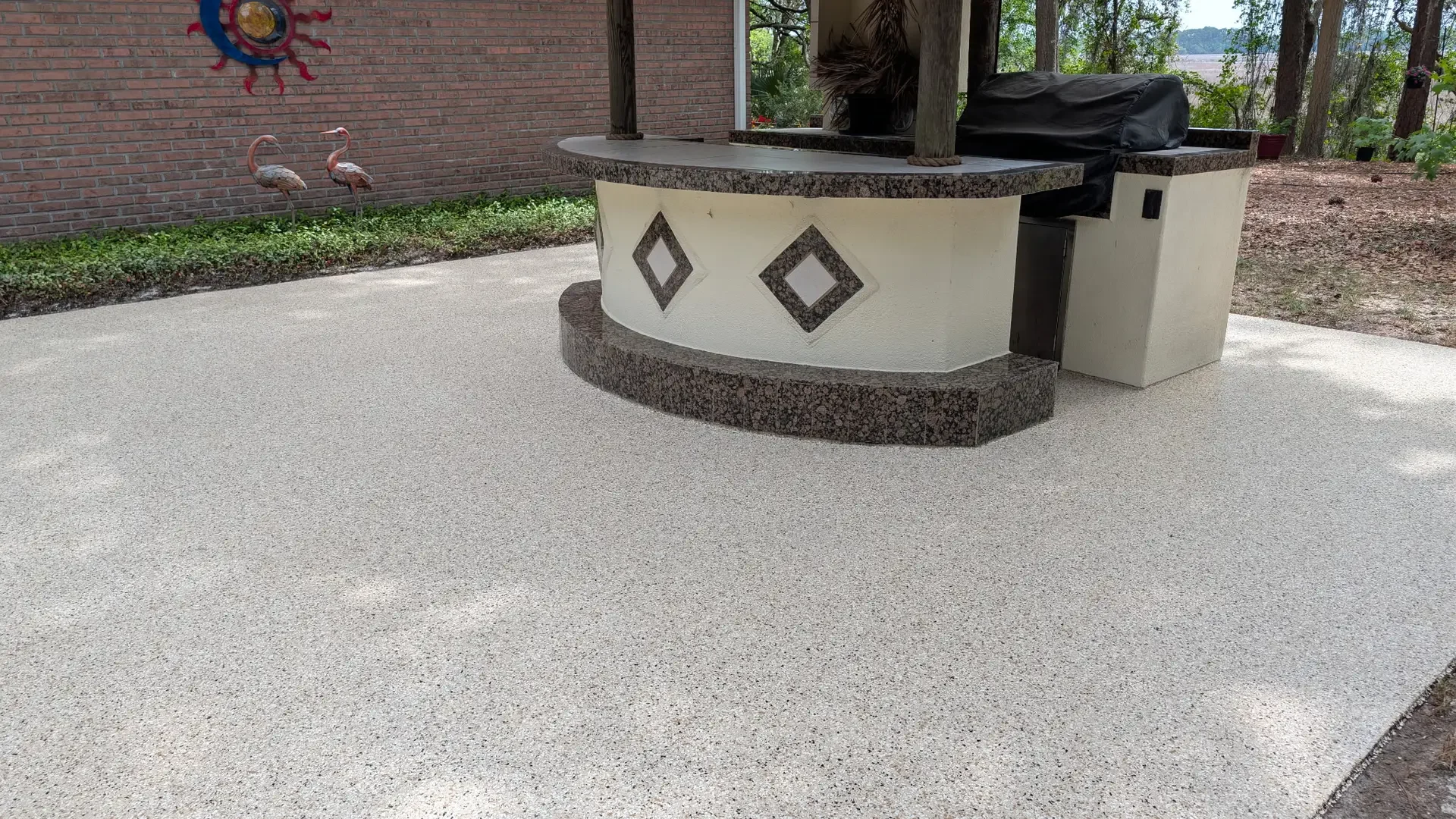
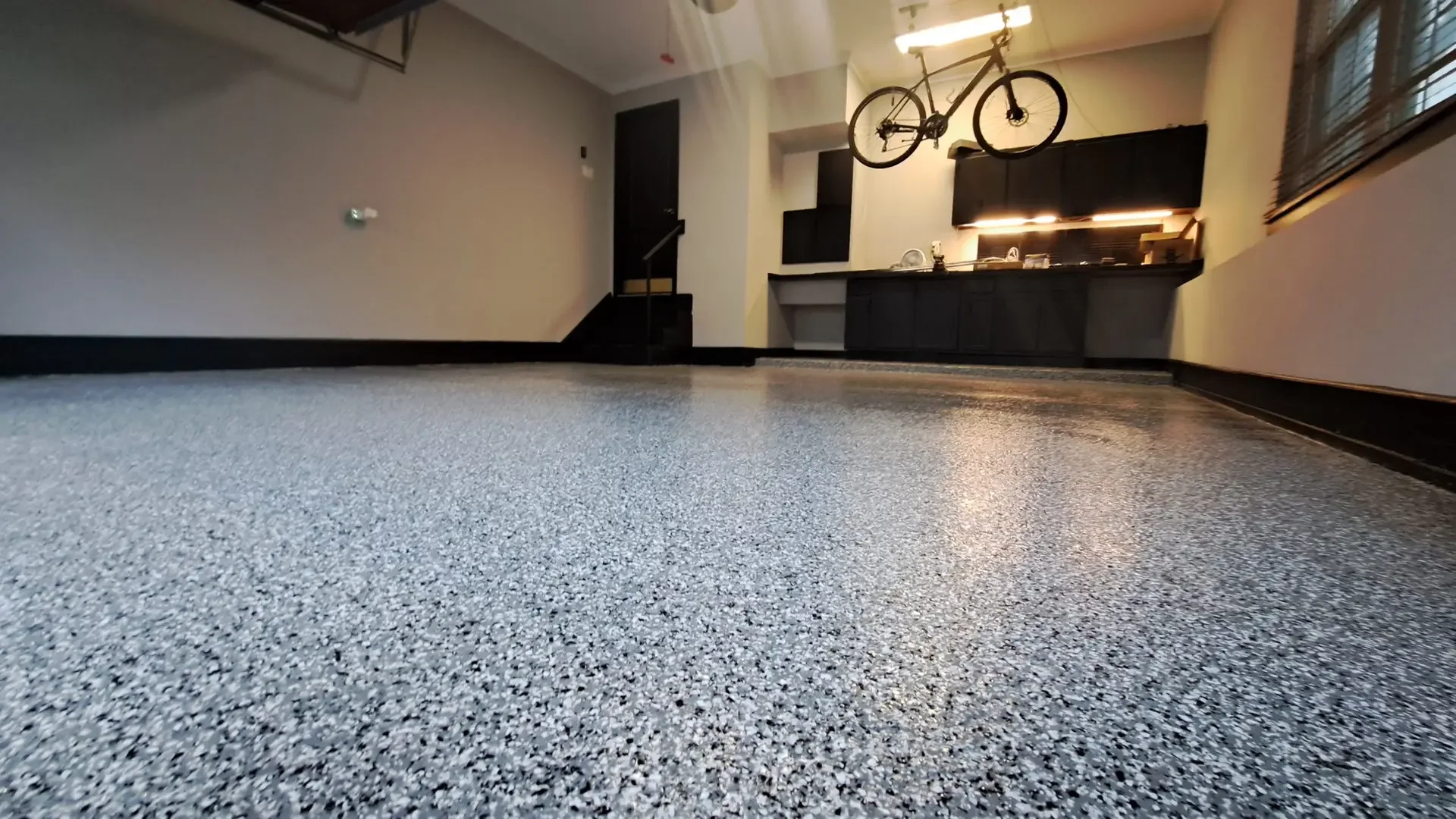
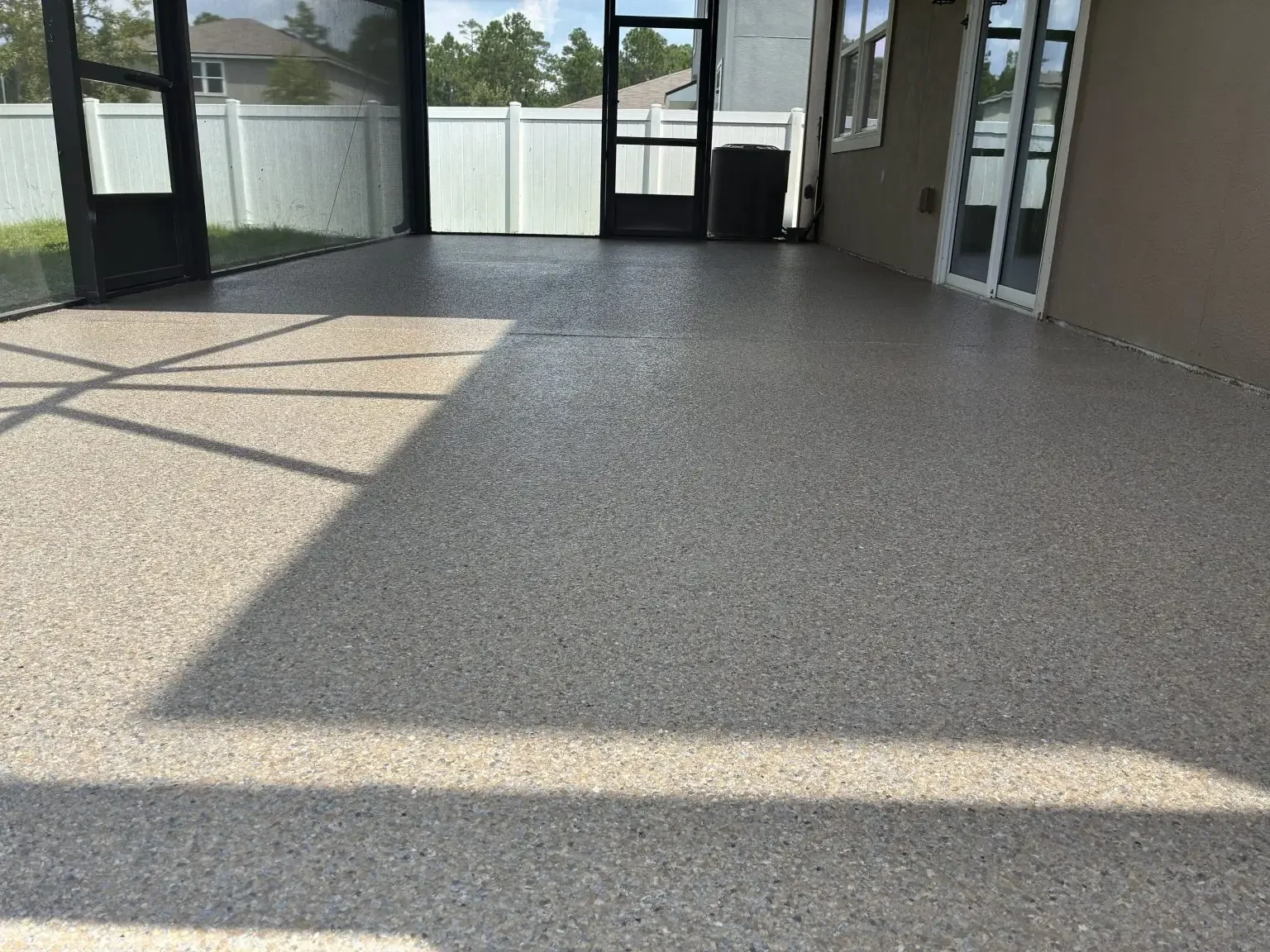
Every floor on this wall came off one of our jobs. No stock photos, because you can’t judge an installer by somebody else’s work. Look close at the edges and around the drains. That’s where a floor tells you who put it down. See all of Matt’s floors.
Start with the room, then pick the system
Most people don’t call asking for polyaspartic. They call about a garage that’s peeling, or a lanai that turns slick every time it rains. So this list starts with the room. If you can’t tell which system fits your floor, that is exactly what the visit is for. Every system on one page.
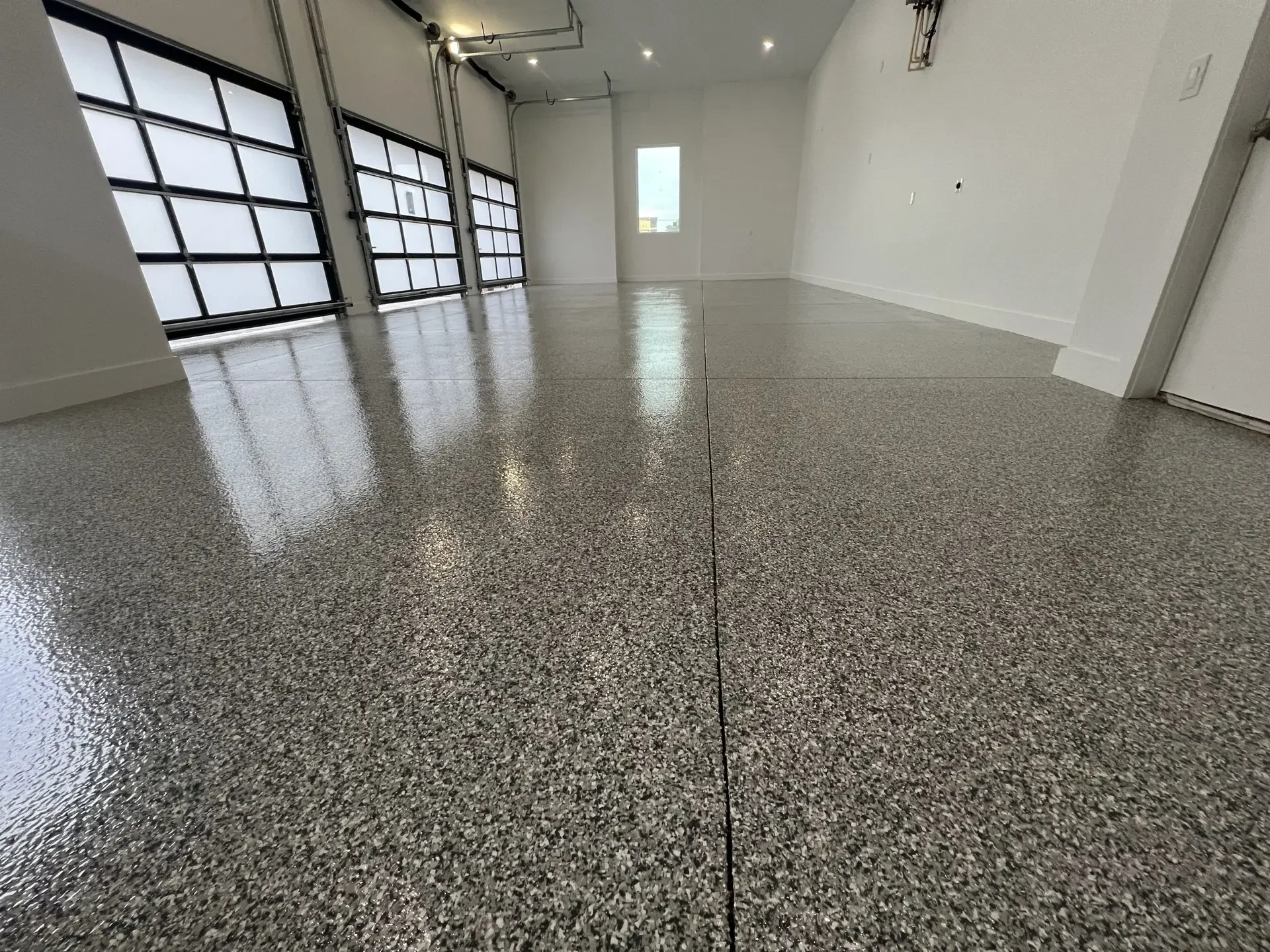
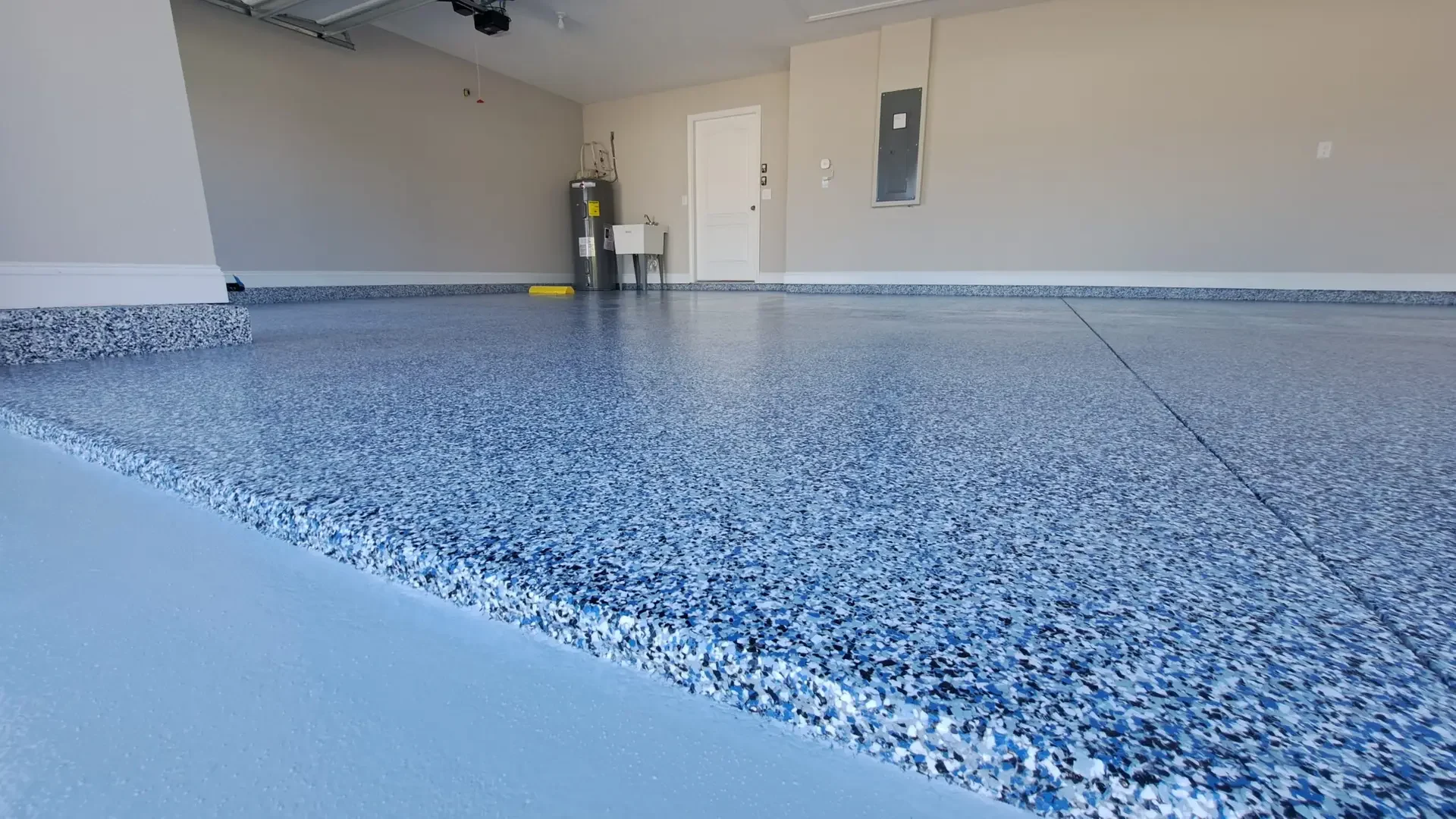
Where most of our calls start. Hot tires, oil, sand tracked in off the beach, and a slab that may be pushing moisture up from underneath.
For the two or three car garage that has to handle hot tires, oil drips and a workbench, picked by people tired of a stained gray slab.
A full broadcast of colored chips into the base coat; the blend hides dust and sand, which is why homeowners near the beach ask for it first.
Colored quartz sand broadcast in layers for a heavy, textured floor, chosen where grip and wear count for more than a mirror shine.
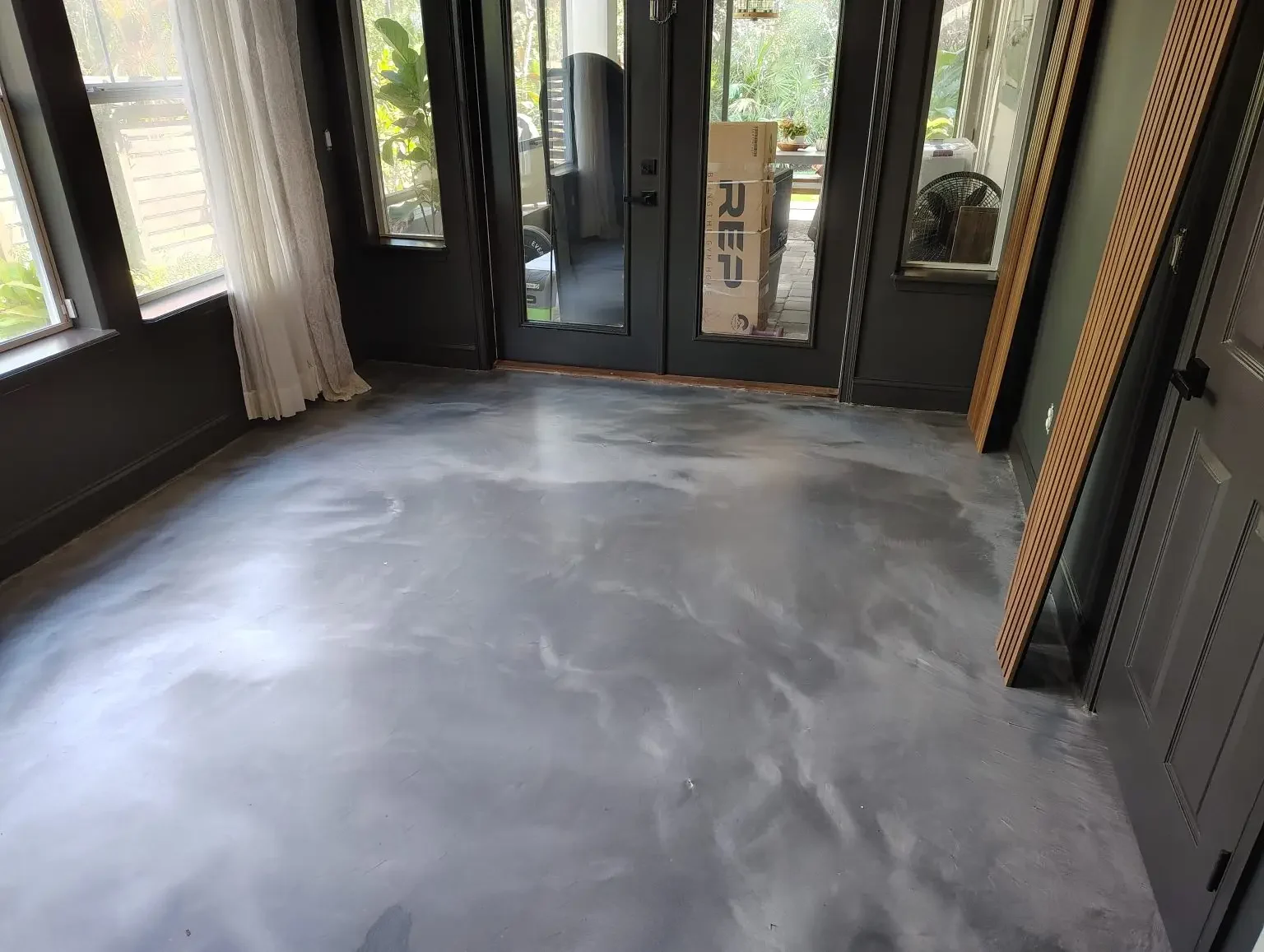
Inside the house, where the floor is the first thing people notice. These pours take more time than a garage, and the finish shows it.
Solid color, 100% solids epoxy in one even shade, for anyone who wants a clean, hard floor anywhere from a laundry room to a workshop.
Want a floor that looks like poured stone? Metallic epoxy moves while it cures, so no two rooms ever come out the same.
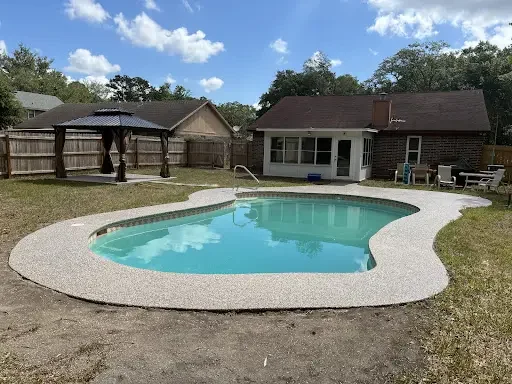
Patios, lanais, pool decks and walkways that bake in full sun and get soaked most summer afternoons. Grip and color that holds matter more out here than gloss.
Patios, lanais and screened porches get a UV-stable system meant to hold its color in the sun and keep its grip after an afternoon storm.
Pool owners choose this one for footing: a textured coating made for wet bare feet, chlorine splash and full sun from morning to dusk.
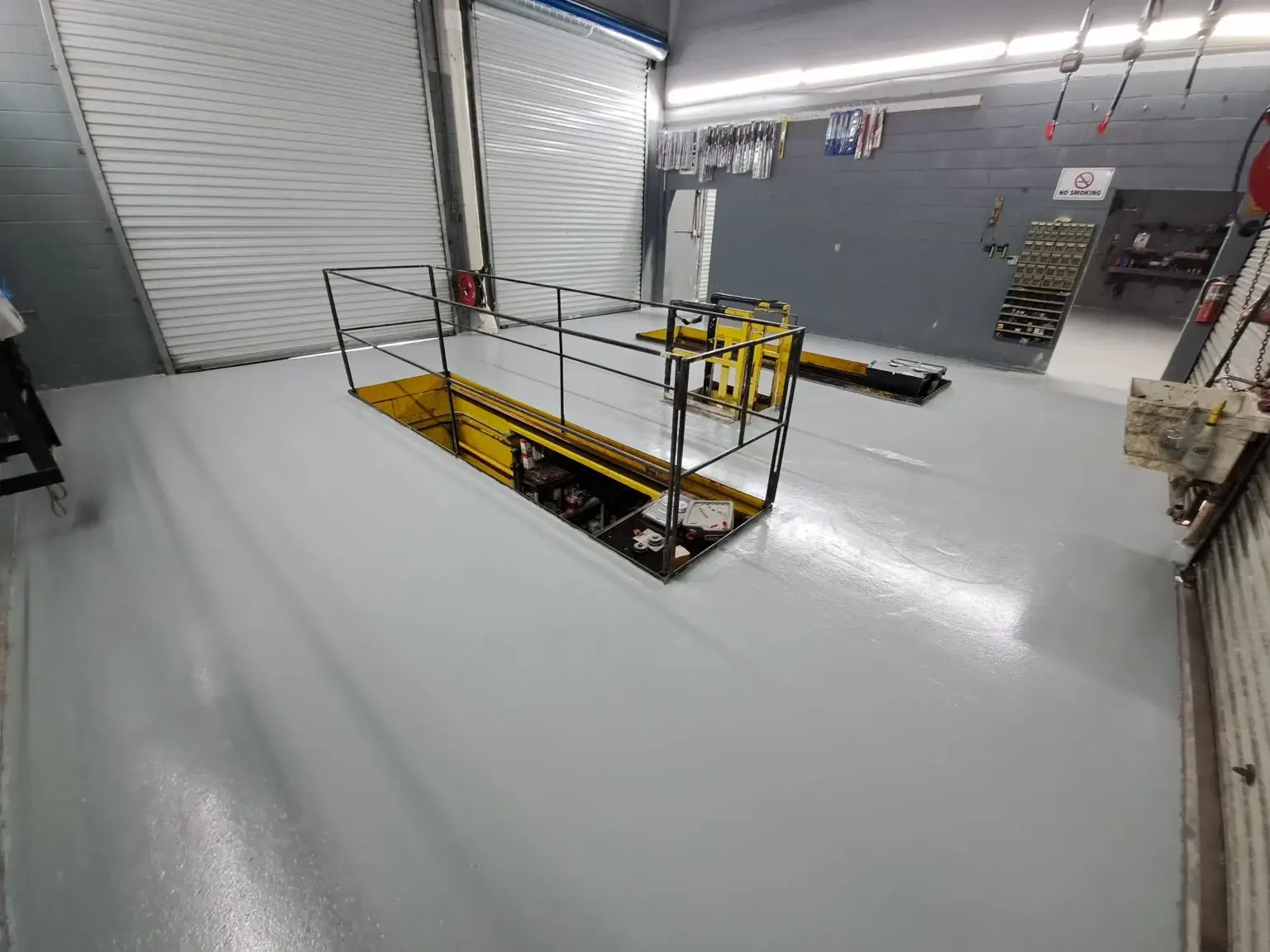
Shops, kitchens, bays and plants. Floors that take chemicals, hot water, rolling loads and a crew on them all day long.
Retail floors, offices and showrooms where the owner needs something that looks sharp, cleans fast and takes steady foot traffic for years.
Built for working bays with brake fluid, antifreeze, dropped tools and the point loads under a lift, and picked by shop owners who are done patching.
Kitchens and back of house see hot water, grease and a scrub every night, and owners pick this so the floor still looks clean after a Saturday rush.
Heavy builds for warehouses and plants running carts, pallet jacks and chemicals over the same slab, specified by people who count every hour of downtime.
When the floor sees boiling water, thermal shock or standing wet all shift, urethane cement is the system that stays put.
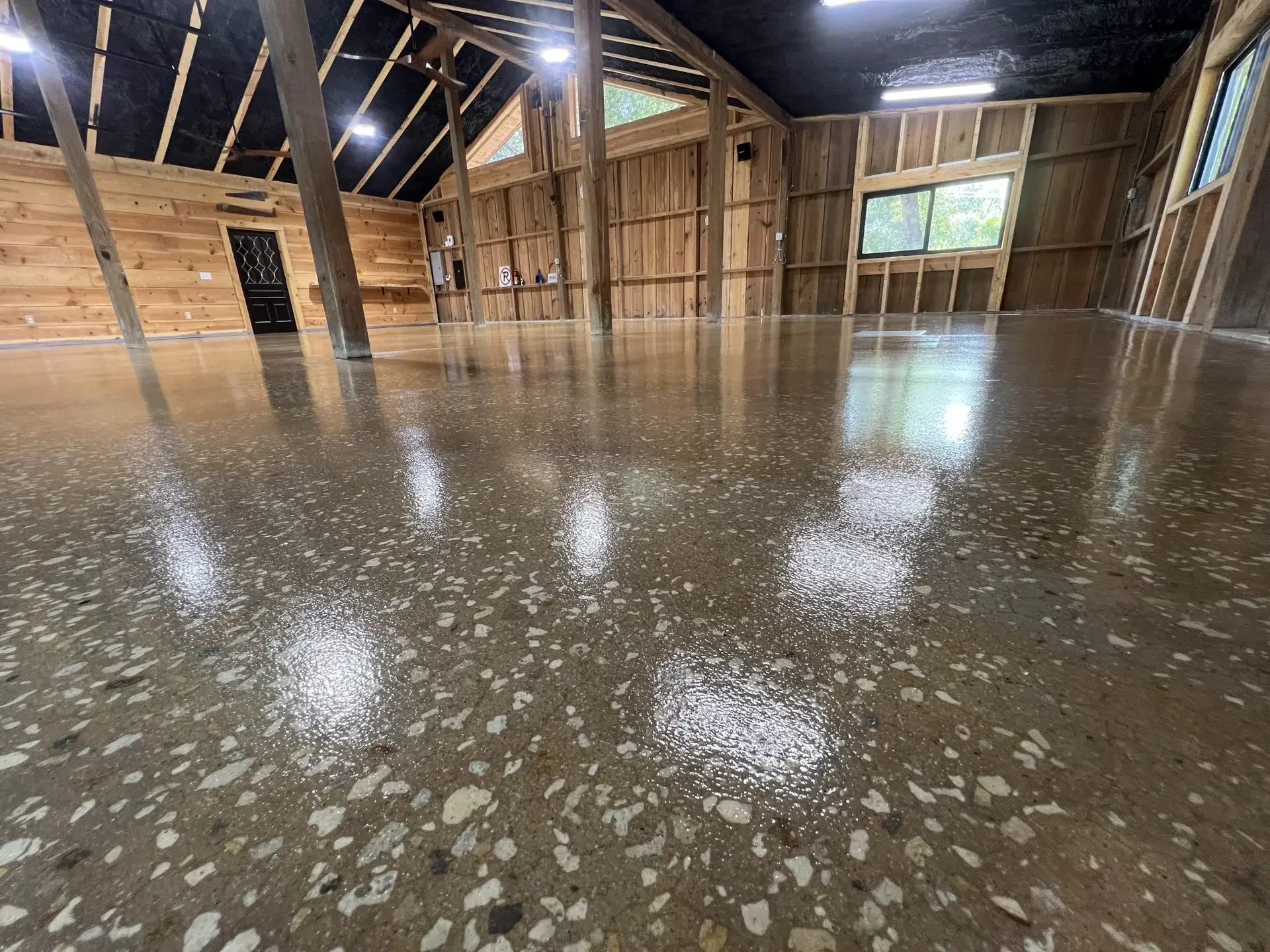
Sometimes the right answer is the concrete itself, ground, polished or sealed, with no thick coating on top.
We grind the slab itself to a sheen with no coating on top, for owners who like the honest look of concrete and want low upkeep.
Grinding on its own, taking off old coatings, glue, paint or high spots so the next floor, ours or a tile setter’s, has something sound to grab.
For driveways, stamped patios and walks that already look right and only need protecting from stains, sun and water.
We take the top off the slab to open up the stone underneath, then seal it glossy; people pick it for barns, porches and old floors with character.
Ten years later, Matt went hunting for the sealer
Becky M.’s stamped porch and back lanai were ten years old and faded when she called again. Matt wanted the same sealer he used the first time, and it was no longer sold around here. This is how she tells it.
Spartan Coatings did a great job resealing our stamped concrete front porch and back lanai surfaces. The original work was done 10 years ago and it was time to reseal. Both the front and back surfaces came out beautifully; the colors are vibrant again. A special thank you to owner Matt Casey, for going the extra mile and hunting down the appropriate sealer originally used when he installed the stamped concrete. The sealer was no longer available locally so Matt had to make several inquiries to track it down.
What sits under a Spartan floor, slab up
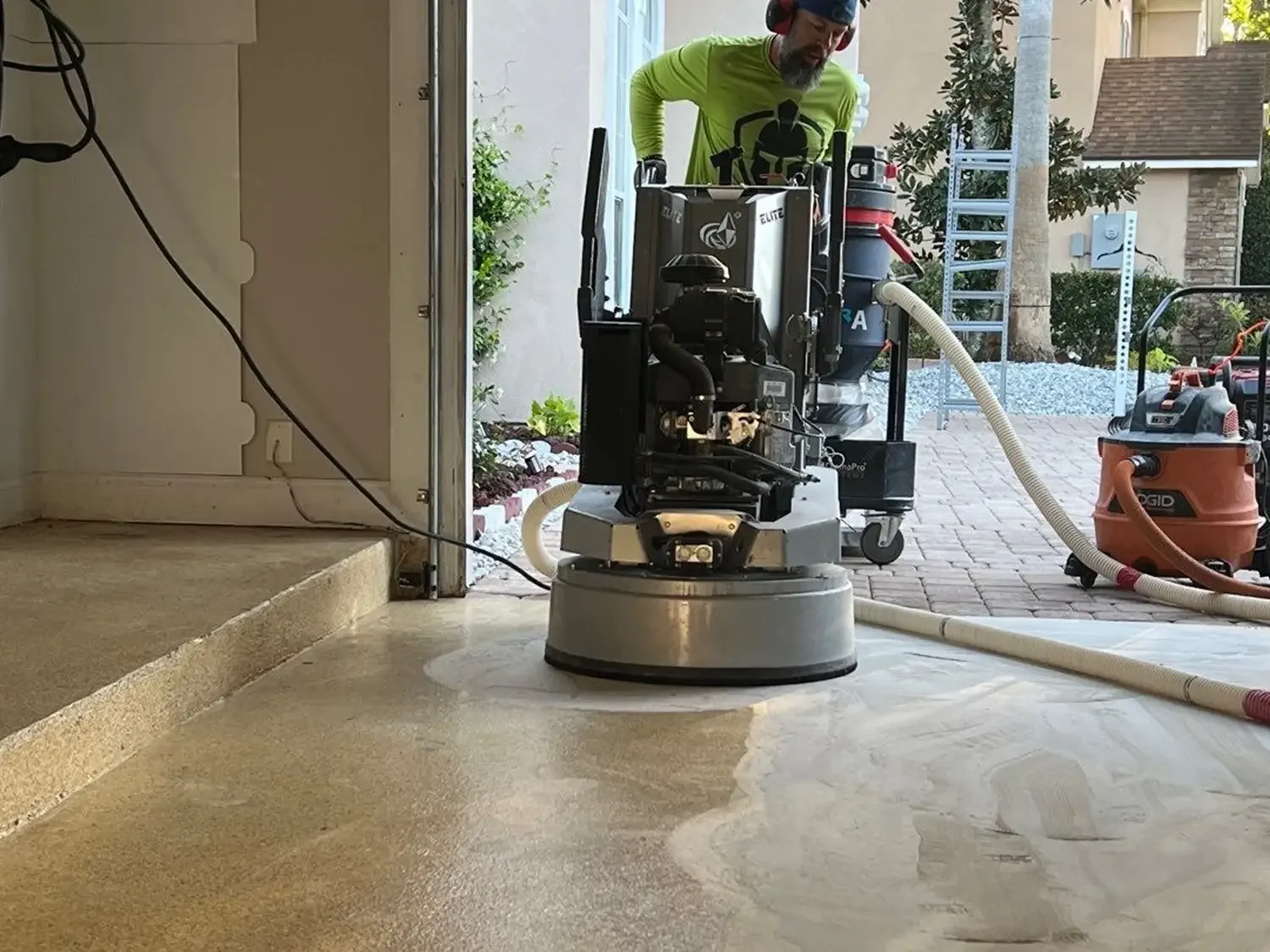
Whether a floor peels is decided underneath. Here is the order we build in, starting at the concrete.
Moisture test
Before anything else, we test the slab. Sandy soil and a high water table push vapor up through Florida concrete, and that vapor is what lifts coatings from underneath.
Diamond grind
We grind the surface with diamond tooling to open the concrete and pull out old sealers and stains. Acid etching is a shortcut. We grind.
Crack and spall repair
Cracks get chased out and filled and broken edges get rebuilt, so the floor goes down flat and nothing shows through later.
Base and primer
A primer soaks into the freshly ground slab for bond. Where the moisture test calls for it, a vapor barrier primer goes down first.
The look
This is where the color happens: a full flake broadcast, a solid coat, a metallic pour or a stain, depending on the system you picked.
Topcoat
A clear polyaspartic topcoat seals it all in and takes the wear, the UV and the hot tires. Then we walk the floor with you and go over care.
Matt Casey, still behind the grinder
Matt started in epoxy coatings in Louisville, Kentucky. He learned the trade the way most people in it do, on his knees behind a grinder, finding out which shortcuts come back to bite you. Most of them do.
He brought that to Florida and built Spartan Coatings, and the slabs down here taught him the rest: vapor coming up through the concrete, sun baking the lanai, sand in everything near the beach. Fifteen years into this trade, Matt is still on every job, from the moisture test to the final walkthrough. When you call, you get him.
Customers mention the crew by name too. Roberta G. wrote that "Dave and Ken kept their work area neat, from the initial step to the final coating." The people who call us usually care more about how the floor turns out than about the lowest number, and Matt gives them straight answers about what their slab needs.
How far the trailer goes
We’re based in St. Augustine and work outward: Jacksonville and the Beaches, Clay County across the river, Flagler down the coast and Putnam to the west.
St. Johns County
Close to home: historic St. Augustine, the beach towns on Anastasia Island, newer garages in Nocatee and World Golf Village, and the farm country around Hastings.
Duval County
Up the road in Jacksonville, from older bungalows along the St. Johns River to shops and warehouses, plus Jacksonville, Neptune and Atlantic Beach, where sand gets into everything.
Clay County
Over the river in Orange Park, Fleming Island, Green Cove Springs and Middleburg, where established neighborhoods sit beside planned communities like Oakleaf Plantation.
Flagler County
Down A1A to Palm Coast’s long runs of block homes on slab and the salt spray along Flagler Beach.
Putnam County
Over in Palatka and the river and lake towns, where homes, workshops and outbuildings sit close to the St. Johns and Crescent Lake.
Volusia County
The southern edge of our range, so Volusia jobs are taken case by case; call Matt and ask.
Before you call, people usually ask
How long does a garage floor take?
Many garage and patio jobs are finished in one day, from grinding through the topcoat. Metallic, quartz, urethane cement and industrial builds take longer. Matt will tell you the real schedule for your slab, including when you can park on it, before anything gets booked.
Why do you grind instead of acid etching?
Acid etching is faster and cheaper, and it leaves a weak, uneven surface that can still hold old sealer. Diamond grinding takes off the top layer, old coatings and stains and opens the concrete so the base coat can bite in. A floor that was only etched is one of the common reasons a coating lets go.
Can you coat over my old epoxy or paint?
Usually not as it sits. A coating that is peeling or poorly bonded gets ground off so the new system bonds to sound concrete. If the existing coat is tight and in good shape, there may be another way to handle it. Matt will tell you which after he sees it in person.
Will a coated pool deck or patio be slippery?
It doesn’t have to be. Outdoor and pool deck systems get texture built in through the broadcast and the topcoat, so wet feet have something to grip. How much texture is partly your call, since more grip takes a little more effort to clean.
Why don’t you list prices on the website?
Two garages the same size can need very different work. One slab grinds clean and tests dry. The next has cracks, spalls and moisture coming up through it. Matt looks at the slab, tests it and then gives you a straight number for that floor, with no pressure to sign anything that day.
Have Matt look at your slab
Call Matt at (904) 671-3930 and tell him about the floor and what’s wrong with it. He’ll come out, test the slab and tell you plainly what it needs.
Want to see more first? See all of Matt’s floors.