
Concrete Grinding, from Spartan Coatings in St. Augustine, FL
Concrete Grinding, the First Step Under Every Floor
Old coatings, carpet glue, thinset and paint come off, high spots come down, and the concrete opens up so the next floor has something to hold. The grinder runs into a vacuum the whole time.
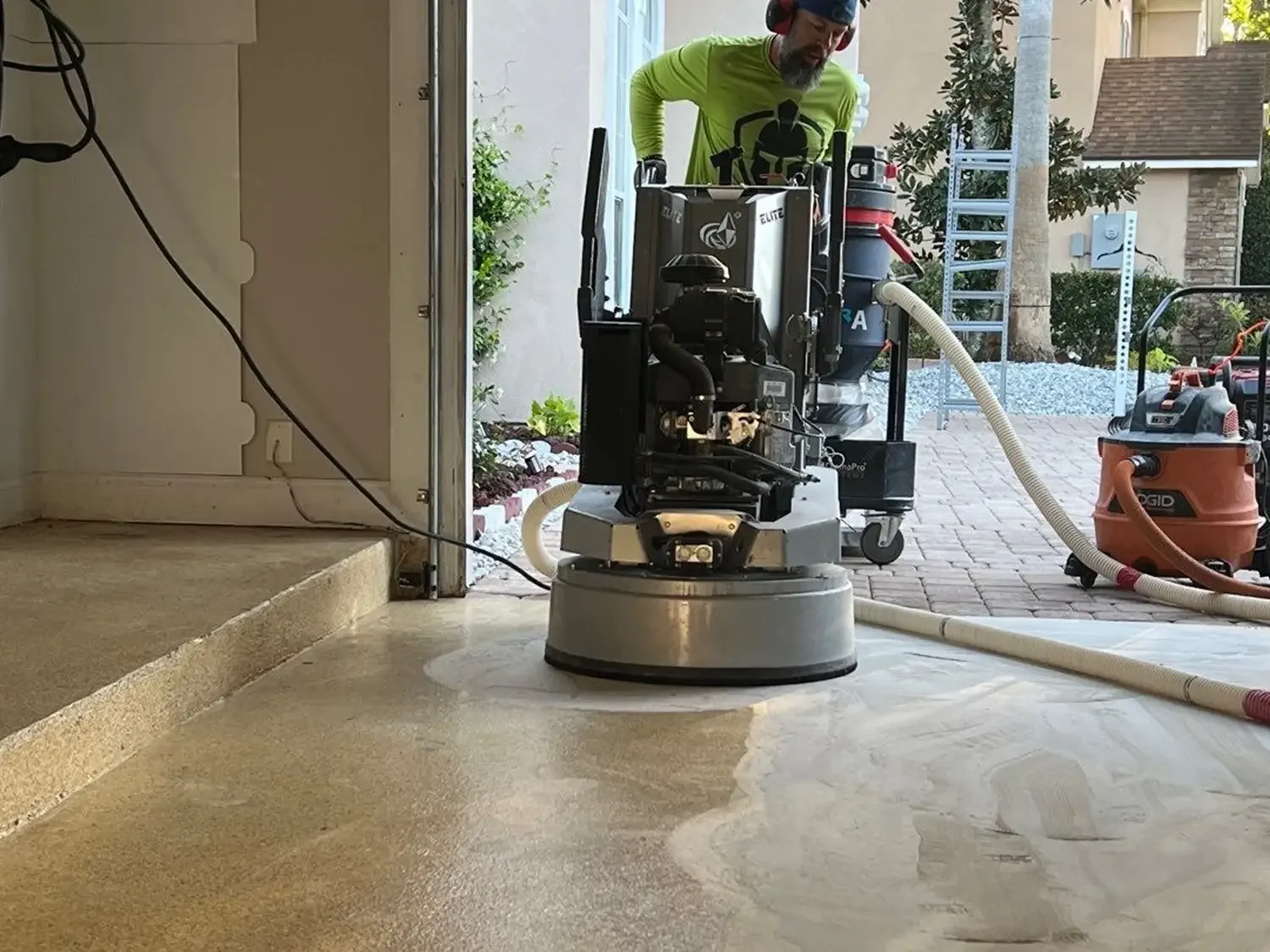
Every floor we put down starts with a diamond grinder. It is a heavy walk-behind machine with spinning heads, and the heads carry tooling studded with industrial diamonds. It shaves the top off a slab the way a sander takes the finish off a door. What it leaves behind is clean, open concrete with a little tooth to it, and that is the only surface an epoxy base coat, a sealer or a tile setter’s mortar can really grip.
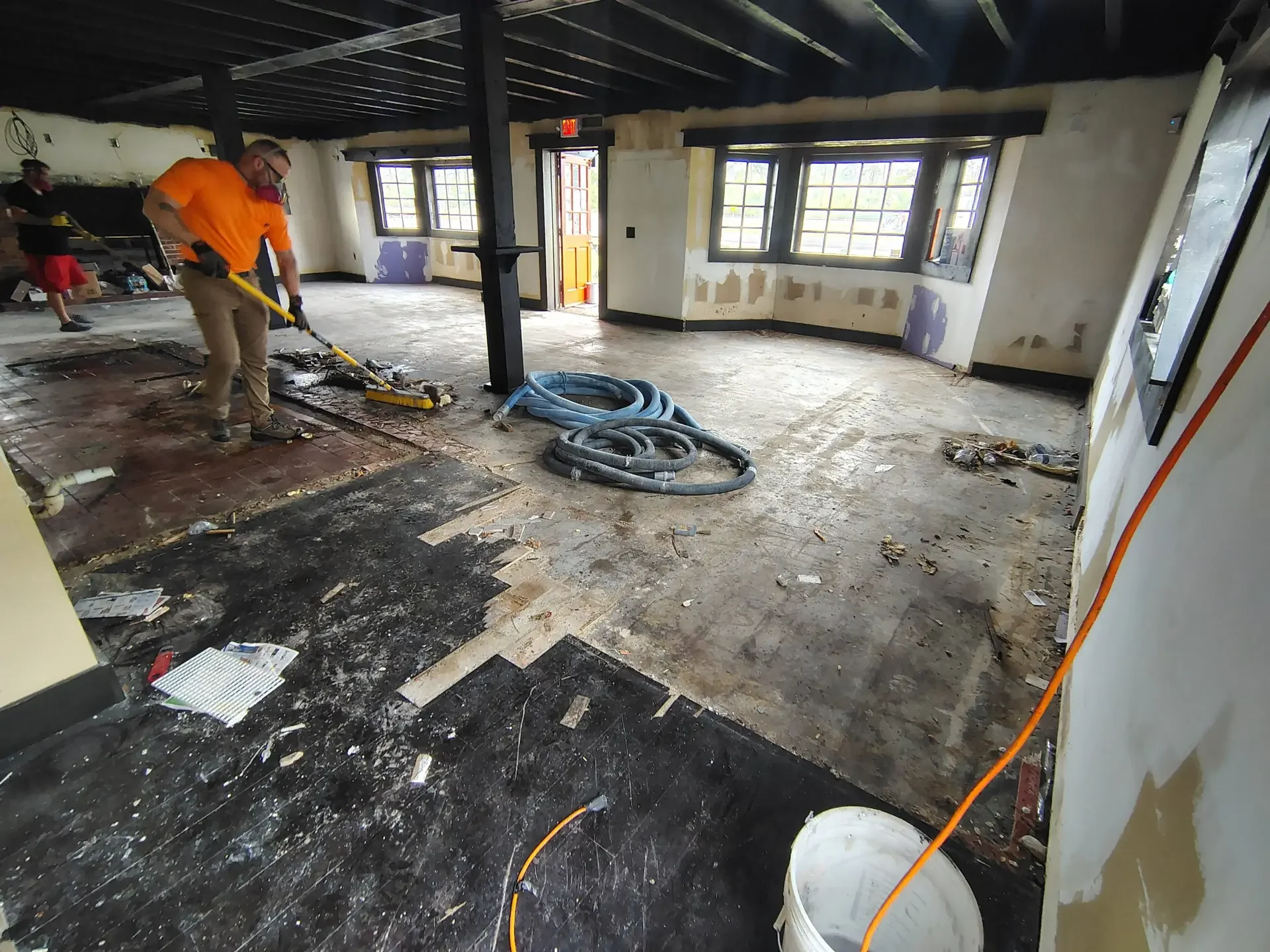
We also grind as a job by itself. Maybe you pulled up the old tile and the floor is covered in ridges of thinset. Maybe the carpet came out and left a black film of glue, or the last owner rolled paint across the garage and now it is peeling in sheets. Maybe you are putting down wood, vinyl or new tile and the installer told you the slab has to be bare and flat before he starts. Those are all grinding jobs, whether or not Spartan Coatings is the one coating the floor afterward.
Matt has spent 15 years in this trade and he is on every job, which matters more on a grind than anywhere else, because this is the step where a slab tells you what it has been hiding. If you want to know what is under your old floor and what it takes to get back to sound concrete, call Matt at (904) 671-3930.
Maybe you are putting down wood, vinyl or new tile and the installer told you the slab has to be bare and flat before he starts.
Grinding, acid or shot blasting, and what each leaves behind
There are three common ways to get a slab ready. Acid etching means pouring diluted acid on the floor, scrubbing it and rinsing it off. The acid only reacts with bare cement, so it does nothing to paint, sealer, glue or old epoxy, it bites unevenly, and it puts a lot of water into a slab right before you want that slab dry. Shot blasting fires small steel shot at the floor and vacuums it back up. It is quick on big open commercial floors, but it leaves a pebbled texture that can telegraph through a thin coating and it cannot reach the edges. Diamond grinding takes the surface down evenly, wall to wall, and lets us choose how aggressive to be one pass at a time. On the floors we do, the grinder is what comes off the trailer.
Grinding is not the answer to everything, and Matt will tell you when it is the wrong job. A slab that is crumbling, badly heaved or broken into pieces needs a concrete contractor, not a grinder. A floor with a real dip in it needs material added, because grinding only takes concrete away. And if you have a stamped porch or patio whose pattern and color you still like, grinding would erase it. That floor wants a good cleaning and a fresh sealer instead, which is a different service we also do.
From old floor to bare concrete, one pass at a time
Look and test
Matt checks what is stuck to the slab, how well it is bonded and how wet the concrete is underneath before deciding how to take it off.
Strip
Coarse diamonds go first and take the thick stuff: thinset ridges, carpet glue, peeling paint and failed epoxy or sealer. Some of it scrapes up before the grinder ever touches it.
Flatten
Lips along cracks and saw cuts get ground down, and high spots get taken back so the floor reads as one plane under a straightedge.
Edges
The big machine cannot reach the last few inches at a wall, so a smaller grinder works the edges, the corners and around door frames.
Repair and clean
Cracks and spalls are filled and ground flush, then the whole floor is vacuumed until it is ready for a coating, a sealer or another trade’s floor.
Why grinding matters more on a Florida slab
Most houses around here are block on slab, poured over sand, and plenty of them had tile set straight onto that slab with thinset. When the tile comes up, the thinset stays behind in hard ridges, sometimes with an older layer of adhesive underneath it from a floor before that. Garages and pool decks tend to carry their own history: a can of paint somebody rolled on, a box kit that has started to lift, a sealer that went cloudy. All of it has to come off, because nothing new bonds properly to an old coating that is already letting go.
Moisture is the other reason. Vapor coming up through a slab is a leading cause of coatings that bubble and peel here, and a freshly ground slab is wide open. That is why the moisture test happens before the grind and why damp patches that show up as the dust comes off get a second look. Near the beaches, sand and salt get worked into old sealers and have to be ground out, not washed out. On new construction, the slab needs time to cure before it gets ground and coated, and Matt will tell you if yours is not there yet.
When the tile comes up, the thinset stays behind in hard ridges, sometimes with an older layer of adhesive underneath it from a floor before that.
What a bare slab tells you, and what to do with it
Once the old floor is gone, the concrete stops keeping secrets. You see the cracks that were hiding under the tile, patches from old plumbing work, the outline where a wall once stood, oil that soaked in years ago and the shadow of a moisture problem. Matt walks you through what turned up before anything new goes down, so the plan is built on the slab you really have instead of the one you hoped for.
If we are handing the floor to another installer, keep it covered and clean until he starts. Ground concrete is thirsty and will soak up a spilled soda, a drip of oil or muddy water the same afternoon. Sweep it instead of mopping it, keep the dog and the moving boxes off it where you can, and do not let it sit open for weeks. If the next step is ours, there is nothing to babysit, since the next coat goes down right behind the grinder.
Want to see finished floors before you decide? See all of Matt’s floors.
Next to concrete grinding on the list
Matt puts this down across all six counties we cover, including DeLand, Hastings, Orange Park and Palm Coast. Most jobs start with a look at the slab, then a choice between systems like these.
We grind the slab itself to a sheen with no coating on top, for owners who like the honest look of concrete and want low upkeep.
For driveways, stamped patios and walks that already look right and only need protecting from stains, sun and water.
We take the top off the slab to open up the stone underneath, then seal it glossy; people pick it for barns, porches and old floors with character.
A full broadcast of colored chips into the base coat; the blend hides dust and sand, which is why homeowners near the beach ask for it first.
Questions people ask about concrete grinding
How much dust does grinding make inside a house?
Far less than people expect. Our grinder runs hooked to a dust vacuum, so most of what the diamonds take off goes straight into the vac instead of into the air or onto your furniture in the next room. A grinder is loud, though, so most people find somewhere else to be for that part of the day.
Can you get the thinset off after we pull up our old tile?
Yes, and it is a good reason to call before you rent a scraper. You can pull the tile yourself or leave it for us. The thinset ridges and any old adhesive under them come off with coarse diamonds, then finer passes leave the slab flat and clean. Pulling tile often uncovers cracks, and Matt points those out before the next floor goes down.
Will you grind a slab if someone else is putting down the new floor?
Sure. A wood, vinyl or tile installer needs bare, flat, sound concrete, and grinding is how a slab gets there. Tell us what is going down next so we can leave the right surface for it. Matt is glad to talk with your installer about how flat the floor needs to be before we wrap up and pack the grinder.
Can grinding make an uneven floor flat?
It can take care of high spots, lips at cracks and the step where two pours meet, because those are concrete that can be ground away. It cannot raise a low spot. A dip or a sag needs a leveling material added on top. Matt checks the floor with a straightedge and tells you which kind of uneven you have before anything starts.
How much concrete does grinding take off?
As little as gets the job done. On a clean garage slab it is a skim that opens the surface. Where a high spot or an old ridge of thinset sits, we take more in that area alone. Grinding does not weaken a sound slab. It removes the weak, dusty top layer and whatever was glued to it.
Is grinding worth doing on a floor I plan to leave bare?
It can be. A slab ground past the surface starts to show the stone inside it, and sealed, that look suits barns, porches and older floors with character. Grinding further and refining it gives you polished concrete. Both start with the same machine, so tell Matt whether you want to cover the concrete or show it off.
Show Matt your floor
Tell Matt what the room has to handle. He will come out, test the slab and tell you straight whether concrete grinding is the right call.
Want to see more first? See all of Matt’s floors.