
St. Augustine, FL, in St. Johns County
St. Augustine Is Home Base for Every Spartan Floor
Matt runs Spartan Coatings out of the oldest city in the country, so a slab here, whether it is a downtown porch or a garage off SR-16, is never a long trip for the trailer.
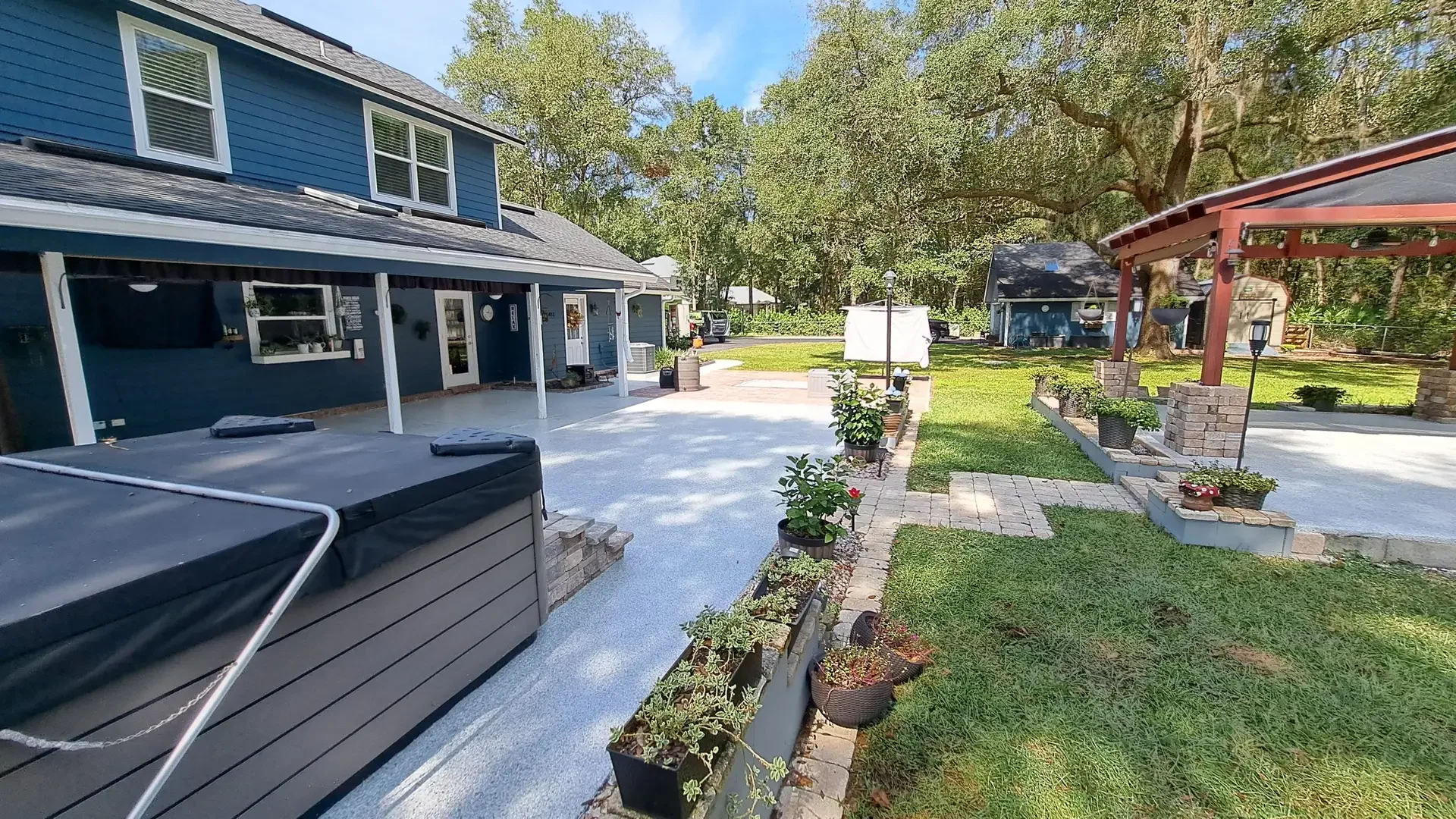
What a hometown slab puts up with
St. Augustine is where Spartan Coatings is based, and it is the oldest city in the United States. Walk the historic district and you see coquina walls and old masonry that have outlasted almost everything built around them. The concrete in town is a lot younger, and that is the part we work on: garage slabs, porches, lanais and the floors inside block homes.
The city does not hold one kind of house. Older homes sit close to downtown. Mid-century block ranches fill the neighborhoods past them, and newer subdivisions keep going up off SR-16 and US-1. That spread means one week of work in town can take us from a slab that has been painted over and over to one a builder poured recently, and the two need very different prep before a coating goes anywhere near them.
On the east side, the Matanzas River puts salt in the air, and the whole city sits on sandy soil with water not far below. So whatever the age of the slab, Matt tests it for moisture before anything else gets decided. A floor that peels in its second summer usually had vapor coming up through it that nobody bothered to check, and we would rather find that out with a test than with a callback.
Which floor people in town usually ask about first
Near downtown, the questions tend to be about the outside: a front porch or a back lanai that has been sealed, painted or stained by owners before you, and now looks tired and blotchy. Those slabs often carry patches and old repairs, and grinding is how we find out what is really under the layers before anyone picks a color.
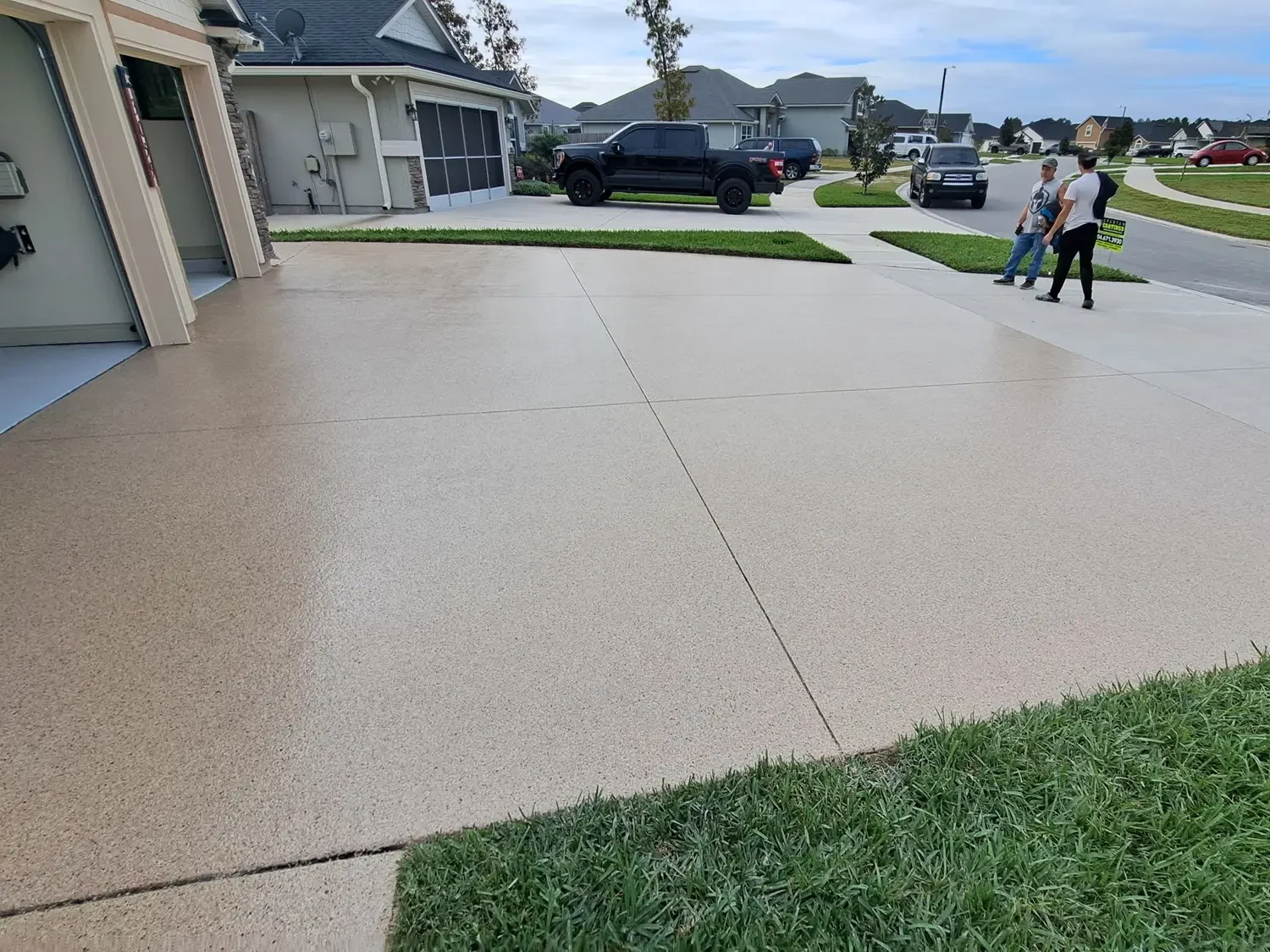
In the block ranches and the newer neighborhoods, the garage usually comes first. Bare concrete there dusts, soaks up oil and stains under the tires. Once the garage is done, people start asking about the inside of the house, where a slab under old tile or carpet could become the finished floor in a living room or hallway, in metallic or a single solid color.
Those slabs often carry patches and old repairs, and grinding is how we find out what is really under the layers before anyone picks a color.
Where we would start in town
What Matt reaches for most on St. Augustine slabs, and why. See all of Matt’s floors.
Plenty of older porches and lanais around town only need the right sealer put back on. Matching it to whatever was used before matters, because the wrong sealer over the old one can cloud or peel.
When tile or carpet comes up in a mid-century block ranch, the slab underneath can take a metallic pour. Indoors, it stays clear of the sun that wears on any outdoor coating.
Garages in the subdivisions off SR-16 and US-1 are mostly bare builder slabs. A flake system over a ground surface gives them a floor that sweeps clean and stands up to hot tires.
In the older neighborhoods, layers of paint and sealer have to come off before any new system goes down. Diamond grinding takes them back to sound concrete without the weak surface acid etching leaves.
Patios on the east side, toward the Matanzas, see salt and full sun, so they get a UV-stable topcoat and enough texture for wet feet after an afternoon storm.
Calling a company that is already in town
Because we are based in St. Augustine, getting to your house is never a long trip, and that makes it easy for Matt to come look before you decide anything. He walks the floor, tests the slab for moisture, checks cracks, edges and old coatings, and asks how you actually use the space. Then he tells you which system fits, why, and what the job involves from grinding to topcoat.
Being close helps on the schedule too. Outdoor work depends on the weather that week, and when an afternoon storm rolls through, it is simple for us to move a patio by a day and come back. Many garage and patio jobs finish in one day, while metallic takes longer, and you will know which yours is before it is booked. Have Matt look at your slab, or call Matt at (904) 671-3930.
Or email spartancoatingsfl@gmail.com with the town and a photo of the floor.
Matt answers this phone himself
Based in St. Augustine, FL, working in St. Augustine.
Finished floors first? See all of Matt’s floors.
Other St. Johns County towns on our route
Down toward Matanzas Inlet the beach houses are quiet, but any outdoor coating still spends its life in full sun and salt air.
Big lots southwest of Hastings leave room for outbuildings, and a workshop floor out here has to shrug off dropped tools and whatever comes in on the mower.
Near Julington Creek on the St. Johns River, these settled neighborhoods have plenty of garages that have sat as bare concrete for years.
With raised houses, pools and outdoor showers near the pier, the slabs that matter most here are the ones that are wet half the time.
West of I-95 at SR-16, the golf-course neighborhoods date from the late 1990s on, and three-car garages over younger slabs are the norm.
Long known for potatoes, Hastings has barns, workshops and equipment sheds whose slabs carry tractors and dirt instead of a family car.
Everything in the county: St. Johns County.
Questions from St. Augustine
You’re based in St. Augustine. Does that change anything for my job?
Mostly it makes things easier. Matt can come see the slab without it turning into a big trip, and if a storm pushes an outdoor job back, rescheduling is simple. After the floor is finished, getting back out to answer a question or look at something is easy too. The work itself follows the same careful process we use on every slab.
Can you put epoxy on coquina or the old masonry around our house?
No. Our systems are built for concrete, and coquina and historic masonry are different materials that need a different kind of care. What we can do is the concrete next to them: the porch slab, the walkway, the garage. Matt will be straight with you about where our work stops and where you should call someone who specializes in old masonry.
We pulled up old tile in our block ranch. Can the slab underneath become the floor?
Often, yes. The thinset and adhesive get ground off, cracks and holes get filled, and the slab gets a moisture test, since an interior floor on slab still sits over Florida groundwater. From there it can go metallic, solid color or polished, depending on what the concrete looks like once it is clean. Matt will tell you which suits it.
Our garage in a newer subdivision off SR-16 looks fine bare. Why coat it?
Bare concrete is porous. Oil, coolant and leaf stains soak in and stay, and the surface slowly turns to dust under your feet. A coating seals it, cleans with a mop and holds up to hot tires when it goes down over a ground slab. If you like the plain concrete look, a grind and seal keeps it close to bare.
Our sealed porch has gone dull and blotchy. Does it need a full coating?
Not always. If the concrete underneath is sound, cleaning it and resealing can bring the color back. The catch is using a sealer that gets along with what is already there, because the wrong one can cloud or lift. Matt will look at it, work out what was used before and tell you honestly whether a reseal is enough.