
Palm Coast, FL, in Flagler County
Palm Coast’s Block Homes, Garage Door to Canal Edge
Palm Coast was laid out in long, even rows, so the garages look alike from the street. The real differences are in the slab under each one, and on the canal side out back.
A city drawn up in the 1970s
Palm Coast did not grow the way older Florida towns did. It is Flagler County’s largest city, planned from the 1970s and built out in long runs of block homes sitting on concrete slabs. Drive a few streets and the pattern is easy to read: a garage facing the road, a front walk, a screened lanai out back. For us that sameness is useful. Matt has a good idea what he will find before the garage door goes up.
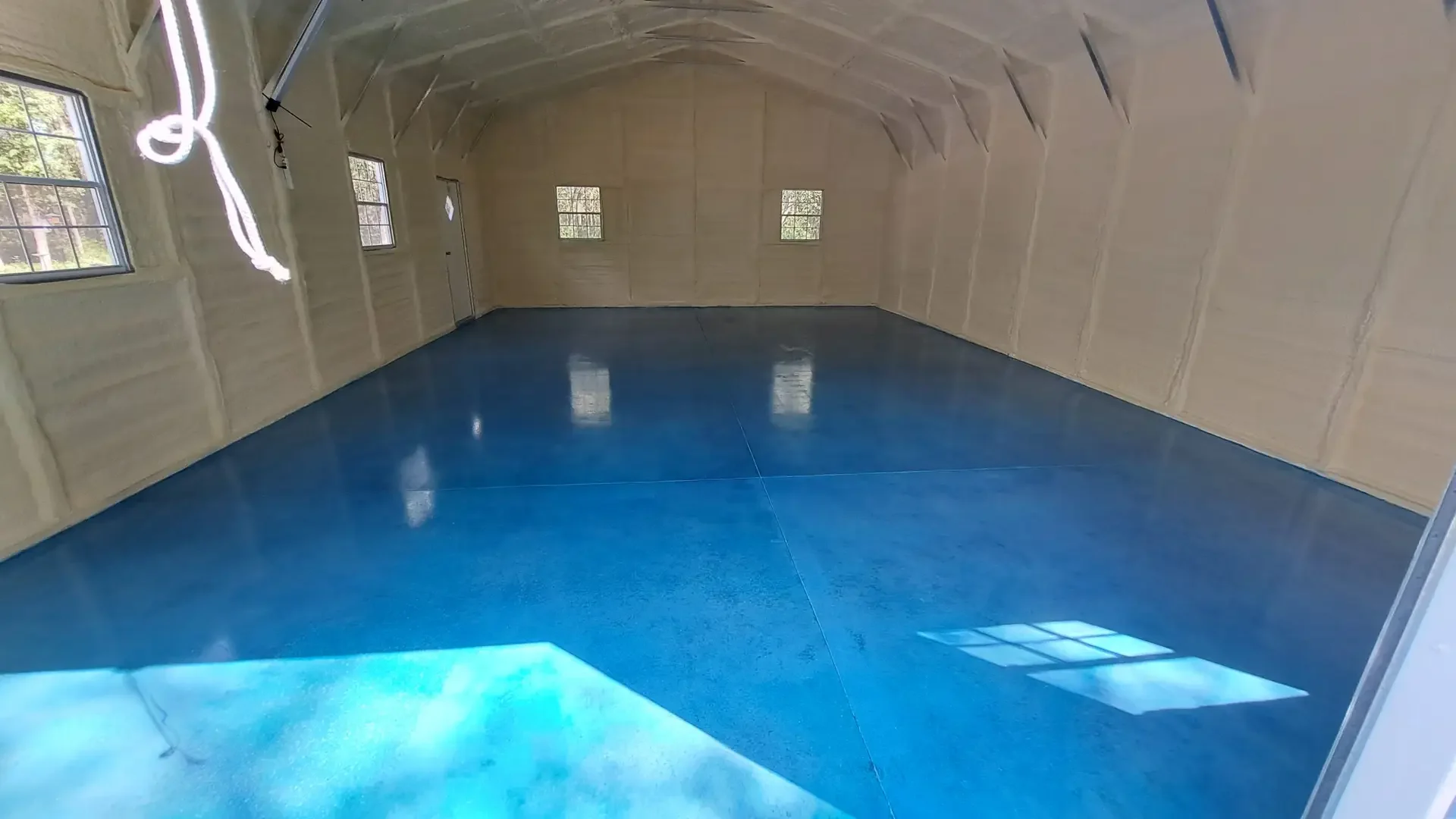
The slabs are not all the same age, though. A city that has been building since the 1970s has garages poured years and even decades apart, and an older one may carry a coat of paint, a worn sealer or a garage kit that has started to let go. All of that has to come off. We diamond-grind every slab down to clean, open concrete, because a new coating is only as good as what it is stuck to.
Then there are the canals. Some sections of Palm Coast back onto saltwater canals, which puts a patio, a lanai or a pool deck right beside salt water. Those floors spend much of their life damp, with salt drying on them and the sun hammering down once the afternoon storm passes. A system that does fine in a garage can struggle out there, so the canal side of a house usually gets a different build than the front.
One house plan, three very different floors
On a typical Palm Coast block home, people ask about three slabs. The garage comes first, usually because the bare concrete has gone stained and dusty and gets tracked into the house. The lanai is next, often a plain gray slab under a screen cage that never looked finished. On a canal lot the pool deck or the patio by the water comes third, and that one gets the hardest questions, about heat underfoot and grip when it is wet.
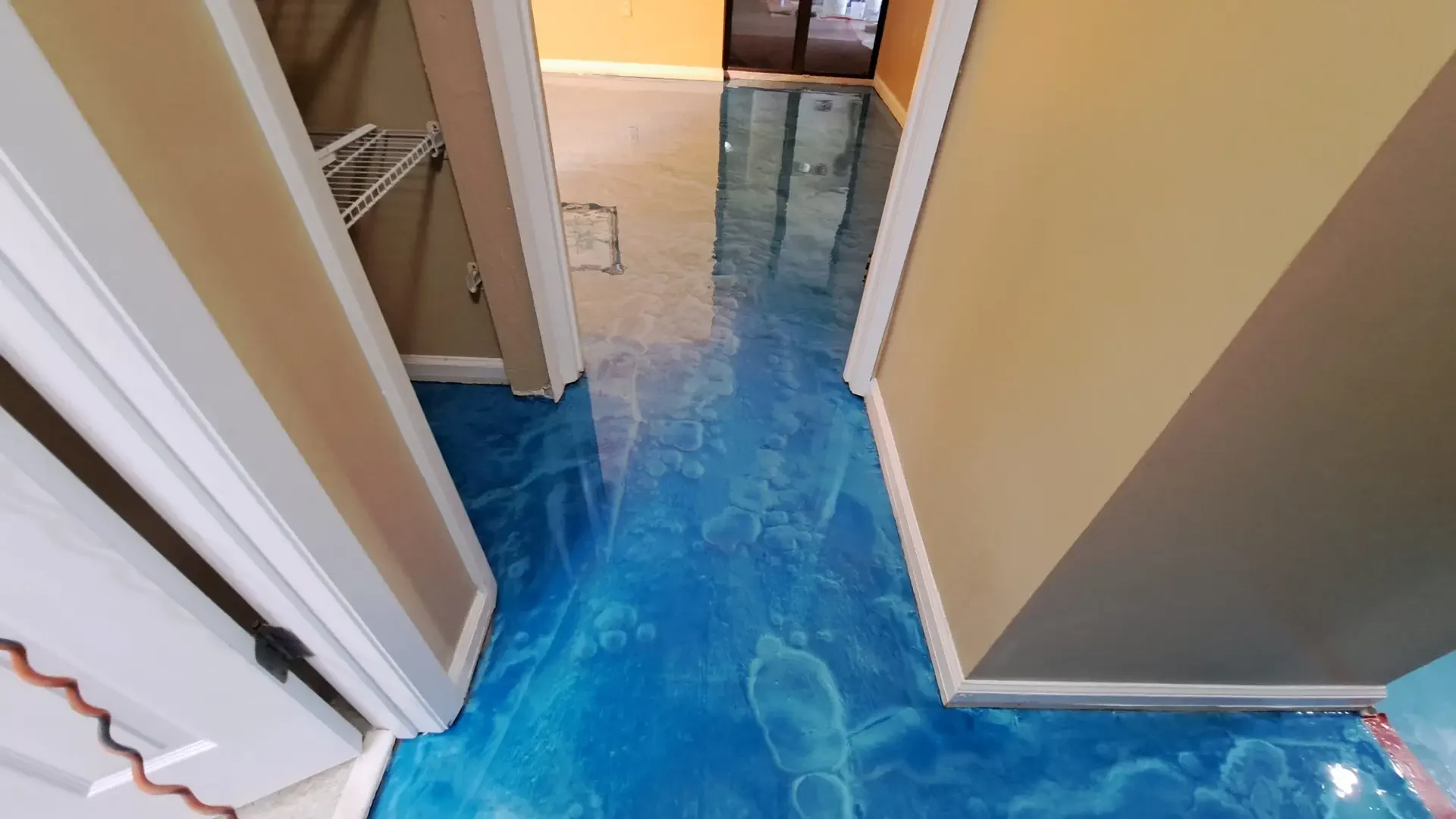
Inside, some owners pull up old carpet or tile and ask whether the slab underneath can become the floor. Often it can. Others are weighing pavers for the back. Pavers are a different surface with their own trade-offs, and Matt will talk it through with you, including when coating the concrete you already have makes more sense and when it doesn’t.
Inside, some owners pull up old carpet or tile and ask whether the slab underneath can become the floor.
Matching a system to each side of the house
What Matt reaches for most on Palm Coast slabs, and why. See all of Matt’s floors.
The front garage takes the cars, the tools and hot tires straight off the road. A full system, ground, primed and topcoated, stands up to that where a hardware-store kit peels.
A screened lanai on a bare slab is the easiest upgrade on most of these houses. Sun still comes through the screen, so it gets a UV-stable topcoat that holds its color.
Pool decks behind canal homes stay wet and salty. They get a textured build that grips bare feet and shrugs off chlorine splash.
On the older garages the first job is getting the old paint or failed kit off. Grinding takes it down to sound concrete and shows what we are really working with.
Where carpet comes up inside, a metallic floor can turn a plain slab into the best-looking floor in the house. It takes more than a day, and it is worth the wait.
What Matt looks at before anyone picks a color
Palm Coast is down the road from St. Augustine, and Matt makes the trip himself. He starts in the garage with a moisture test, since vapor coming up through a slab is a leading reason coatings peel in Florida. Then he checks the cracks, the spalls and the lip at the garage door, and he tells you up front if an old coating has to come off first. On a canal lot he walks out back and watches how the patio or pool deck sheds water.
You leave with a straight answer on which system goes on which slab and how the days fall. Many garage and patio jobs here wrap up in one day. A metallic interior never does. Have Matt look at your slab, or call Matt at (904) 671-3930.
Or email spartancoatingsfl@gmail.com with the town and a photo of the floor.
Matt answers this phone himself
Based in St. Augustine, FL, working in Palm Coast.
Finished floors first? See all of Matt’s floors.
Other Flagler County towns on our route
Home since 1938 to the oceanarium at the Flagler and St. Johns line, Marineland is a tiny coastal town where wind-blown sand and salt are part of every floor’s day.
This tiny town sits right on A1A north of Flagler Beach, close enough to the ocean that sand is the first thing any floor has to handle.
Inland and quieter, the county seat trades salt spray for the usual Florida problem: moisture vapor rising through a garage slab.
Salt spray off the ocean by the pier reaches every outdoor slab in town, so an exterior coating here needs a UV-stable topcoat and real texture underfoot.
Everything in the county: Flagler County.
Questions from Palm Coast
Every garage on our street looks the same. How do we make ours stand out?
Color and texture do most of the work. Flake comes in gray, blue, dark and tan blends, and the size of the chip changes the look more than people expect. A solid color reads clean and sharp, close to a shop floor. Metallic brings movement and depth. Matt can show you what each one looks like before you decide anything.
Do the garage, the lanai and the pool deck all get the same system?
Usually not. The garage has to handle tires, oil and dropped tools. The lanai needs a topcoat that holds its color in the sun. The pool deck needs grip when it is wet and has to live with chlorine. They can still look like they belong together with related colors, but each slab gets the build that suits the work it does.
Our patio runs right up to the canal. Does the coating go all the way to the edge?
It goes to the edge of the concrete patio and finishes in a clean line. Where the patio meets the canal wall there is often a joint that moves a little, and we treat that joint so the coating does not crack along it. The coating protects the patio only. If Matt sees something at the canal wall that should be looked at first, he will tell you.
Can you coat the lanai while we keep using the pool?
The lanai has to be empty while the system goes down and cures, so plan on staying off it for that stretch. The pool can stay filled. Keep the kids and the dog inside, keep the screen doors shut so leaves and pollen stay out of the wet coating, and Matt will tell you when it is safe to walk on and when the furniture can go back.
We want a metallic floor inside, and the slab runs through several rooms. Can it go room to room?
Yes. Metallic is poured, so it can run through doorways from one room into the next, which is a big part of why it looks so good in a house. The rooms have to be cleared, and the floor takes several days from grinding to topcoat. Every room will look a little different, since the movement in a metallic floor never repeats.