
Atlantic Beach, FL, in Duval County
Atlantic Beach cottages and the newer houses beside them
At the north end of the Beaches near Mayport, older beach cottages stand alongside newer homes. Their slabs need different work, so Matt finds out which kind you have before anything else.
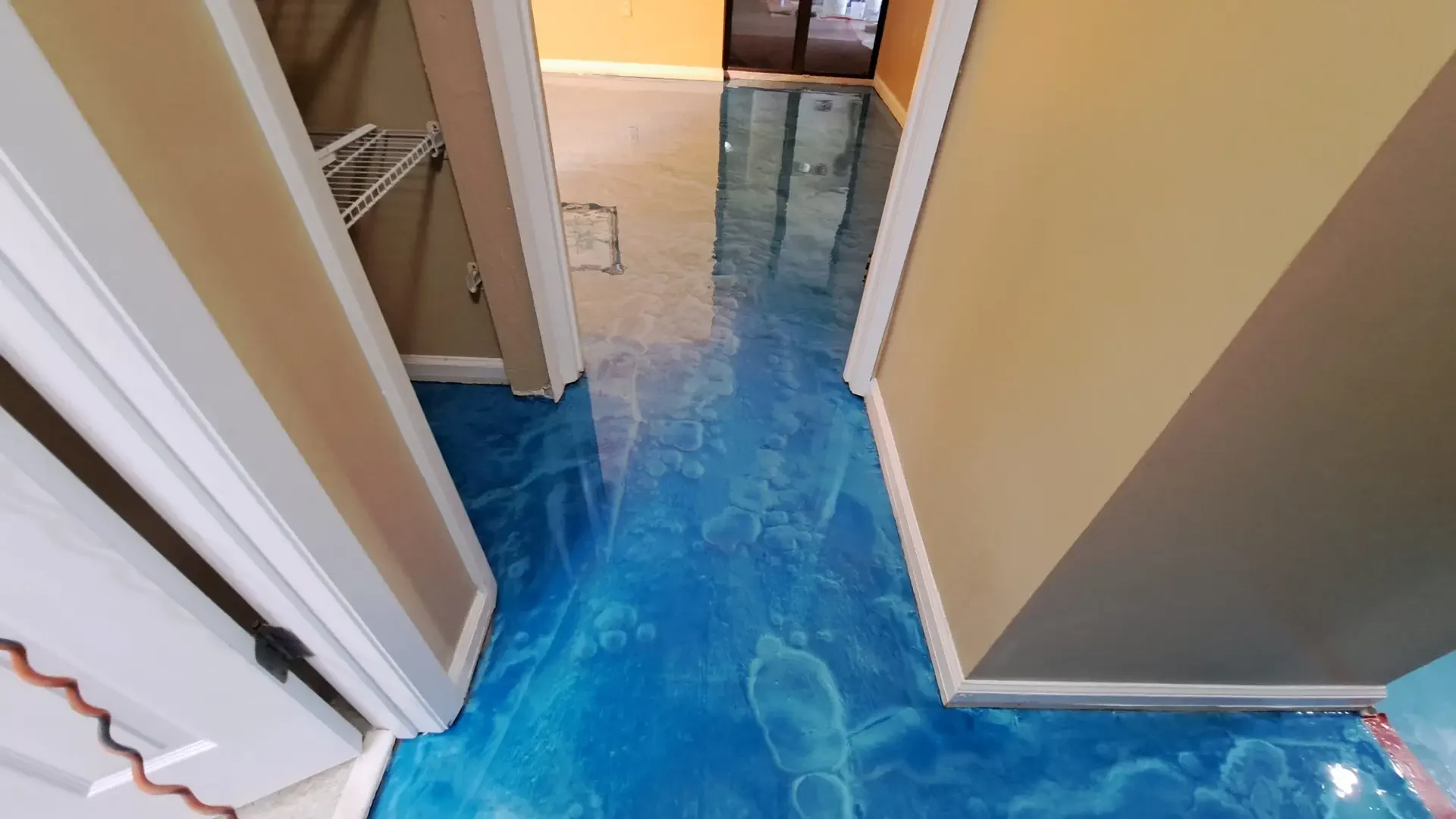
Up toward Mayport, where the Beaches end
Atlantic Beach is the northernmost of the three Beaches cities, up near Mayport, and its streets mix older beach cottages with newer homes. That mix is the whole story for a floor. An old cottage slab has had decades of salt air, patching and paint. A newer one may be clean and gray, or still giving off moisture from the pour.
Near the ocean, bare concrete takes a beating. Salt air works into it and wind-blown sand scours it. The sun bakes every exterior slab most of the day. Sand piles up against garage doors and blows across lanais, and anything left sitting on a bare porch for a season leaves its mark. On an older porch the damage shows up first along the edges and steps, which take the most weather and the most feet.
Underneath, the ground is the same sand and high water table found all along the coast, and moisture vapor coming up through a slab is a leading cause of peeling. Old or new, every slab here gets a moisture test and a diamond grind before we pick a system, and outdoor work gets scheduled around the afternoon storms.
Cottage floors, and the newer garages next door
Cottage owners usually ask about the front porch first, then the slab inside: a floor that has been under old tile, carpet or linoleum for years that they want to keep as the floor. They want something that suits the age of the house. A high-gloss metallic can look out of place in a cottage, and a stained or ground-and-sealed slab often looks like it has always been there.
Owners of the newer houses ask for different things. A two-car garage that should look as finished as the kitchen, a lanai behind the pool cage, sometimes a pool deck. Those are flake and pool deck jobs, built for hot tires and wet feet, and the slab is often young enough that its cure time is the first question.
A two-car garage that should look as finished as the kitchen, a lanai behind the pool cage, sometimes a pool deck.
Sorted by the age of the house
What Matt reaches for most on Atlantic Beach slabs, and why. See all of Matt’s floors.
A cottage porch gets ground to bare concrete, its chipped edges and steps repaired, then a UV-stable textured system that stands up to salt air off the ocean.
Where a cottage owner wants the old concrete to keep its character, a stain and seal adds soft color and slows salt and grime from soaking in.
The slab inside a cottage, once the old flooring and its glue are ground off, can take a solid color epoxy that mops clean and shrugs off sand from the beach.
A newer home’s garage gets a full flake system over a ground slab, thick enough for hot tires and in a blend that hides the sand blown in under the door.
Where a newer house has a pool, the deck gets texture for wet feet and a light color that stays cooler underfoot.
Reading the slab before anything gets picked
Matt comes up the road from St. Augustine and starts with the age of the slab, because it changes everything after. On an old cottage he looks for paint and patches that have to come off, cracks that are still moving and edges where the concrete is coming apart. On a newer house he asks when it was poured and what the builder put on it. Both get a moisture test.
Then you hear which system goes where, what the prep involves and how many days the job takes. Many patio and garage jobs finish in one day. Older slabs can take more prep than people expect, and he tells you that up front. If a slab isn’t ready, he says so. Have Matt look at your slab, or call Matt at (904) 671-3930.
Or email spartancoatingsfl@gmail.com with the town and a photo of the floor.
Matt answers this phone himself
Based in St. Augustine, FL, working in Atlantic Beach.
Finished floors first? See all of Matt’s floors.
Other Duval County towns on our route
Homes sit a few blocks from the restaurants and bars along the busy strip by the pier, and both kinds of floor deal with sand, salt and wet feet coming in off the beach.
Everything in the county: Duval County.
Questions from Atlantic Beach
Pieces are popping off the edge of our cottage porch, and there’s rust in the holes. What is that?
Usually steel inside the concrete. Salt and moisture reach the rebar or mesh over the years, it rusts and swells, and the swelling pops the concrete off above it. We remove the loose concrete and repair the spall before any coating. If the steel is badly rusted or the damage runs across the whole porch, that is a concrete repair job first, and Matt will tell you so.
Our screened porch has its framing sitting right on the slab. Can you coat around it?
Yes. We grind and coat up to the framing, with the edges finished by hand so the line is clean. Where rain blows in and sits against the bottom of the frame, Matt looks at how the porch drains first, so the finished floor sheds water away from that edge. Screens and frames get covered while we work.
Should the gap between our pool coping and the deck be coated over?
No. That joint is there so the deck and the pool can move a little on their own. Coat over it and the coating cracks in a straight line along the coping. We stop the system at the joint and leave it to a flexible sealant, which can be replaced on its own when it wears out.
Our cottage’s little garage is the workshop and the laundry room. Can one floor handle both?
Yes. A solid color or flake system takes tools and a workbench, and a leaking washer just puts water on top of the floor where you can mop it up. The washer and dryer have to come out so we can coat underneath them, and any hookups along the wall stay protected while we work. Tell Matt if you use solvents at the bench.
Our dog spends half the day in the garage. Will claws scratch the new floor?
Claws leave fine marks on any glossy surface. A flake floor hides them well, and a dark, solid high-gloss color shows the most. Texture in the topcoat also helps a dog keep its footing on turns. Accidents and water bowl spills wipe up without soaking in, which bare concrete can’t promise.