
Jacksonville, FL, in Duval County
Jacksonville has every kind of slab. Which one is yours?
One city line holds bungalow porches and warehouse aisles. Matt comes up the road from St. Augustine and works out which floor you have before he talks systems.
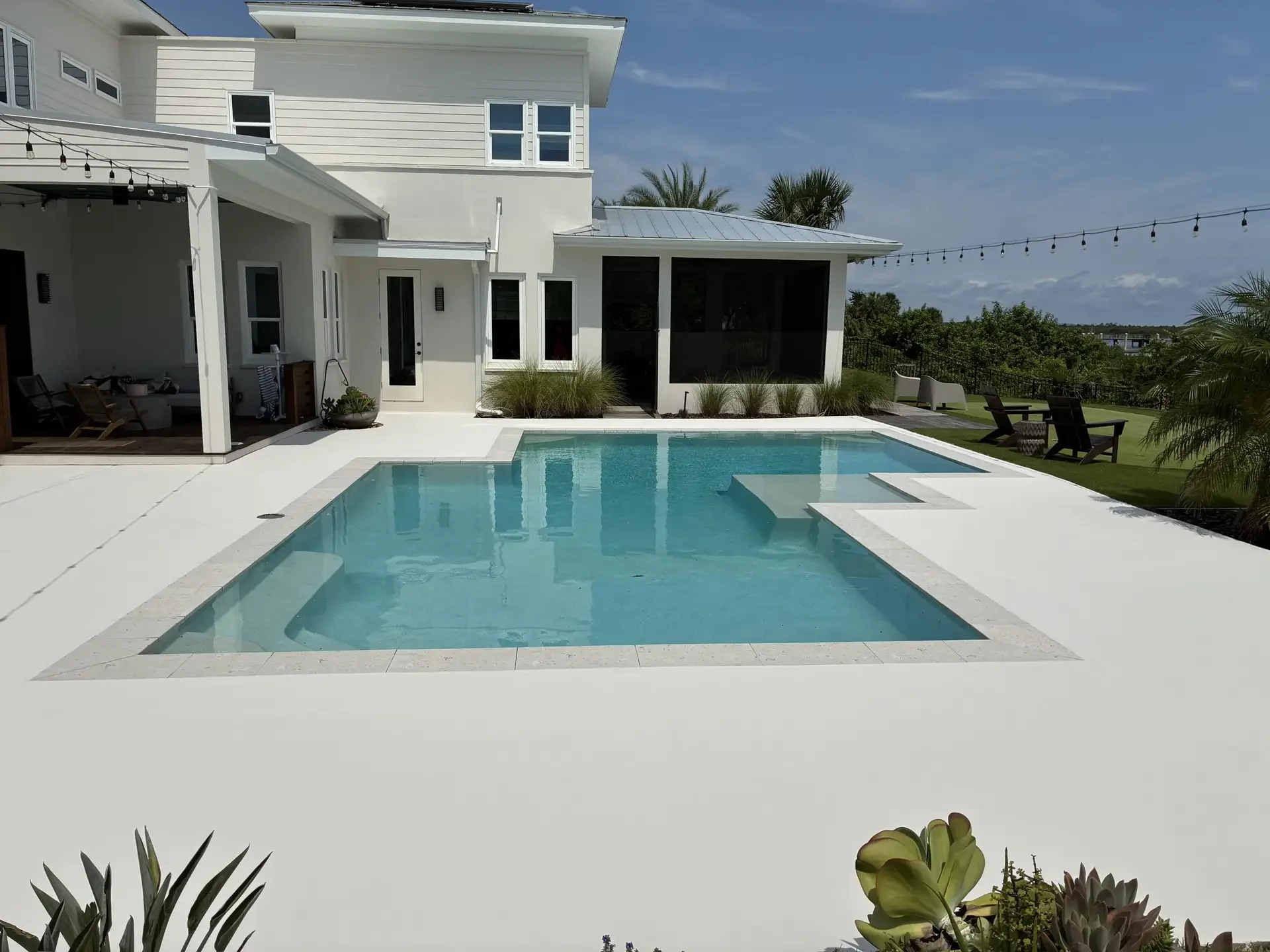
More land than any city in the continental US
Jacksonville and Duval County run as one government, which makes Jacksonville the largest city by land area in the continental US. For a floor company, all that ground means variety. Inside the city line sit bungalow porches with paint flaking at the edges, subdivision garages poured a few years back, auto shops with a lift in every bay and warehouses where forklifts work the aisles all day. Each one fails in its own way, so each one gets its own system.
The St. Johns River runs through the middle of it, and both banks sit on the same sandy soil and high water table we work on all over Northeast Florida. Summer air here is thick and wet. Water vapor climbs up through concrete, and it is a leading reason coatings bubble and let go. So every slab gets a moisture test before anyone talks color, under a new house or an old one, on either side of the river.
Heat is the other constant. A car driven across town in July brings hot tires home, and thin garage kits soften under them and peel up in the tire tracks. Shop floors take jacks, dropped wrenches and fluids. Warehouse floors take loaded wheels turning on the same spots, shift after shift. Every one of them starts the same way: diamond grinding to open the concrete, then crack and spall repair. We don’t acid etch. It leaves a weak surface, and the floor pays for it later.
Who calls us from inside the city line
In the older neighborhoods, people usually start with the porch, a detached garage out back or a slab they found under old carpet. Those floors carry history: patches, paint, glue, a crack older than the current owner. In the newer subdivisions it is a bare gray two-car garage and a lanai behind the pool cage, and most folks there want a flake floor that hides dust and takes hot tires.
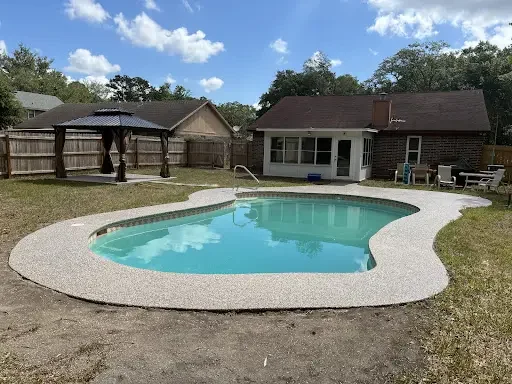
The rest of the calls come from floors that earn money. A shop owner wants a floor bright enough to spot a dropped bolt, with oil and coolant wiping up before they soak in. Warehouses need a surface that takes forklift traffic without wearing a path down the main aisle, and a showroom floor has to look right the second a customer walks in. We treat those as separate jobs, because they are.
Those floors carry history: patches, paint, glue, a crack older than the current owner.
Five places to start on a Jacksonville floor
What Matt reaches for most on Jacksonville slabs, and why. See all of Matt’s floors.
Lift bays want a hard, light solid color that shows small parts on the floor and stands up to jacks, creepers and spilled fluids.
Old bungalow porches and garages carry paint, sealer and patches from past owners, and all of it has to come off first. Sometimes a clean ground slab and a sealer is all the floor needs, and Matt will say so.
A newer subdivision garage gets hot tires every day of summer. A full flake build over a ground slab holds where a store-bought kit lets go.
Warehouse aisles get a thicker build, with the joints repaired first, because forklift wheels hit the joint edges harder than any other spot on the floor.
A showroom or warehouse slab in good shape can be polished. Nothing sits on top to wear through, and a big room gets brighter from the floor up.
What the first look covers
Jacksonville is up the road from St. Augustine, and Matt makes the drive himself. He walks the whole slab, tests it for moisture, checks the cracks and joints and pries at any spot where old coating is lifting. Then he asks how the floor gets used. At a house that means cars, pets and maybe a workbench. At a shop or warehouse it means traffic, chemicals and how long the floor can be shut down, and it helps if he sees the place while it is working.
You get a plain answer on the system, the prep and the schedule, including when a slab isn’t ready for a coating yet. Have Matt look at your slab, or call Matt at (904) 671-3930.
Or email spartancoatingsfl@gmail.com with the town and a photo of the floor.
Matt answers this phone himself
Based in St. Augustine, FL, working in Jacksonville.
Finished floors first? See all of Matt’s floors.
Other Duval County towns on our route
Older beach cottages near Mayport stand next to newer homes, and an old cottage porch usually needs its paint ground off before anything new will bond to it.
Everything in the county: Duval County.
Questions from Jacksonville
Our house is decades old. Is there a vapor barrier under the slab?
Maybe. Plastic under the slab was not always part of the pour on older homes, and nobody can tell from the top whether it is there or still whole. That is why Matt puts a test on every slab. If the slab reads high, a moisture vapor barrier primer goes down under the system. If it reads dry, you skip that step.
I work on my own cars in the garage. Will a floor jack and jack stands hurt the coating?
A full flake system with a hard topcoat handles a rolling floor jack fine. Jack stands are the bigger worry, because the whole car sits on four small feet. Set them on a square of plywood or a rubber pad. Hot tires and oil drips are exactly what a well-built garage floor is made for, and a chip from a dropped tool can be touched up.
We’re moving our business onto a bare slab. What finish looks professional?
That depends on what the slab looks like once it is ground. An even slab with few patches can be polished or ground and sealed, which keeps a clean concrete look. A slab with more history usually looks better under a solid color or metallic epoxy. Matt tests it for moisture, looks it over and tells you which way he would go, and why.
Brake fluid and solvents get spilled in our shop. What holds up to that?
Tell Matt exactly what gets spilled and how often, because that decides the topcoat. Some shop fluids, brake fluid and certain solvents among them, are hard on many coatings if they sit. The right system resists them far better than bare concrete does, and any floor lasts longer when spills get wiped up the same day.
For a warehouse, is polished concrete better than a coating?
Each has its place. Polished concrete has no coating to wear through and is easy to keep clean, but it needs a slab in decent shape, and oil can still mark it. A coating hides more patching and seals the surface against spills. Matt looks at the slab and how the building runs before he recommends either one.