
Pomona Park, FL, in Putnam County
Pomona Park’s painted garage floors, layer by layer
Small-town garages and carports off US-17 tend to collect a fresh coat of paint every time the floor looks tired. Eventually the paint starts letting go, and that’s the moment to stop adding coats.
Off US-17 in the south end of the county
Pomona Park is a small town in the south end of Putnam County, just off US-17. Houses in small towns tend to be kept a long time, and a long-kept house usually has a garage or carport floor that has been painted more than once. Each coat made sense at the time. Paint is cheap, it rolls on in an afternoon, and it makes a stained floor look new for a while.
The trouble starts underneath. Each coat sticks only to the coat below it, and the bottom one went on concrete that may never have been cleaned or ground. Moisture coming up from the slab pushes at that weak bottom layer, hot tires pull at the top, and sooner or later the whole stack peels in sheets. Then, too often, the next coat goes over the peeling one.
The result in many older garages is a stack of paint with a slab somewhere under it. Nothing new should go on top of that stack, ours included. It all comes off first, down to bare, sound concrete, and only then can anyone say honestly what the floor needs. Sometimes the slab under all that paint is in great shape. Sometimes it has cracks nobody has seen in years.
Carports, garages and the porch out front
The house is often a single-story home with a carport or garage on one side and a concrete porch or stoop at the front door. Carports take rain blowing in and afternoon sun on part of the slab, so they wear unevenly. Garages hold the car, the yard tools and, often, a chest freezer or a second fridge humming in the corner.
A painted porch is the same story at a smaller size, with one added problem: people walk on it in the rain. Peeling paint on a step is slick, and it looks worse every month. Grinding it off and putting down a textured system fixes both at once.
Carports take rain blowing in and afternoon sun on part of the slab, so they wear unevenly.
Where the paint ends and the real floor starts
What Matt reaches for most on Pomona Park slabs, and why. See all of Matt’s floors.
Every painted floor starts here. The diamonds take off every layer of paint and the weak top skin of the concrete, so whatever comes next bonds to the slab itself.
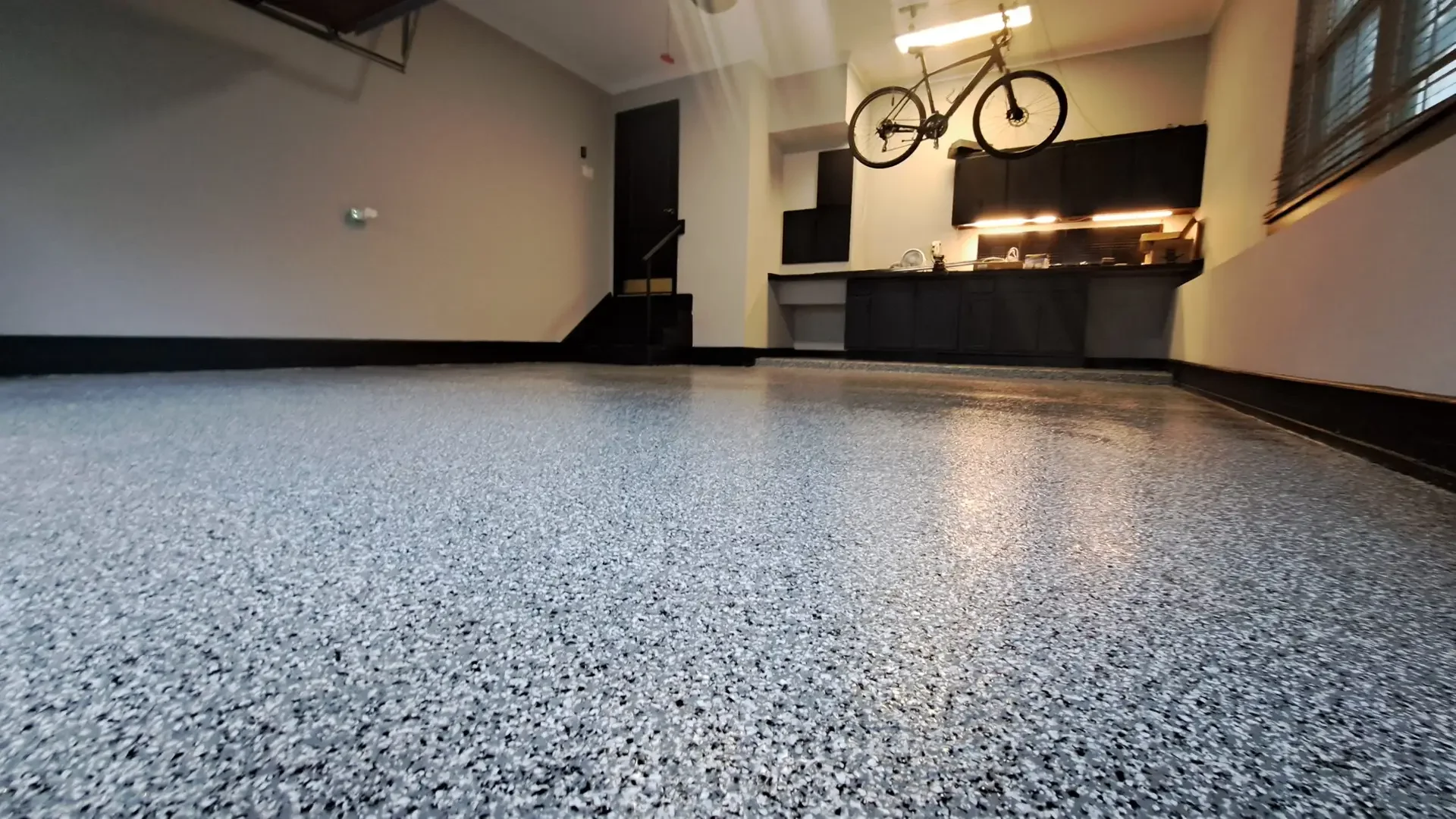
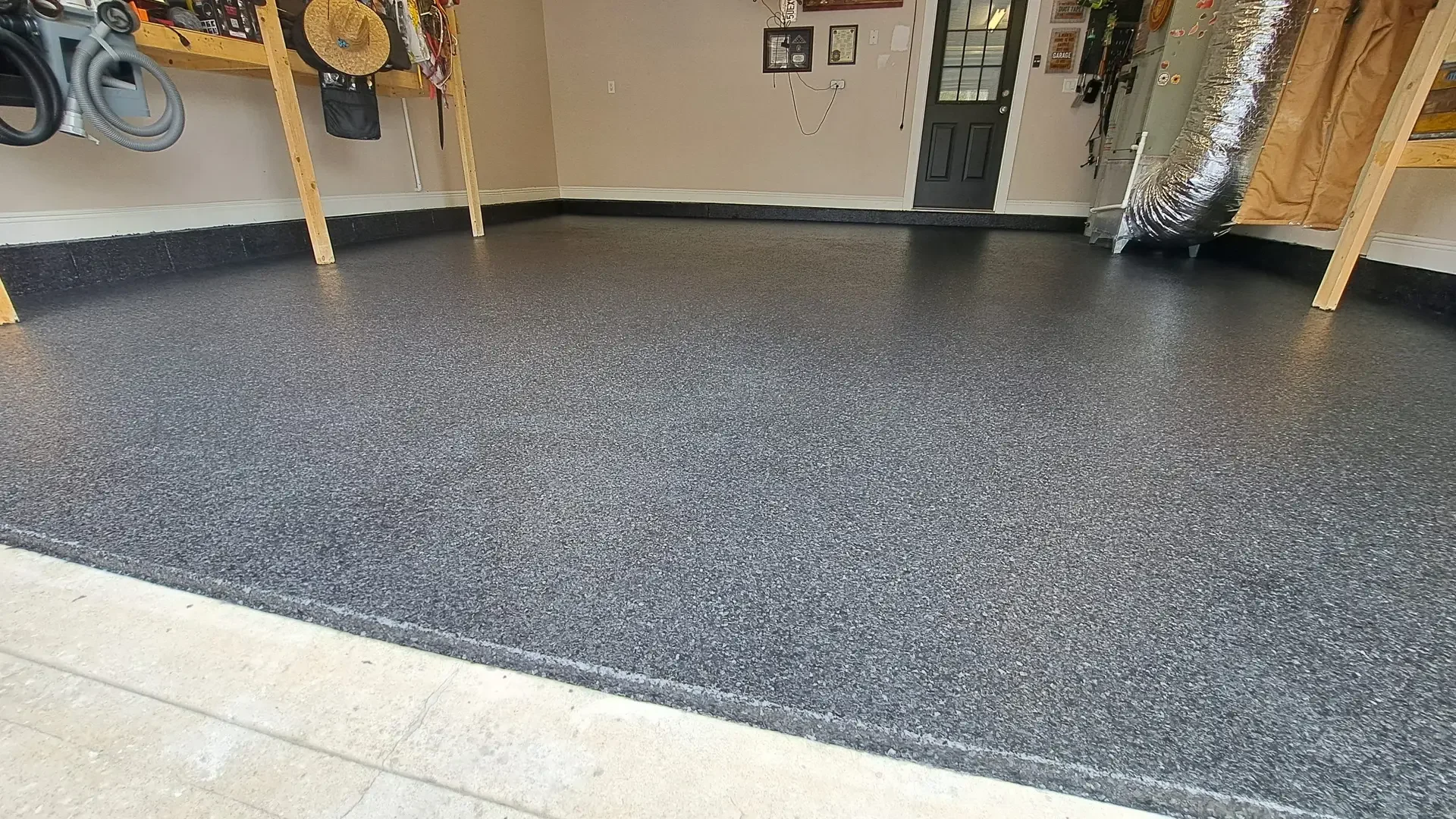
Once the paint is gone, a garage system with a full flake broadcast gives you a floor that stands up to hot tires instead of peeling under them the way the paint did.
For a carport or a front porch, a textured coating with a UV-stable topcoat handles the sun and rain that wore the old paint out.
If grinding turns up concrete you’d rather look at than cover, a sealer keeps it clean and lets the slab be the floor.
Expect Matt to scrape at the paint
Pomona Park is down in south Putnam, a good drive over for us, so Matt plans to see the garage, the carport and the porch in one stop. He’ll pick at the edges of the paint to see how well it’s holding, look for spots where it has already let go, and test the slab for moisture in a place where he can reach concrete.
He’ll also ask what’s been put down over the years, if you know. If you don’t, the grinder finds out. If the paint has already let go across most of the floor, that tells him something too. Either way you get a plain answer about what’s under there and what it will take. Call Matt at (904) 671-3930.
Or email spartancoatingsfl@gmail.com with the town and a photo of the floor.
Matt answers this phone himself
Based in St. Augustine, FL, working in Pomona Park.
Finished floors first? See all of Matt’s floors.
Other Putnam County towns on our route
Looking back at the county seat across the river, East Palatka puts garages close enough to the St. Johns that a vapor barrier primer is often part of the plan.
Known for its fishing on the St. Johns, Welaka is a little river town where a coated garage or porch has to put up with wet boots and wet trailer tires.
With Crescent Lake on its doorstep, a patio in Crescent City gets lake humidity in the morning and hard sun by afternoon.
Palatka’s historic downtown on the St. Johns means older buildings and porches, and an old slab there earns a careful look at its cracks before anyone talks color.
Out in the lake country on the western side of the county, Interlachen floors sit on sandy ground with the water table close beneath them.
Everything in the county: Putnam County.
Questions from Pomona Park
How many layers of paint can you grind through?
As many as are there. More layers just mean more grinding time, and soft, gummy paint loads up the diamonds and slows things down. We keep going until the whole floor is bare, sound concrete, including the corners and along the walls, where paint tends to build up thickest. Matt can usually judge the size of the job from a scrape test.
Why can’t we just paint the floor one more time?
You can, and it will look good for a while. It will also peel the same way the last coats did, because it’s stuck to them and they’re stuck to an unprepared slab. Every new coat makes the eventual grind-off bigger. If you want a floor that stays put, the paint has to go.
There’s a chest freezer in our garage, and the floor under it is stained and damp. Is that a problem?
It’s common. Freezers and second fridges drip a little condensation, and their feet leave rust rings. Grinding takes off most of that staining, and a coated floor keeps future drips on top where you can wipe them. Set the freezer on rubber pads afterward so the feet don’t scratch, and pull it out to wipe under it once in a while.
Old paint came off in sheets when we pressure washed. Is the slab bad?
Usually not. Paint that lifts in sheets was never bonded well, often because the concrete wasn’t ground before it went down, or because moisture came up behind it. The slab underneath is often fine. Matt will test it for moisture to find out which it was, since that decides whether a vapor barrier primer goes under the new system.
We don’t know what’s under the paint. What if we end up liking the bare concrete?
Then it can stay bare and get sealed. Grinding sometimes uncovers a slab that looks better than anyone expected, with clean aggregate and few patches. More often an old garage slab shows stains, patches and saw cuts, and a coating is the better look. Ask Matt about opening a small spot first so you can see the concrete before you decide.