
Epoxy Flooring, from Spartan Coatings in St. Augustine, FL
Epoxy Flooring Built From the Slab Up
Real 100% solids epoxy over a ground and tested slab, matched to the room and how you use it. Matt Casey picks the system after he has seen your concrete.
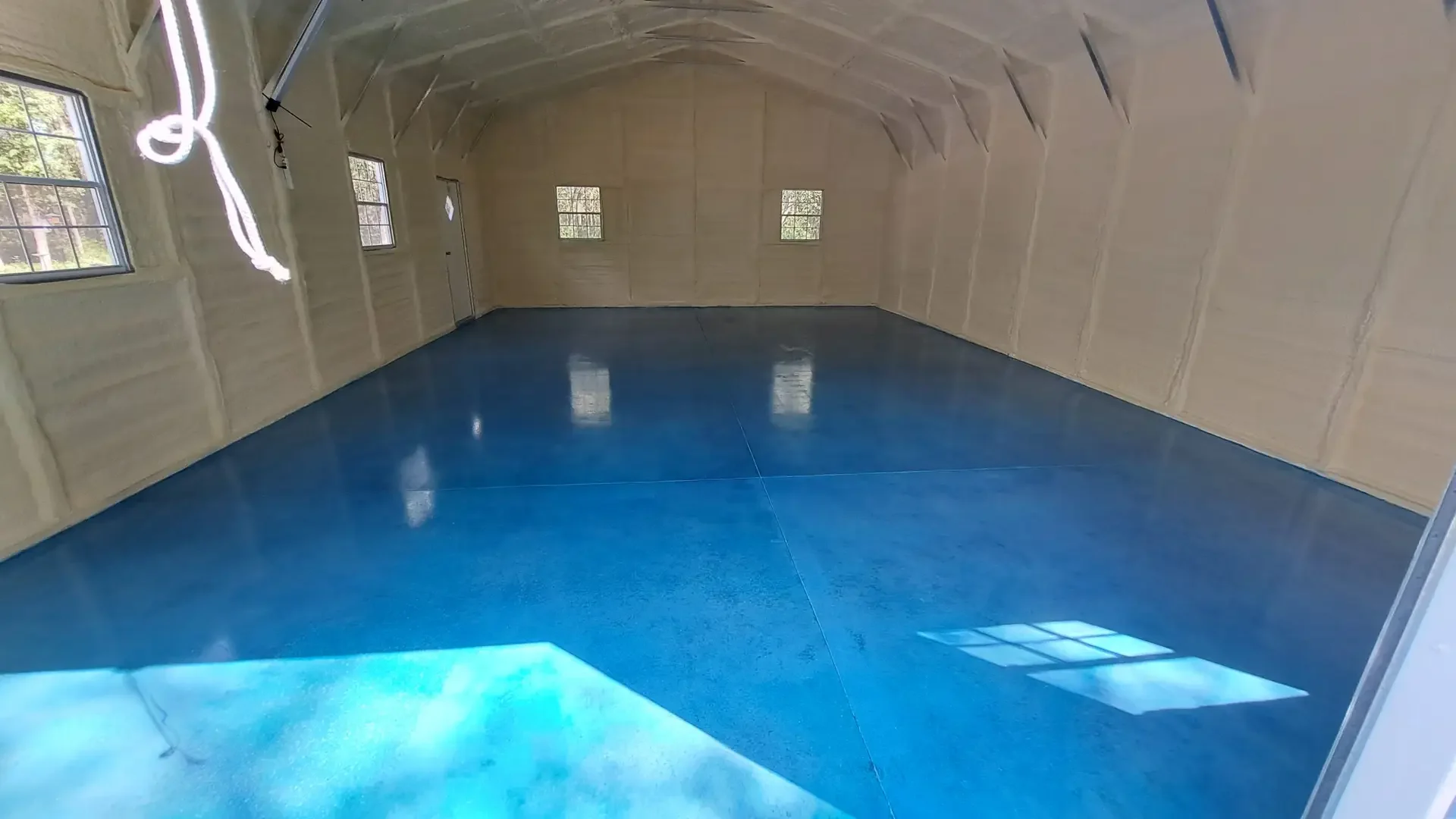
Epoxy covers a lot of ground. The kit on the hardware store shelf is epoxy, and so is the floor in a hospital hallway, and the two have little in common past the name. Most kits are water-based and thin. They get rolled over a slab that was hosed off or acid etched, and the first summer a hot tire sits on them, they start to lift. What we install is 100% solids epoxy: nothing in the can evaporates out as it cures, so what goes down is what stays on your floor, and it goes down far heavier than a kit coat.
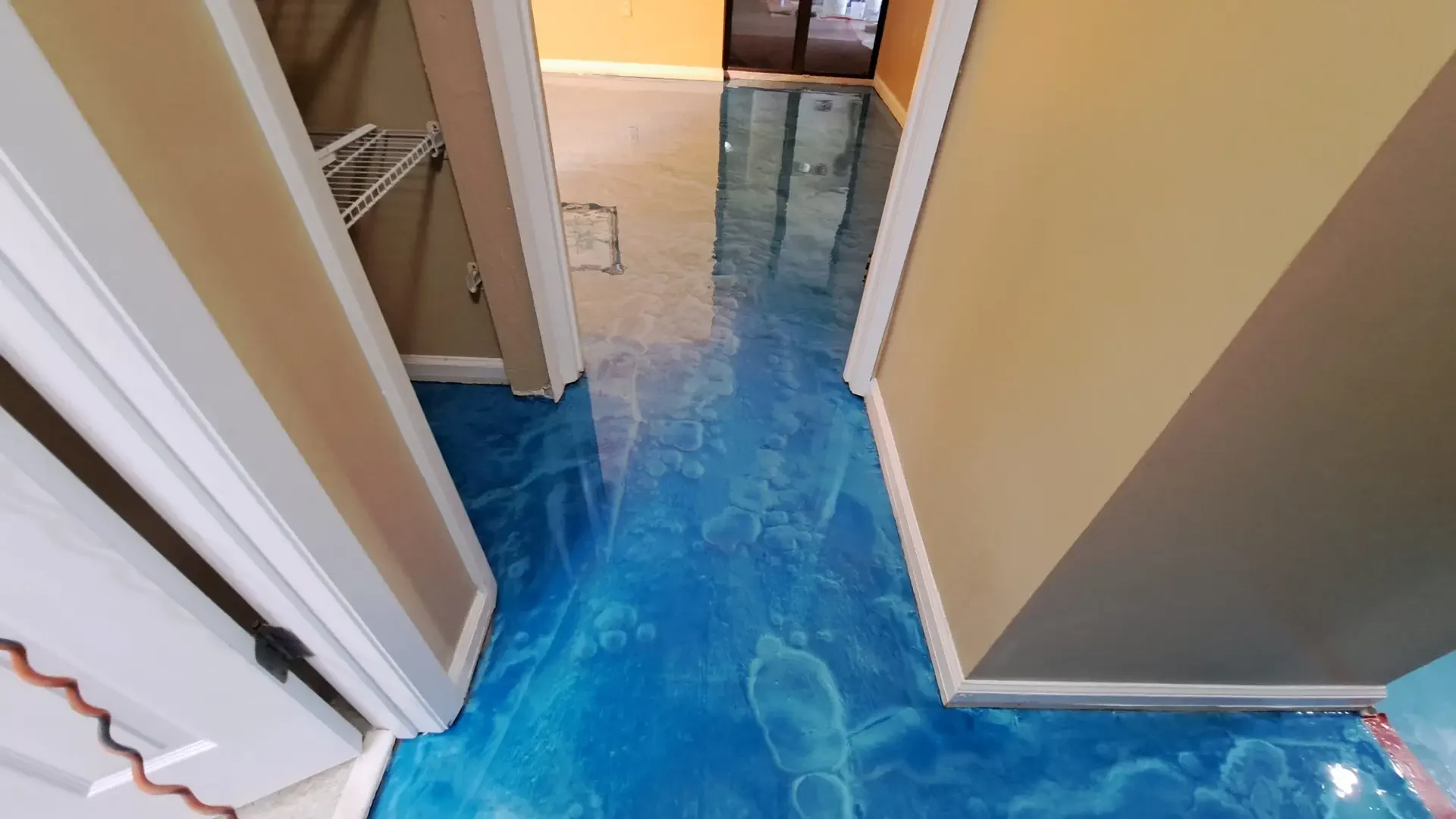
This page is for the homeowner who knows they want a coated floor and hasn’t settled on which one. Spartan Coatings installs full flake broadcast, solid color, metallic, quartz, stain and seal, and polished concrete, along with scoring and logo work when a floor needs a line or a name in it. Garages are the floor most people start with. Interiors, home gyms, laundry rooms, workshops and showrooms come after, for homeowners and business owners alike.
Matt Casey has been doing this for 15 years. He started in epoxy coatings in Louisville, Kentucky, then brought the trade to Florida. What he’s after on every floor is the mix of beauty and functionality: something you’re glad to look at every morning that also takes a dropped wrench or a spilled drink in stride. A floor that only manages one of those is the wrong floor.
He started in epoxy coatings in Louisville, Kentucky, then brought the trade to Florida.
Which system goes on which slab
Matt picks the system once he has seen the concrete. A two-car garage that gets a truck every night and a leaf blower dragged across it wants flake, because the chips hide dust and the texture gives your shoes something to grab. A home gym with mats and dropped plates does well in a heavier solid color. A living room or hallway where people actually notice the floor is where metallic earns its place. An older slab with good color and a few hairline cracks you’ve made peace with may only need a stain and seal, or a grind and polish, and he’ll say so.
Some slabs shouldn’t get epoxy at all. If the moisture test shows more vapor than a barrier primer can hold back, we’ll tell you before anything goes down. Plain epoxy is also the wrong top for a floor in full sun, since it ambers under UV. Outside we finish with polyaspartic and point you to our patio coatings. A commercial kitchen with hot oil and scalding washdown belongs in urethane cement. And if price matters more than anything else about the floor, a kit will cost less, and we’re probably not your call.
How an interior epoxy floor goes down
Test
Matt reads the slab first: moisture, old coatings, sealers, cracks, and how fast the concrete drinks water. What he finds decides the primer, and sometimes whether the slab gets epoxy at all.
Grind
The whole surface gets diamond-ground open, edges included, so the coating has clean, rough concrete to grab. Etching with acid leaves a weak skin on top, and we don’t use it.
Repair
Cracks get filled, spalls get patched, and low spots get brought up so the finished floor reads flat under a gloss.
Prime
On a slab with vapor coming through, a moisture vapor barrier primer goes down first. On a dry slab it’s a 100% solids primer that soaks into the ground concrete.
Body coat
This is the floor you see: solid pigment, flake broadcast into wet resin, or a metallic pour, depending on what Matt picked for the room.
Topcoat
A clear topcoat sets the gloss and the texture. Indoors that can be epoxy or polyaspartic. Anywhere the sun reaches, it’s polyaspartic.
What a Florida slab does to a coating
Concrete here is rarely as dry as it looks. High water tables, sandy soil and a lot of block homes poured straight on grade mean moisture vapor is always working its way up through the slab, and a humid summer keeps it coming. That vapor is one of the leading reasons coatings peel. It pushes from underneath until the floor lets go in blisters. Testing first, and priming for what the test shows, is how a floor here stays stuck down.
New construction brings its own problem. A slab in a brand-new house needs time to cure before anything gets sealed over it, and not every schedule allows for that. If you’re closing on a new home in a place like Nocatee and want the garage done before the boxes come in, call early so Matt can check the concrete and tell you when it’s ready. Heat is the last one. A thin kit softens under hot tires and peels up in the shape of your tread. A 100% solids system over a ground slab is built to stay put.
Testing first, and priming for what the test shows, is how a floor here stays stuck down.
Living on an epoxy floor
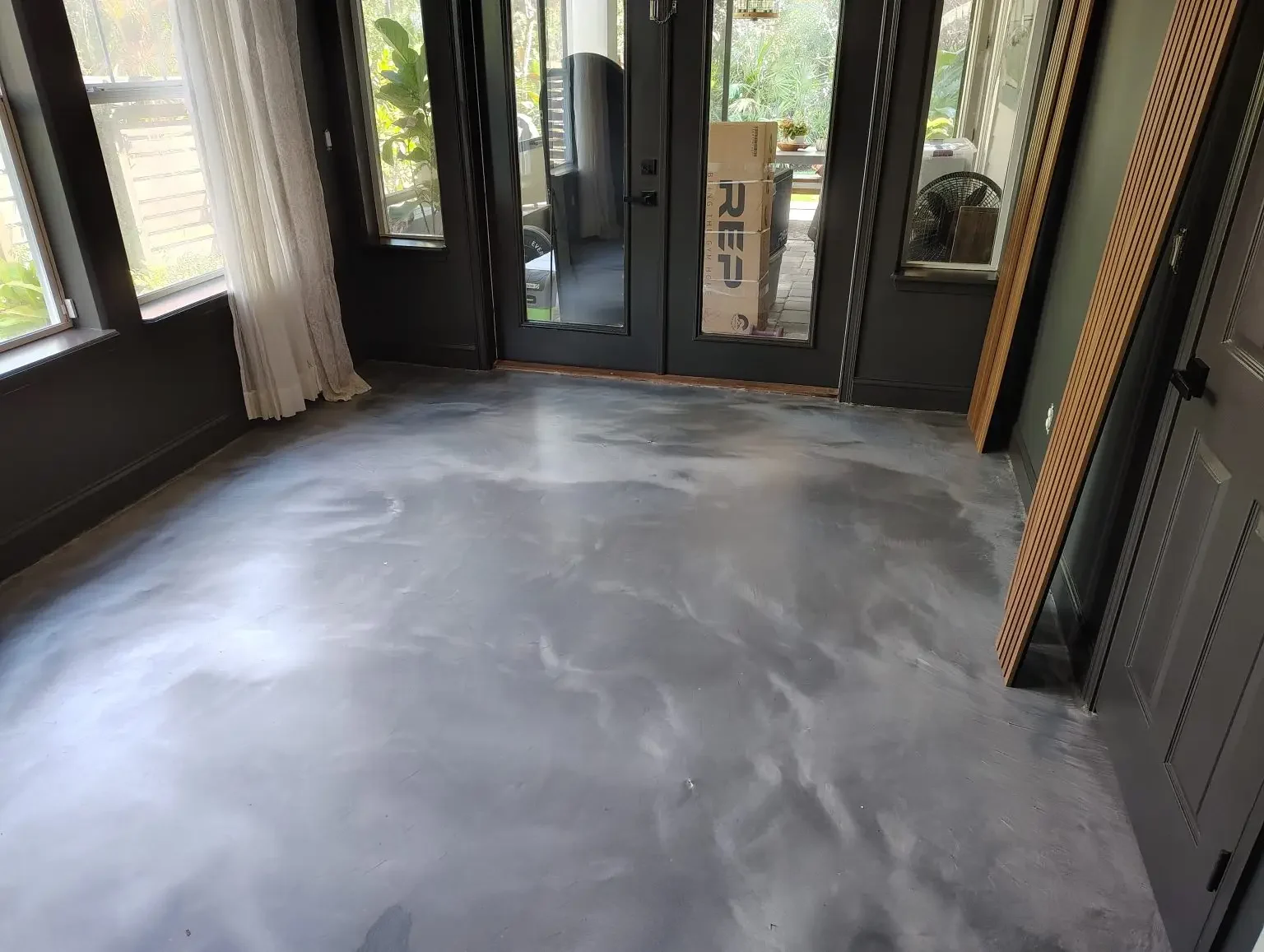
Sweep or dust-mop it, and wash it with warm water and a little mild cleaner when it needs it. Skip citrus and vinegar cleaners, and anything soap-heavy that leaves a film. That film is what makes a glossy floor look dull and feel slick. Put felt pads under chair legs, and wipe up brake fluid, pool chemicals and fertilizer when you see them.
Over the years, traffic shows in the topcoat first, the same way it does on a car’s clear coat. That’s the layer meant to take the wear. When a busy path starts looking tired, the usual fix is a light sand and a fresh topcoat over the same floor. Matt goes over care for your particular system at the final walkthrough, before the trailer pulls out of your driveway.
Want to see finished floors before you decide? See all of Matt’s floors.
Next to epoxy flooring on the list
Matt puts this down across all six counties we cover, including Palatka, Daytona Beach, Crescent Beach and Neptune Beach. Most jobs start with a look at the slab, then a choice between systems like these.
Want a floor that looks like poured stone? Metallic epoxy moves while it cures, so no two rooms ever come out the same.
For driveways, stamped patios and walks that already look right and only need protecting from stains, sun and water.
Pool owners choose this one for footing: a textured coating made for wet bare feet, chlorine splash and full sun from morning to dusk.
Questions people ask about epoxy flooring
Is 100% solids epoxy really different from a hardware store kit?
Yes. A kit is mostly water or solvent that evaporates as it dries, so the film left behind is thin. 100% solids epoxy has nothing to evaporate, so the full thickness stays on the floor. Put it over a diamond-ground slab instead of a quick etch and the bond is in a different league, which is what you notice a couple of summers later.
Can you coat over the old coating that’s peeling in my garage?
Usually it comes up first. A coating that’s peeling in one corner is often barely hanging on everywhere else, and anything we put over it is only as good as what it’s stuck to. We grind it off down to clean concrete. If Matt finds an old floor that’s still well bonded, it can sometimes be ground and recoated, and he’ll show you why.
How long before I can walk on it and park on it?
It depends on the system and the weather. Many garage and patio jobs start and finish in one day with a fast-curing polyaspartic top. Full epoxy builds, metallic floors and anything with several coats take longer. Foot traffic comes back first and cars come later. Matt gives you the exact times for your floor at the walkthrough, so you’re not guessing.
How do I choose between flake, solid color and metallic?
Start with how the floor gets used. Flake hides dirt and grit and gives the best grip, which is why most garages get it. Solid color looks clean and works well in gyms, shops and laundry rooms. Metallic is the showpiece, best indoors where it can be seen and stays out of the sun. Matt will walk the room with you and give you a straight answer.
Do you put epoxy inside the house, or only in garages?
Inside too. Living rooms, hallways, kitchens, home gyms and laundry rooms all get coated. The old flooring has to come up so we’re working on bare concrete, and baseboards often come off for a clean edge. An interior takes more care around walls and cabinets than a garage does, and Matt plans the job around how you’ll live in the house while it cures.
Can you put our logo or a line in the floor?
Yes. Scoring cuts lines, borders and patterns into the concrete before it’s coated, and logo work puts a name or a mark into the floor itself. Business owners ask for it in showrooms and shops, and some homeowners want a border in the garage or a team logo in a game room. Bring the artwork and Matt will tell you what reads well at that size.
Show Matt your floor
Tell Matt what the room has to handle. He will come out, test the slab and tell you straight whether epoxy flooring is the right call.
Want to see more first? See all of Matt’s floors.