
Palm Valley, FL, in St. Johns County
Waterfront Slabs Along Palm Valley’s Intracoastal
Old waterfront houses and new builds share the same salt air and sandy ground here. Matt reads each slab on its own before anyone talks about color.
Salt air comes with the water view
Palm Valley runs along the Intracoastal Waterway in the Ponte Vedra area, and the water sets the terms for every slab near it. Salt rides in on the breeze off the waterway. Wind pushes sand across driveways and pool decks. Humidity sits on the concrete most of the year, and the summer sun bakes anything left outside. A coating out here has to handle all of it at once, every day.
The ground matters as much as the air. Sandy soil and a high water table keep moisture close under the slab, and that moisture works its way up and out. Put a coating over a slab that is pushing vapor and sooner or later it lifts. So before Matt talks about flake blends or topcoats, he tests the concrete, and on a waterfront lot he takes that test seriously.
Then come the afternoon storms. A screened lanai or a pool cage keeps leaves off the deck, but rain still blows in through the sides, and the floor stays wet for a while after. A glossy finish that looks great dry can turn slick under bare feet, so outdoor floors here get texture built into the topcoat. We would rather give up a little shine than have someone slip.
Older waterfront homes next door to new builds
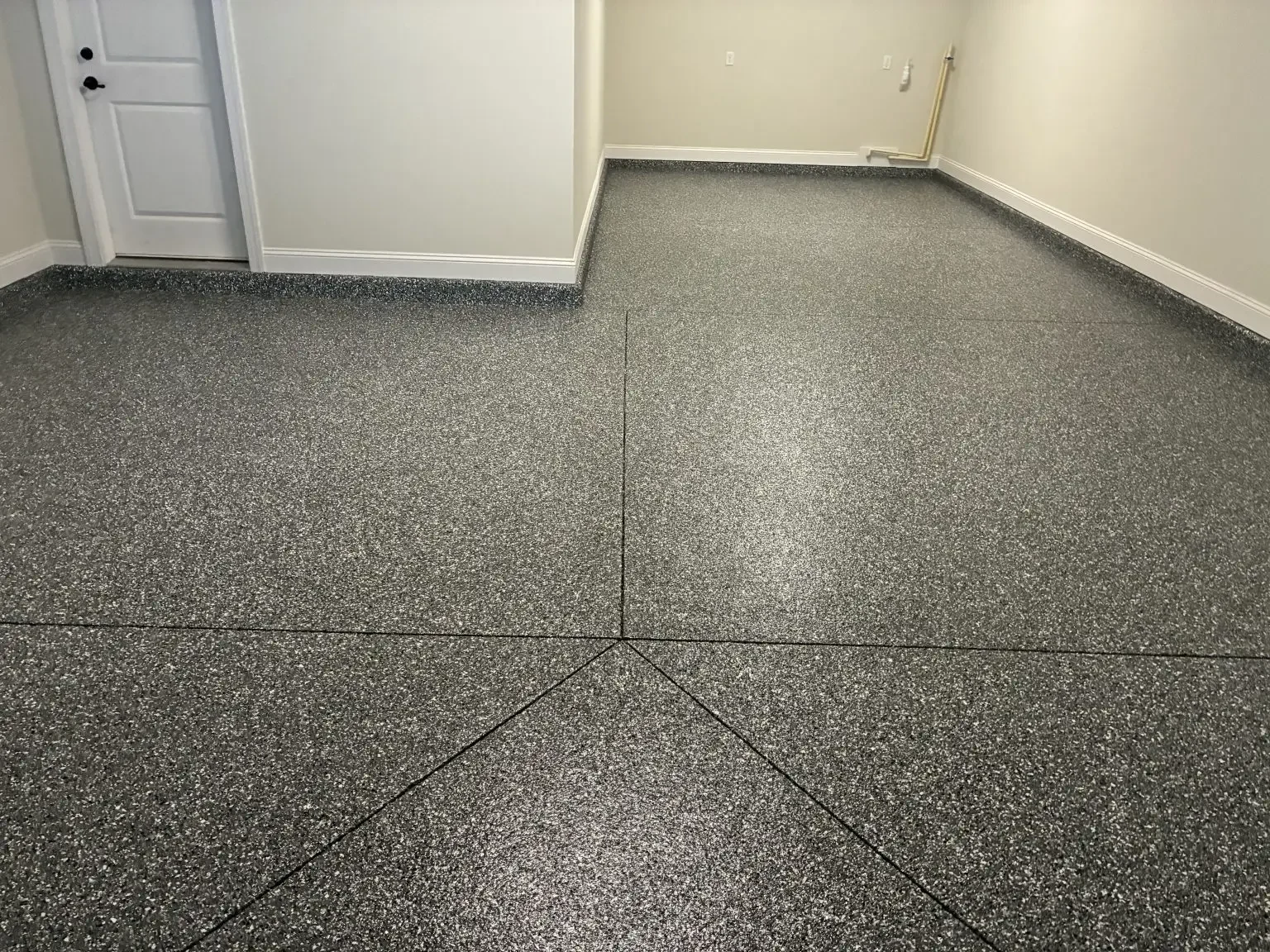
The mix is what makes Palm Valley different from a planned neighborhood. Some of the waterfront homes have stood a long time, and their concrete shows it: a garage floor painted twice, a lanai with a sealer gone cloudy, a pool deck with hairline cracks running toward the drain. Floors like that need the old layers ground off before anything new can bond to them.
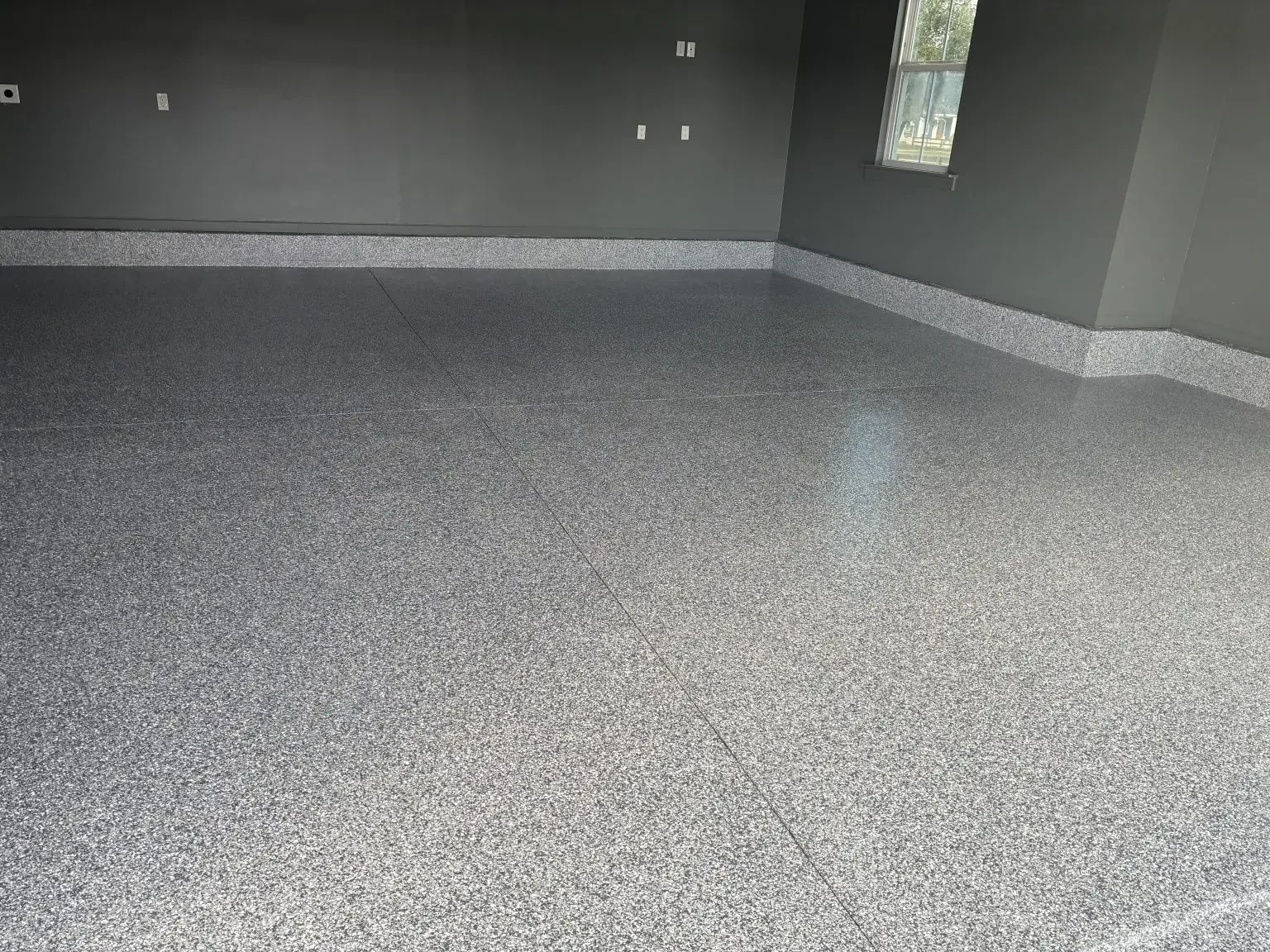
Next door might be a newer build with a garage nobody has parked in yet. That slab is cleaner, but it is also younger, and fresh concrete has to finish curing before it gets coated. People in both kinds of house tend to start with the same short list: the garage, the pool deck and the screened lanai that takes the most traffic.
Next door might be a newer build with a garage nobody has parked in yet.
Systems that make sense near the waterway
What Matt reaches for most on Palm Valley slabs, and why. See all of Matt’s floors.
A deck around a pool takes chlorine splash, wet feet and full sun all day. A textured, UV-stable topcoat holds its color longer and gives bare feet something to grip.
On the older waterfront homes, paint and sealer from past owners have to come off first. Diamond grinding gets back to sound concrete, the only surface a new coating should be trusted to.
For a newer build’s garage, a full flake broadcast hides tracked-in sand between sweeps and stands up to hot tires, once the slab has cured long enough to coat.
An open patio facing the water takes the same salt and sun as the pool deck, minus the chlorine. A flake or solid color system under a UV-stable topcoat keeps it from fading and chalking.
A stamped or stained driveway that is sound but faded may only need a deep clean and the right sealer. If that is all yours needs, Matt will say so.
Getting Matt up to Palm Valley
From St. Augustine, Palm Valley is close to home, up in the Ponte Vedra end of the county, so getting out to look at your floor is easy to fit in. Matt walks every slab you are thinking about, runs a moisture test, looks at cracks, edges and any old coating, and asks who uses the space and how. On a pool deck he also watches how water runs off, because a spot where it puddles changes the plan.
Then he tells you what he would put down and what the job involves from grind to topcoat. Garages and lanais often wrap up in a day. Pool decks and open patios wait on the weather, and we would rather lose a day to a storm than coat a damp slab. Have Matt look at your slab, or call Matt at (904) 671-3930.
Or email spartancoatingsfl@gmail.com with the town and a photo of the floor.
Matt answers this phone himself
Based in St. Augustine, FL, working in Palm Valley.
Finished floors first? See all of Matt’s floors.
Other St. Johns County towns on our route
With raised houses, pools and outdoor showers near the pier, the slabs that matter most here are the ones that are wet half the time.
West of I-95 at SR-16, the golf-course neighborhoods date from the late 1990s on, and three-car garages over younger slabs are the norm.
Long known for potatoes, Hastings has barns, workshops and equipment sheds whose slabs carry tractors and dirt instead of a family car.
Near Julington Creek on the St. Johns River, these settled neighborhoods have plenty of garages that have sat as bare concrete for years.
Most homes here are older single-story block houses on slab along the Matanzas, which makes the garage and back porch the usual candidates for a new floor.
This stretch of Anastasia Island carries Frank Butler’s name, from the days his beach was the one African American beach in the area, and its slabs get the same salt and blowing sand as the rest of the island.
Everything in the county: St. Johns County.
Questions from Palm Valley
Our house is right on the Intracoastal. Will salt air ruin a coating?
Salt is hard on bare concrete and cheap paint, but a properly built system handles it. Prep matters most: a ground surface the coating can grip, then a polyaspartic topcoat that resists UV and rinses clean. Hose your outdoor floors off now and then so salt and sand do not build up in the texture.
Our pool deck has hairline cracks. Will they come back through a new coating?
Cracks get opened up, filled and ground flush before the coating goes down, so they do not print through on day one. Concrete keeps moving, though, and a crack that is still active can show again over time. Matt will point out which cracks look settled and which ones he would keep an eye on before you decide.
Our pool is under a screen cage. Does the deck still need a UV-stable topcoat?
Yes. The screen cuts some glare and keeps leaves out, but plenty of sun still reaches the deck, and rain blows through the sides in an afternoon storm. We treat a caged deck as an outdoor floor: a topcoat that holds its color in sunlight and a texture that still grips when it is wet.
Will a coated pool deck get too hot to walk on?
Any surface in full Florida sun gets warm, and dark colors hold more heat than light ones. Light flake blends and pale solid colors stay more comfortable underfoot. If your deck takes the afternoon sun, Matt will steer you toward the lighter end of the color chart and tell you plainly how it should compare with what you have now.
Does blowing sand scratch a coated garage floor?
Grit dragged under tires and shoes dulls any glossy finish over time, coated or bare. A flake floor hides those fine scratches far better than a solid color does, and the hard polyaspartic topcoat holds up to the wear. A mat at the door and a quick sweep after a windy day go a long way.