
Metallic Epoxy, from Spartan Coatings in St. Augustine, FL
Metallic Epoxy, Poured and Worked by Hand
Pigment and resin moved across the floor while it’s wet, so no two floors come out alike. It belongs indoors, and Matt will tell you straight if your room isn’t the place for it.
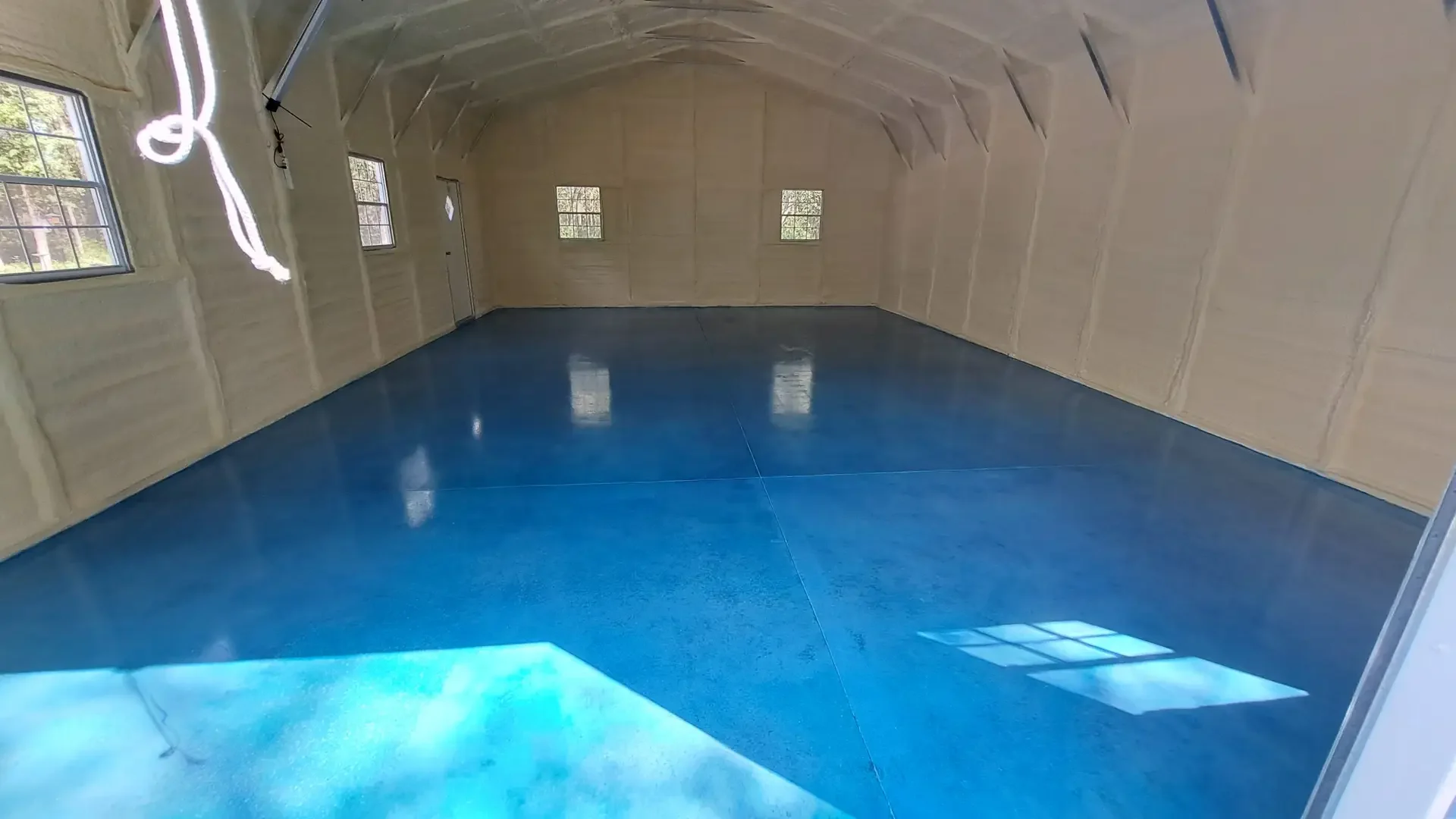
A metallic floor starts as clear 100% solids epoxy loaded with pearl pigment. It goes down wet, and the real work happens before it sets: pushing it, pulling it, laying a second color into the first, misting the surface so it opens into veins and cells. The pigment settles in different directions and catches light differently from every angle, so the floor looks deep, as if you could reach into it. Walk to the far side of the room and it changes.
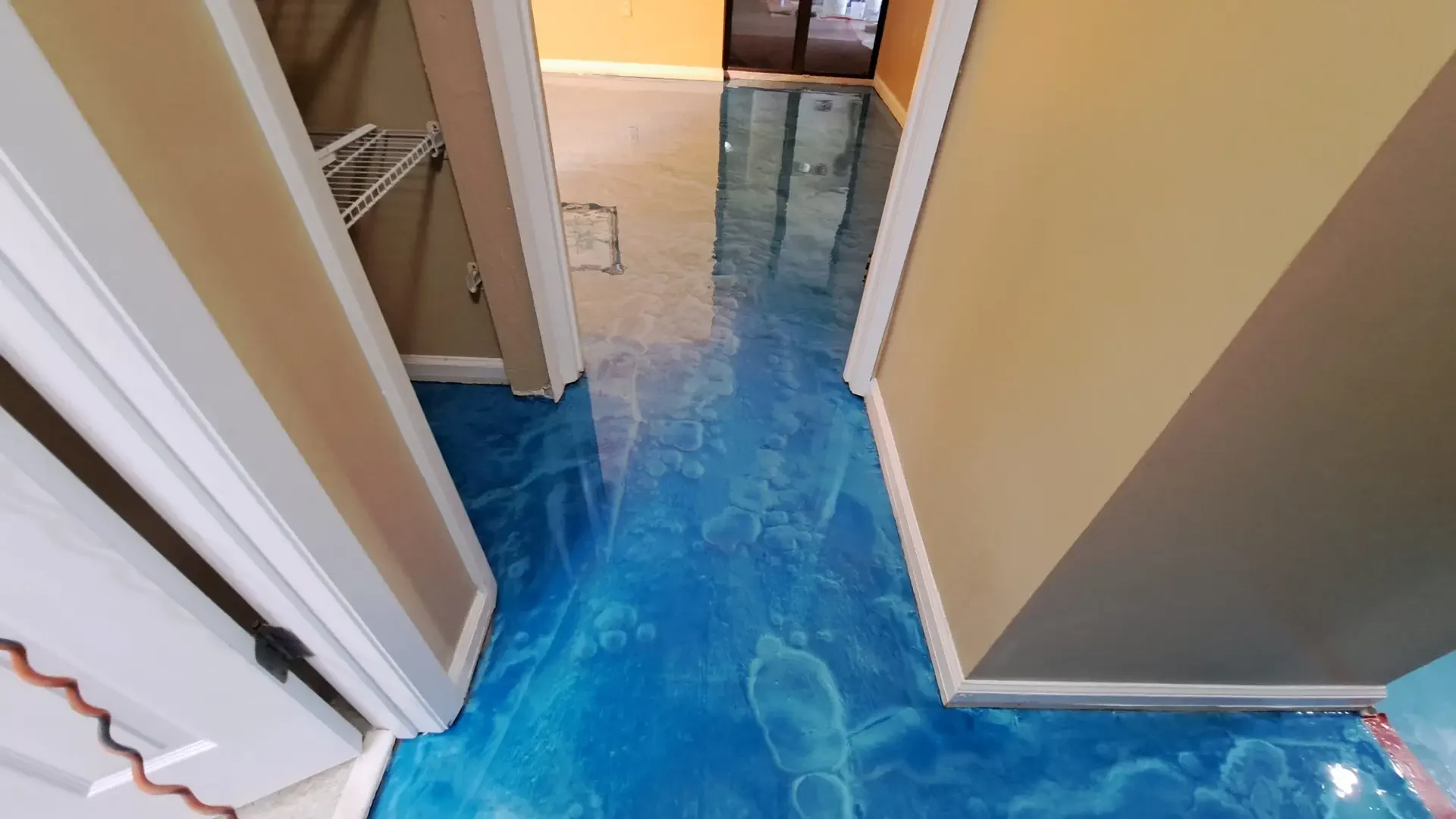
No two come out alike. You can’t order a metallic floor from a picture and get that picture back, and anyone who promises you can is selling something. You choose the colors, how much movement you want, and whether it leans toward stone or toward moving water. Bring photos of floors you like and Matt will talk through what your room can carry. The pattern itself happens on the day, by hand.
Of everything Spartan Coatings puts down, this is the floor closest to what Matt means when he talks about turning basic, boring concrete into works of art. It is also the system that exposes a careless installer fastest. Every shortcut shows in a metallic floor, which is why Matt is standing over every one of them from the grind to the last coat.
Of everything Spartan Coatings puts down, this is the floor closest to what Matt means when he talks about turning basic, boring concrete into works of art.
Rooms that suit a metallic pour, and a few that don’t
Metallic is an indoor floor. Living rooms, hallways, kitchens, home offices and finished garage rooms used as a game room or a gym all suit it. So do retail showrooms and offices where the floor is the first thing a customer sees. It looks best in a room with steady light and some open floor, because the movement needs space to read. A long hallway works well too, since the pour can run with the length of it and pull your eye down the hall.
Keep it out of hard sun and away from sand. Epoxy ambers under UV, so a metallic floor on an open patio or in a sunroom with full western light will yellow over time. Outside we’d put down flake or a solid color under a polyaspartic top. Near the beach, tracked-in sand works like sandpaper on a high-gloss finish and dulls the walk paths, so a beach house entry or the garage you come through from the sand is better off in flake. Floors that see forklifts or rolling carts belong in a solid-color or industrial system.
What goes into a metallic floor, bottom to top
Grind and fill
The slab is diamond-ground and every crack, pit and old patch filled flush. Metallic hides nothing, and a crack left under it shows up as a line through the pattern.
Prime
A primer seals the concrete so it can’t breathe air up into the pour, or a moisture vapor barrier primer when the test calls for one.
Base color
A tinted base coat in the main color gives the metallic a solid ground, so a thin spot never shows gray concrete through it.
Metallic pour
The pearl-pigmented epoxy goes down and gets worked by hand, color by color, for as long as the resin stays workable. This layer is the floor.
Clear top
A clear topcoat, usually polyaspartic, adds scratch resistance and holds up to the light coming through your windows. Where feet will be wet, a fine texture can go in.
Why a metallic floor wants a dry slab and a shaded room
Moisture is harder on a metallic pour than on anything else we install. Vapor coming up through a slab pushes bubbles and a cloudy blush into the resin. On a flake floor the chips cover that. On a metallic floor it shows as pinholes and milky patches right in the middle of the pattern. With the water tables and humidity here, the moisture test and the right primer are mandatory, and a room that can be kept closed and air-conditioned while the epoxy cures comes out cleaner than one with the garage door open to an afternoon storm.
Light is the other concern. Through a west-facing window or a pair of French doors, Florida sun is strong enough to amber an epoxy finish over a few years, which is why we usually top metallic with polyaspartic. Blinds and curtains help. If you live near the water and the floor is the first thing anyone steps onto coming in from the beach, put a good mat at the door, because salt-air sand will scratch any gloss.
On a metallic floor it shows as pinholes and milky patches right in the middle of the pattern.
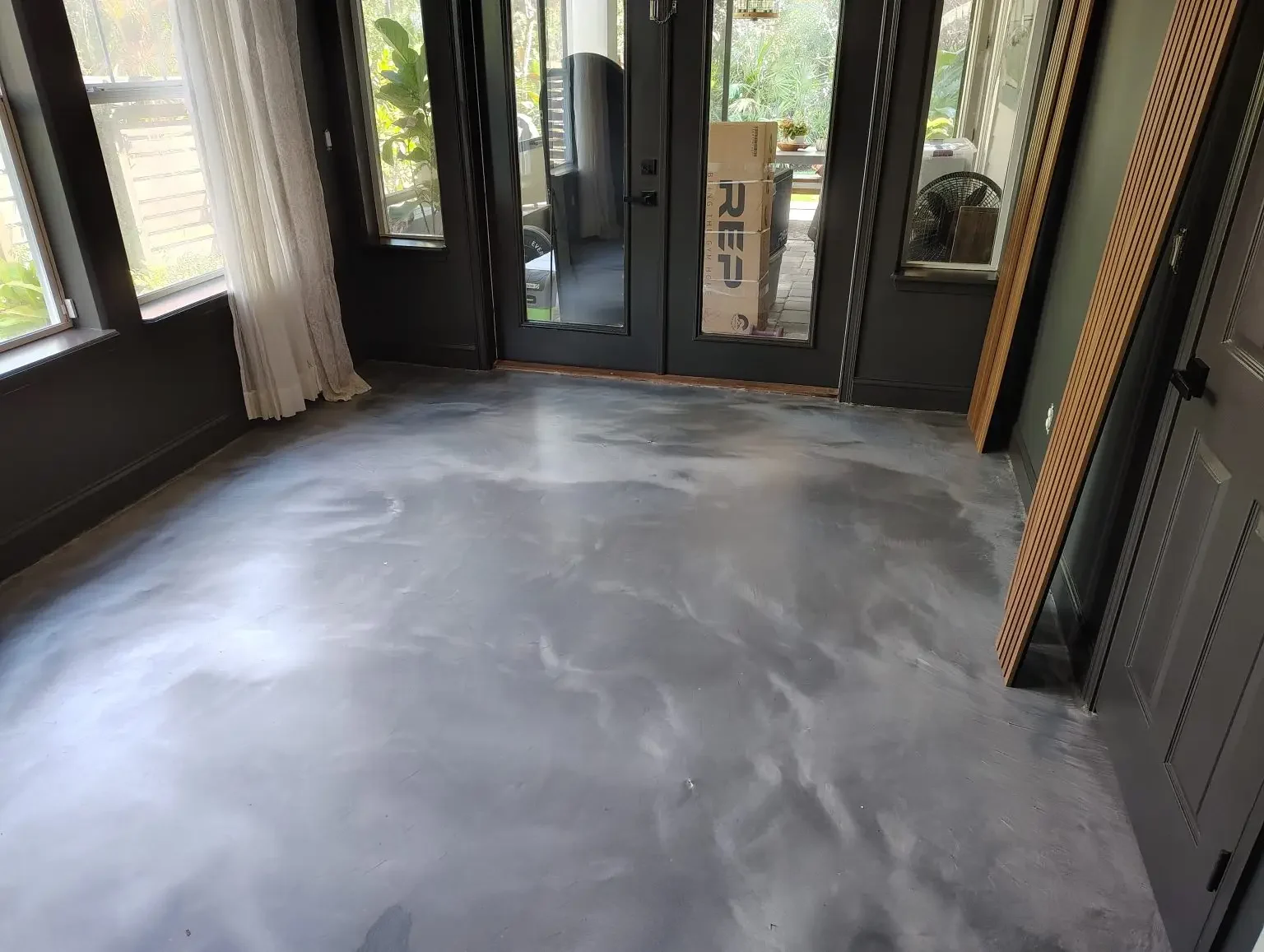
Keeping a metallic floor looking deep
Gloss shows dust and footprints more than flake does, so keep a microfiber dust mop handy. Damp-mop with warm water or a pH-neutral cleaner and skip anything that leaves a film. Rubber-backed rugs can stain a coated floor over time, so pick rugs with a felt or natural backing, and put pads under furniture legs.
Scratches land in the topcoat, and the pattern under it stays put. When the walk paths start to look hazy after some years, a light sand and a fresh clear coat bring the depth back without touching the metallic layer. At the walkthrough Matt will point out which spots in your room will wear first, so you know what to watch.
Want to see finished floors before you decide? See all of Matt’s floors.
Next to metallic epoxy on the list
Matt puts this down across all six counties we cover, including Butler Beach, Jacksonville, Asbury Lake and Palatka. Most jobs start with a look at the slab, then a choice between systems like these.
Solid color, 100% solids epoxy in one even shade, for anyone who wants a clean, hard floor anywhere from a laundry room to a workshop.
Pool owners choose this one for footing: a textured coating made for wet bare feet, chlorine splash and full sun from morning to dusk.
Kitchens and back of house see hot water, grease and a scrub every night, and owners pick this so the floor still looks clean after a Saturday rush.
Questions people ask about metallic epoxy
Can I choose exactly how my metallic floor will look?
You choose the colors, how busy the movement is, and the general look, whether that’s closer to marble or to water. You can’t choose where every vein lands, because the pigment moves on its own as the resin flows and settles. That’s what makes it a one-off. If you need a floor to match a photo line for line, a solid color or a flake blend is a safer pick.
Why do some metallic floors look cheap?
Usually rushed work. Muddy color from overworking the pigment, a pattern that repeats like wallpaper, fish-eyes where the slab wasn’t clean, and a hard line where the installer stopped and started again. Bubbles from an unprimed slab are another giveaway. A good metallic has movement that looks like it happened on its own, even though somebody spent hours steering it.
Can you put a metallic floor in a garage?
In a garage you use as a room, yes. Game rooms, gyms and garages that hold a car you mostly look at are good candidates, and we finish them with a polyaspartic top for hot-tire and scratch resistance. A working garage with a daily driver tracking in sand and rain is better in flake, whose chips disguise the grit that would dull a gloss floor.
Will a metallic floor hide the cracks in my slab?
No, and that’s worth knowing up front. Metallic is thin and glossy, and it shows what’s under it. We fill cracks and pits before the pour, but a crack that keeps moving can telegraph back through as a fine line later. Matt will look at your slab and tell you honestly whether it’s a good candidate, or whether flake would serve you better.
Can a metallic floor go in a kitchen?
Yes, and a kitchen is one of the better rooms for it. Spills wipe up off the sealed surface, and grease and food can’t soak in the way they do in grout lines. Plan around the cabinets: the floor either runs under new ones before they go in or stops cleanly at the base of existing ones. Matt will want to see the layout before he plans the pour.
Why isn’t a metallic floor a one-day job?
Each layer needs to cure before the next one goes on. The primer, the base color, the metallic pour and the clear topcoat all get their own time, and rushing the metallic layer is how you end up with soft spots and haze. Plan on more than one day, with a room nobody walks through. Matt will lay out the schedule before work starts.
Show Matt your floor
Tell Matt what the room has to handle. He will come out, test the slab and tell you straight whether metallic epoxy is the right call.
Want to see more first? See all of Matt’s floors.