
Interlachen, FL, in Putnam County
Sawdust, Glue and Heavy Machines Out in Interlachen
Lake country in western Putnam often means room to spread out, and plenty of that room ends up as a shop. A woodworking floor has its own troubles, and we plan the slab around them.
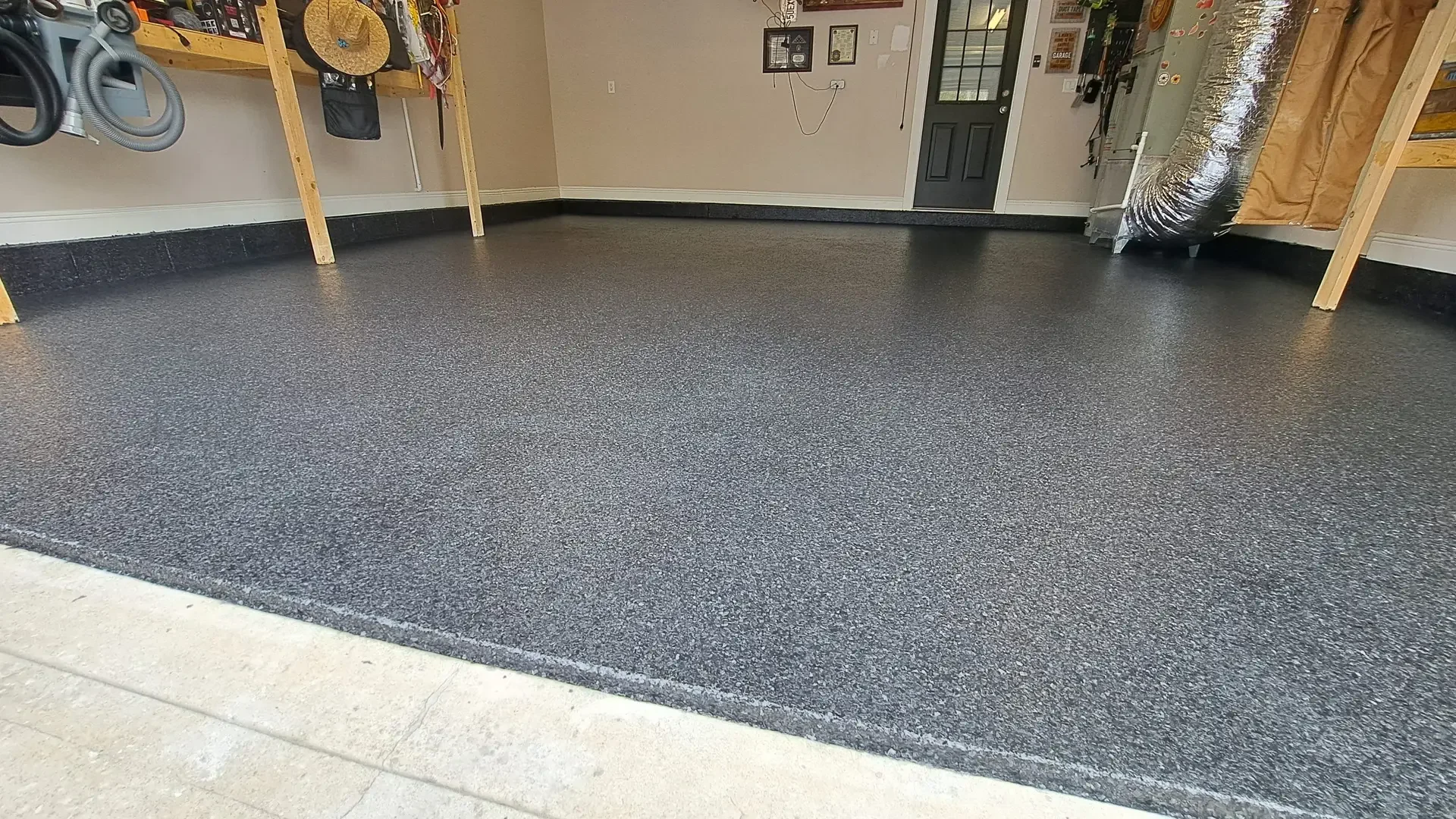
Room to work in the lake country
Interlachen sits on the western side of Putnam County, out in the lake country. Lots there often have a little more ground around the house, and more ground tends to mean a detached garage or a shop building standing out back on a slab nobody has given much thought to since it was poured. For a woodworker, that slab is the most-used surface in the building.
A wood shop works a floor differently than a garage does. Sawdust drifts into every corner and gets ground in underfoot. Glue drips and dries. Finishes get spilled. A cabinet saw or a planer sits in one spot, and a heavy machine on a mobile base rolls back and forth along the same path for years. Bare concrete soaks up the spills, and it sheds a fine dust of its own that settles right onto a fresh finish.
The ground underneath is sandy lake country ground, often with water not far below. A shop slab poured without a vapor barrier can stay damp at the bottom while the top looks dry. That matters for a coating, and it matters for the boards you stack on the floor, so Matt tests the slab before anything else gets planned.
The building out back, and what happens inside it
The usual setup is a detached garage or shop with one side given over to the bench and the machines and the rest holding the mower, the truck and whatever else lives outside the house. The slab often carries years of oil, rust and paint drips, and maybe an old coat of garage paint flaking at the edges. All of that comes off with the grinder before anything new goes down.
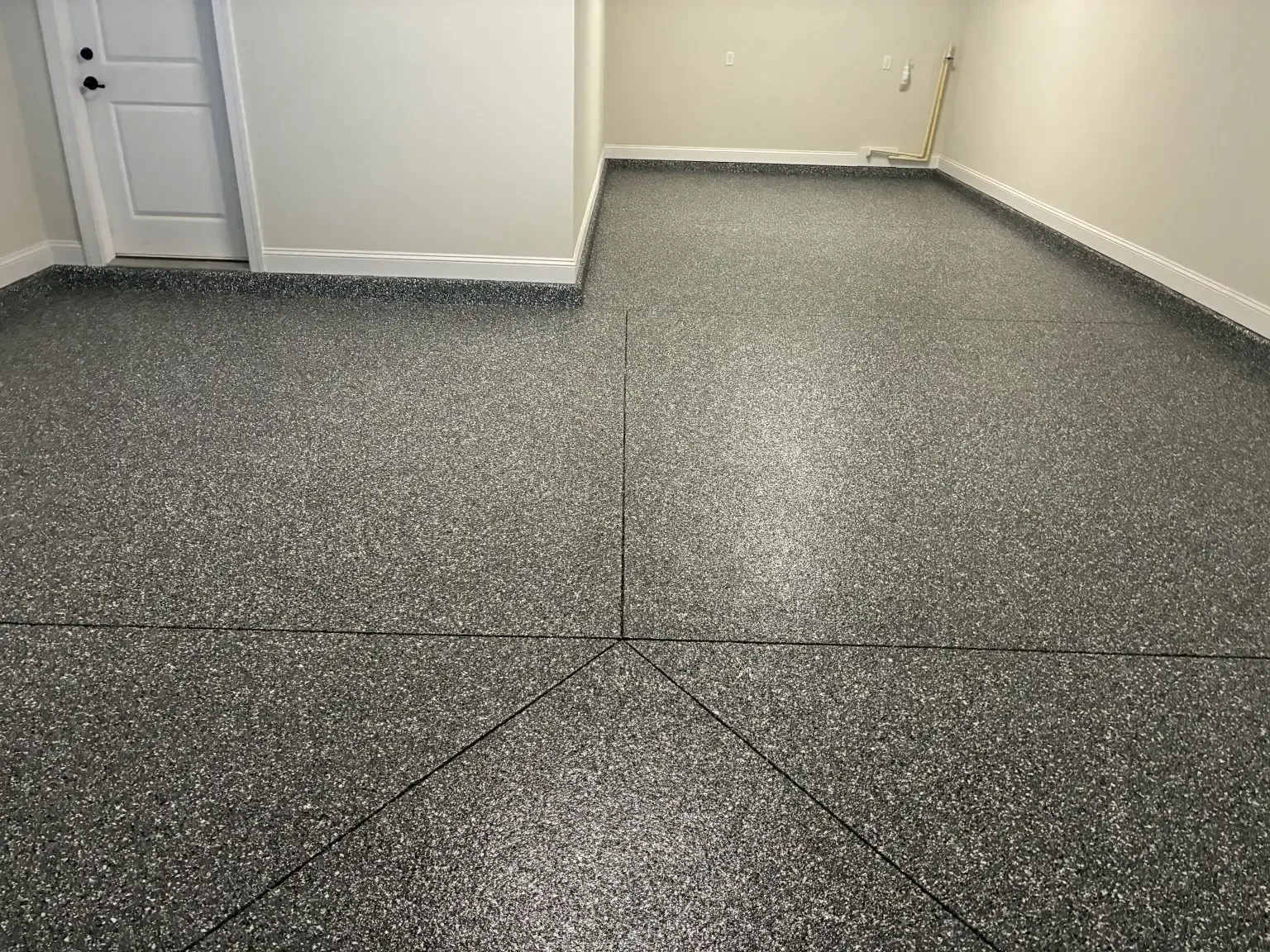
What the floor should become depends on how hard the shop works. A weekend hobby space does fine with a light coating that cleans up fast and brightens the room. A shop that runs most days, with heavy iron rolling around, may be better off with polished or ground concrete that has no film on top to scuff. Matt asks how you work before he suggests either one.
The slab often carries years of oil, rust and paint drips, and maybe an old coat of garage paint flaking at the edges.
Matched to how often the saw runs
What Matt reaches for most on Interlachen slabs, and why. See all of Matt’s floors.
A light solid color brightens a shop with small windows and makes a dropped screw or a stray offcut easy to spot. Sawdust sweeps right off it.
For a busy shop with heavy machines on mobile bases, polished concrete is hard, bright and has no coating to wear through. It needs a slab in decent shape to look its best.
Where the shop shares the building with the truck and the mower, a flake broadcast hides the mess between sweeps and stands up to hot tires on the garage side.
Grind off the old paint and oil, then seal what’s left. The concrete stops dusting onto your projects and keeps its plain, honest look.
Show Matt where the machines live
Interlachen means a longer haul west for the trailer, so it pays to have Matt see everything in one trip. Walk him through where each machine sits, which ones roll, where the glue-ups happen and where finishes get brushed or sprayed. He tests the slab for moisture, looks at cracks and old patches, and checks whether anything is bolted down.
The shop has to be cleared for the work, machines included, so plan where everything goes for the length of the job. He’ll also tell you plainly if the slab needs repair before any finish makes sense. Call Matt at (904) 671-3930, or have Matt look at your slab and he’ll lay out the plan in plain terms.
Or email spartancoatingsfl@gmail.com with the town and a photo of the floor.
Matt answers this phone himself
Based in St. Augustine, FL, working in Interlachen.
Finished floors first? See all of Matt’s floors.
Other Putnam County towns on our route
With Crescent Lake on its doorstep, a patio in Crescent City gets lake humidity in the morning and hard sun by afternoon.
Palatka’s historic downtown on the St. Johns means older buildings and porches, and an old slab there earns a careful look at its cracks before anyone talks color.
In a small town off US-17 like Pomona Park, a garage usually works harder than the car parked in it, so a tough flake or solid color beats a glossy paint job.
Looking back at the county seat across the river, East Palatka puts garages close enough to the St. Johns that a vapor barrier primer is often part of the plan.
Known for its fishing on the St. Johns, Welaka is a little river town where a coated garage or porch has to put up with wet boots and wet trailer tires.
Everything in the county: Putnam County.
Questions from Interlachen
Does sawdust make a coated floor slippery?
It can. Fine dust on any smooth, glossy surface acts a bit like ball bearings under your shoes. A topcoat with some texture helps, and so does running the dust collection and sweeping at the end of the day. Polished concrete is smooth too, so the same habits apply there. Tell Matt how much dust your shop makes and he’ll set the texture to suit it.
Can I bolt my machines down after the floor is coated?
Yes. Drill through the coating into the slab and set anchors the normal way, then seal around each one so water and dust don’t creep under the edge. If you already know where a machine will be anchored, tell Matt, since it’s cleaner to plan those spots ahead than to come back to them after the floor is finished.
Will a heavy cabinet saw on a mobile base dent or scuff the floor?
A hard, well-bonded system handles the weight. Small, hard casters are what leave marks, because they put the whole load on a tiny contact point and turn in place. Larger wheels, or ones with a softer tread, are easier on any floor. Polished concrete has no film to scuff, which is one reason the heaviest shops lean that way.
We spill glue and wood stain. What happens on a coated floor?
On a coating they stay on top. Fresh glue scrapes off once it skins over, and stain wipes up if you get to it soon. On bare concrete both soak in for good, which is why so many shop floors look the way they do. Keep a putty knife and a rag handy and the floor stays clean far longer than bare concrete ever would.
Our shop slab feels damp and the boards stacked on it warp. Will a coating help?
A coating stops the slab from wicking moisture straight into whatever sits on it, but lumber still takes on moisture from humid air. Store wood on racks or stickers off the floor either way. If the slab tests wet, a moisture vapor barrier primer goes under the coating so it stays attached. Matt will tell you what the reading shows.