
Crescent Beach, FL, in St. Johns County
A Crescent Beach floor that outlasts the salt air
Down A1A toward Matanzas Inlet, the houses are quiet and the air is salty. We grind every slab back to sound concrete and coat it for the conditions at this end of the island.
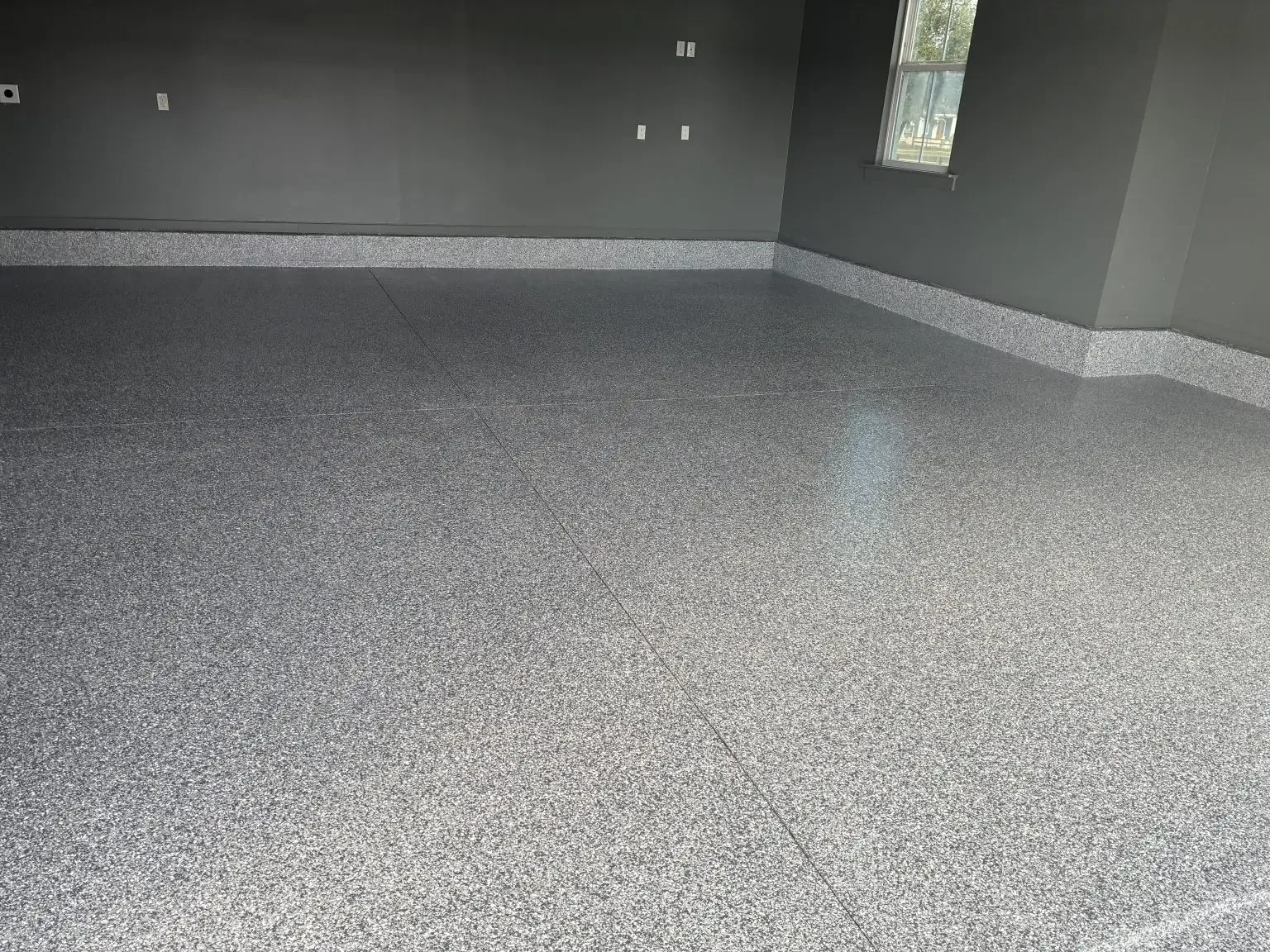
At the quiet end of A1A, near Matanzas Inlet
What does a slab go through at the bottom of Anastasia Island? Crescent Beach runs along A1A toward Matanzas Inlet, and the houses here are quieter than the ones up by the pier in St. Augustine Beach. Quiet doesn’t mean easy on concrete. The same salt air comes off the ocean, the same sand rides in on the wind, and the sun hits an open driveway or porch from morning until the afternoon clouds build.
Older beach houses tend to collect coatings over the years. A garage gets a hardware-store epoxy kit. The porch gets sealed, then sealed again by the next owner. Somebody patches a spalled corner with whatever was in the shed. Salt and sun break all of that down unevenly, so a single floor can be peeling in one corner and holding tight in the next, and the tight part is often only hanging on by a thread.
None of that is anything to build on. After the moisture test, the first real work at Crescent Beach is the grinder. Diamond tooling takes the slab down past the old layers to clean, open concrete, and only then can Matt see what he’s really working with. Cracks and spalled edges get repaired, a vapor barrier primer goes down if the test called for one, and the new system bonds to bare concrete. An acid wash would leave half the old sealer behind. That’s why we grind.
Houses with a few layers of history on the floor
Many of the floors people bring up at this end of the island sit right in the daily routine: the entry where everyone comes in off the sand, the slab under a covered porch where the hose and the fishing rods live, the steps down from the deck. Those spots stay damp in this humidity, collect sand and grow mildew on bare concrete. A coating there has to grip when it’s wet and come clean with a rinse.
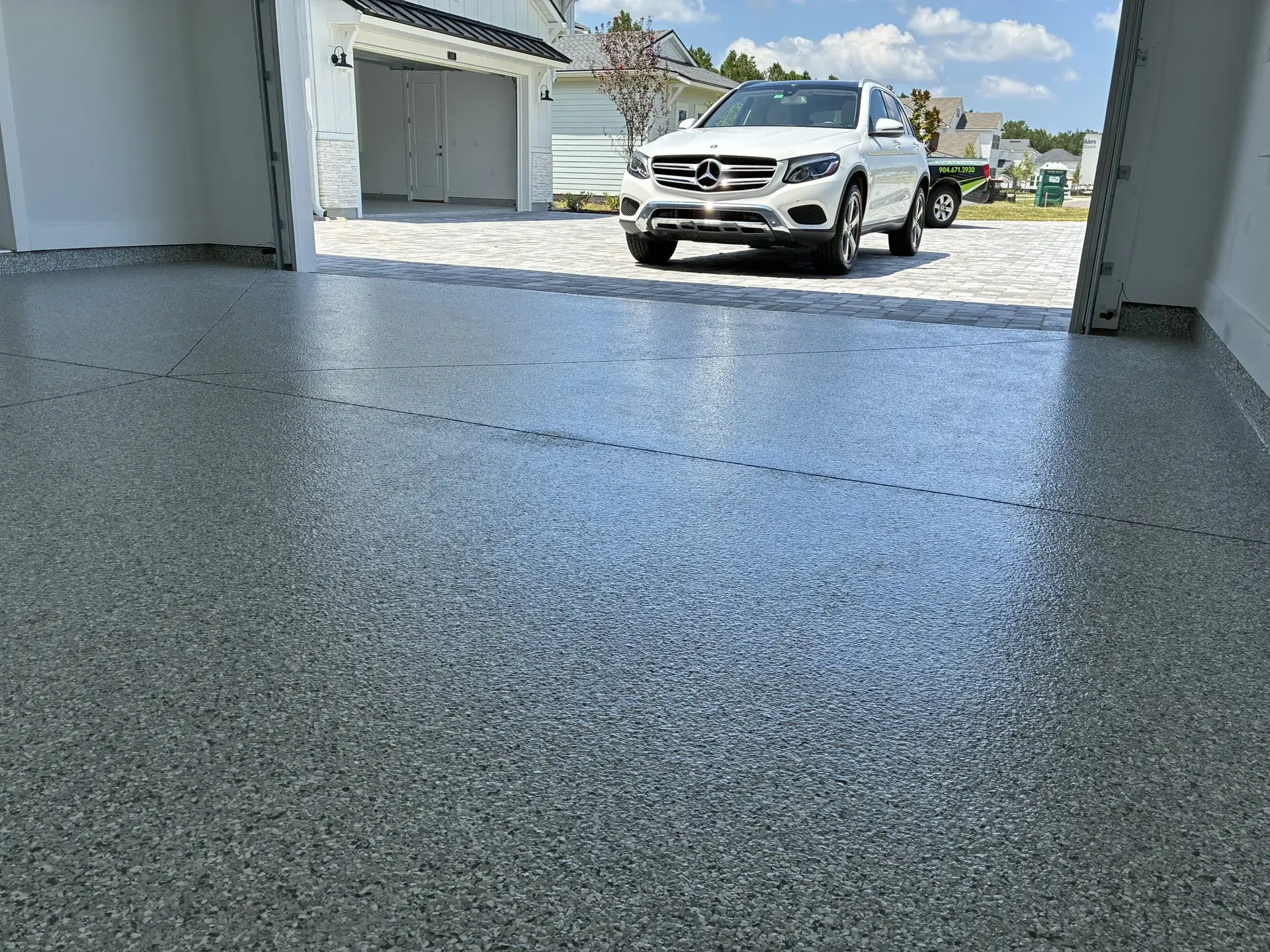
Inside, houses on slab sometimes have concrete hiding under tired carpet or tile, and some owners would rather make the concrete itself the finished floor. That’s where metallic epoxy or a grind and seal comes in. One gives you a poured, flowing look in color. The other shows off the stone and sand already in the slab under a clear, glossy sealer. Both need the slab ground and checked first, because old tile glue and carpet tack strips leave their own mess.
Those spots stay damp in this humidity, collect sand and grow mildew on bare concrete.
Four systems that suit the south end
What Matt reaches for most on Crescent Beach slabs, and why. See all of Matt’s floors.
Most floors here start with taking old paint, sealer and failed coatings off. Grinding is also the honest way to find out what shape the slab underneath is really in.
A full flake broadcast hides sand and salt film between cleanings and gives a wet garage or porch floor some grip. It’s the floor we’d look at first for most beach-house garages.
For an interior slab that’s going to be the finished floor, metallic gives you movement and depth that nothing rolled on can match. It takes longer than a garage, so plan the house around it.
If you like the look of the concrete itself, we grind it to expose the aggregate and seal it glossy. It’s simpler than a full coating and easy to live with in a house that sees sandy feet.
When Matt drives down to Crescent Beach
Crescent Beach is still close to home for us, a run down A1A from St. Augustine. Matt will want to see every slab you’re thinking about, and he’ll ask what’s on it now and roughly how long it’s been there, because the answer changes the prep. A floor with one old coat of paint and a floor with three owners’ worth of sealer are different jobs.
He tests for moisture, checks how well any old coating is holding, looks at cracks and edges, and tells you what grinding is likely to turn up. You get one plain recommendation with the reasons behind it. Have Matt look at your slab, or call Matt at (904) 671-3930.
Or email spartancoatingsfl@gmail.com with the town and a photo of the floor.
Matt answers this phone himself
Based in St. Augustine, FL, working in Crescent Beach.
Finished floors first? See all of Matt’s floors.
Other St. Johns County towns on our route
This stretch of Anastasia Island carries Frank Butler’s name, from the days his beach was the one African American beach in the area, and its slabs get the same salt and blowing sand as the rest of the island.
Long known for potatoes, Hastings has barns, workshops and equipment sheds whose slabs carry tractors and dirt instead of a family car.
Older waterfront homes and newer builds share the Intracoastal here, so one driveway might be a tired, chalky slab and the next a fresh pour.
Over the Vilano bridge on A1A, houses sit on a thin strip between the Tolomato River and the Atlantic, and sand works its way into every garage.
Built along the Matanzas from the 1970s on and home to many retirees, the Shores is full of garage floors that should clean with a hose and patios that should not get slick.
Building since the late 2000s, Nocatee is mostly new construction, and the first question on a new garage is whether the slab has cured long enough.
Everything in the county: St. Johns County.
Questions from Crescent Beach
Our garage has an old DIY epoxy kit that’s peeling. Can you fix just the bad spots?
Spot repairs on a failing kit floor rarely last. The coating around a peeling patch is usually weak too, it just hasn’t let go yet, and a new patch bonds to that weak edge. The kit has to come off so the new system grips the concrete itself. We grind the whole floor and start clean. It’s more work than patching, and it’s the only version Matt will put down.
We’re not at the house full time. Do we need to be there while you work?
Not for all of it. Someone should walk the slab with Matt before the job and be reachable on the day in case grinding turns something up. We need the space cleared and access sorted out ahead of time. After that you can let us get on with it and come back for the final walkthrough, when Matt goes over the care instructions.
Can the concrete floor inside our house become the finished floor?
Often, yes, once the carpet or tile and its glue are gone. Metallic epoxy, a solid color, a grind and seal or a polish can all work on an interior slab. What decides it is the slab itself: cracks, old patches and moisture all show up once it’s ground. Matt tells you which of those finishes your floor can carry.
Will a glossy sealed floor be slippery with sandy feet coming in from the beach?
Sand on any smooth, glossy floor is slippery, and that’s worth taking seriously at a beach house. We can build some texture into the topcoat so it has a little tooth, and a good mat at each door catches most of what the beach sends in. For a floor that sees wet feet all day, a flake broadcast grips better than a clear seal.
Is it worth coating a driveway this close to the ocean?
It can be, if the slab is sound. A driveway out here takes full sun, salt and whatever the tires drag in, so it needs a UV-stable system that won’t yellow or chalk. Some driveways are better served by a clean grind and a good sealer. Matt looks at the cracks, the slope and how you use it, then tells you which makes sense.