
Spartan Coatings, St. Augustine, FL
Stamped and stained concrete doesn’t fail all at once. The color goes flat, the water stops beading, and one day the patio looks ten years older than it did last spring. That’s the sealer talking.
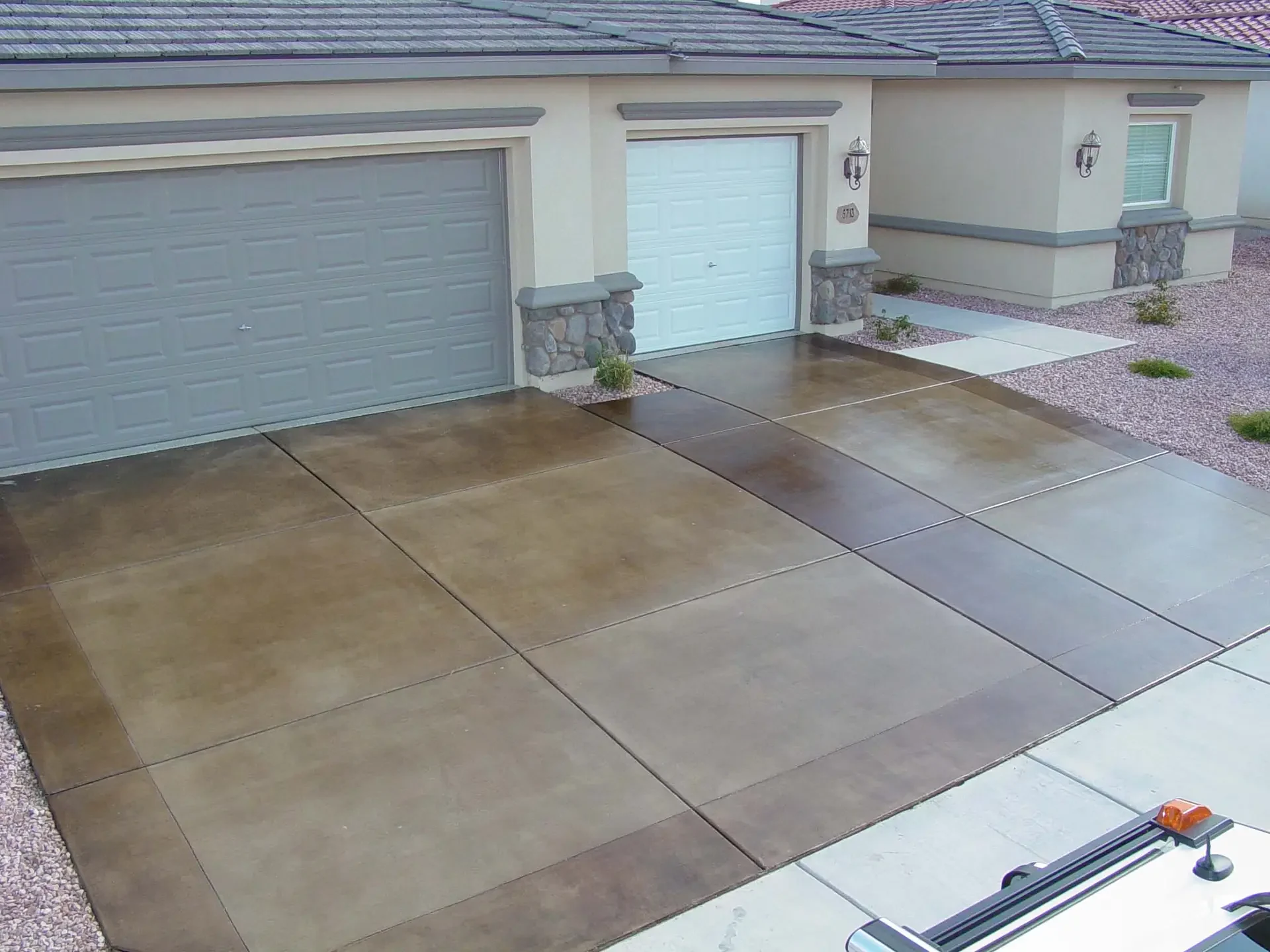
What a worn-out sealer looks like
The sealer is the clear layer that gives stamped concrete its deep, wet look and keeps water, dirt and sun out of the color. It wears away a little every year from foot traffic, tires, UV and rain. The concrete underneath is usually fine for a long time after that. What you’re watching is the coat on top.
The easiest test costs nothing. Splash some water on the busiest part of the patio or driveway. If it beads up and sits there, the sealer is still working. If it soaks in and leaves a dark patch that slowly dries, the surface is open and the color is taking the weather straight on.
Fading is the next giveaway. Stamped concrete is colored with a base color and a release color in the low spots of the pattern. When the sealer goes, the release color washes out first and the pattern starts to look flat, like a photo of itself. Stained concrete does something similar and goes chalky and pale in the sun.
- Water soaks in dark instead of beading
- The colors look dull and washed out
- A gray, chalky film you can wipe with a finger
- Dirt and mildew sitting in the grout lines of the pattern
- White, cloudy patches or flakes peeling in the traffic paths
Why sealer goes cloudy in this humidity
The white haze people call blushing is the most common sealer problem we see around here. Most stamped concrete is sealed with an acrylic, and acrylic sealers react badly to trapped moisture. Water gets caught in the film or right under it and turns the clear coat milky, sometimes in patches, sometimes across the whole slab.
Northeast Florida gives that moisture plenty of ways in. A slab poured on damp sand pushes vapor up from below. A sealer rolled on late on a humid afternoon can catch the evening dew before it has cured. A storm that rolls in an hour after the job is done does the same. And a slab that never dried after a week of rain gets sealed right over the water still in it.
Buildup causes the other half of the trouble. Every reseal adds another layer, and when a patio gets a heavy coat every year or two without anyone checking what’s already there, the film gets thick. Thick acrylic traps more moisture, gets softer in the heat and starts to peel in sheets where people walk. More sealer on top of that only makes it worse.
The fix for both is the same idea. Get the bad layer off or opened back up, let the slab breathe and dry, and put the new sealer down thin, in the right weather, on concrete that’s ready for it.
Matching the sealer that’s already there
Sealers don’t all play together. A water-based acrylic over a solvent-based one can fail to bond, and some products will soften or wrinkle the coat underneath. Put the wrong one down and the new finish peels off the old one, taking your weekend with it.
So the first question on any reseal is what’s on the slab now. Sometimes the homeowner kept the bucket or the paperwork from the original job. Often nobody knows, and then we test a small patch in a corner, see how it reacts, and decide from there whether to go over it or take it off.
Matt has gone a long way to get this part right. Becky M. had stamped concrete on her front porch and back lanai that Matt installed about ten years before she called. The sealer he’d used originally wasn’t sold locally anymore, so he tracked it down. In her words: "A special thank you to owner Matt Casey, for going the extra mile and hunting down the appropriate sealer originally used when he installed the stamped concrete. The sealer was no longer available locally so Matt had to make several inquiries to track it down."
Color matters as much as chemistry. Some sealers are clear, some carry a tint, and some dry glossier than others. Put a high-gloss coat on a porch that was sealed with a satin finish and the two areas will never look like they belong together. A test patch shows the color, the sheen and the bond before the whole surface is committed.
Not every reseal needs that much detective work. But matching the product to what’s underneath is the difference between a reseal that brings the color back and one that peels by fall.
What a reseal involves, start to finish
It starts with a look. Matt checks the color, the old film, any blushing or peeling, and the slab itself for cracks and moisture. A reseal over a slab that’s pushing water up from underneath will blush again, so that has to be known first.
Next comes a real cleaning. The surface gets scrubbed and rinsed to pull dirt, mildew and oak stains out of the texture, and the pattern’s low spots get extra attention because that’s where grime packs in. Then the slab has to dry out completely, which in this climate can mean waiting on the weather.
If the old sealer is cloudy, peeling or built up too thick, it comes off. Sometimes that means stripping it. Sometimes a blushed coat can be reopened with the right solvent so the trapped moisture escapes and the film clears up. Either way, nobody seals over a white haze and hopes.
Faded color can often be brought back before sealing, so the pattern reads the way it did when it was new. Then the sealer goes down in thin, even coats with the right tools, on a day with dry air and no storm on the radar. Thin coats cure clear. Thick coats are how the whole problem started.
Finally the slab cures. We’ll tell you when you can walk on it and when the cars can come back, and what to keep off it for the first stretch.
How often, and what wears it down faster
There’s no one schedule. A screened lanai out of the rain and the worst of the sun can hold its sealer a long time. A driveway facing west that takes car tires every day and full sun every afternoon wears out much sooner. Do the water test once in a while and let the slab tell you.
A few habits stretch the time between reseals. Rinse off pollen and oak leaves before they stain. Use a fan tip on the pressure washer and keep it moving. Put pads under heavy planters. And on a sealed driveway, know that hot tires can lift a soft acrylic in the summer, so a car that sits in the same spot all day leaves the first marks.
Stained concrete deserves a closer eye. The stain lives in the top of the concrete itself, so once the sealer wears through, foot traffic starts wearing the color off along with it, and a worn path in a stain can’t be touched up to match perfectly. Resealing while the old coat is merely tired protects the color you already have.
When stamped concrete keeps blushing no matter what goes on it, or the driveway takes more abuse than an acrylic can handle, there are other routes, including a tougher clear coat. Matt will tell you which way he’d go once he has seen the slab in person, because a photo hides most of what matters.
A reseal at the right time is a small job that keeps stamped concrete looking like you paid for it. Wait too long and the color fades into the slab for good. If the water’s soaking in or the patio’s gone cloudy, don’t wait on it. Call Matt at (904) 671-3930.