
Spartan Coatings, St. Augustine, FL
Metallic epoxy is the floor people stop and stare at. It is also the one where expectations matter most, so here is what we tell every homeowner and business owner before they pick it.
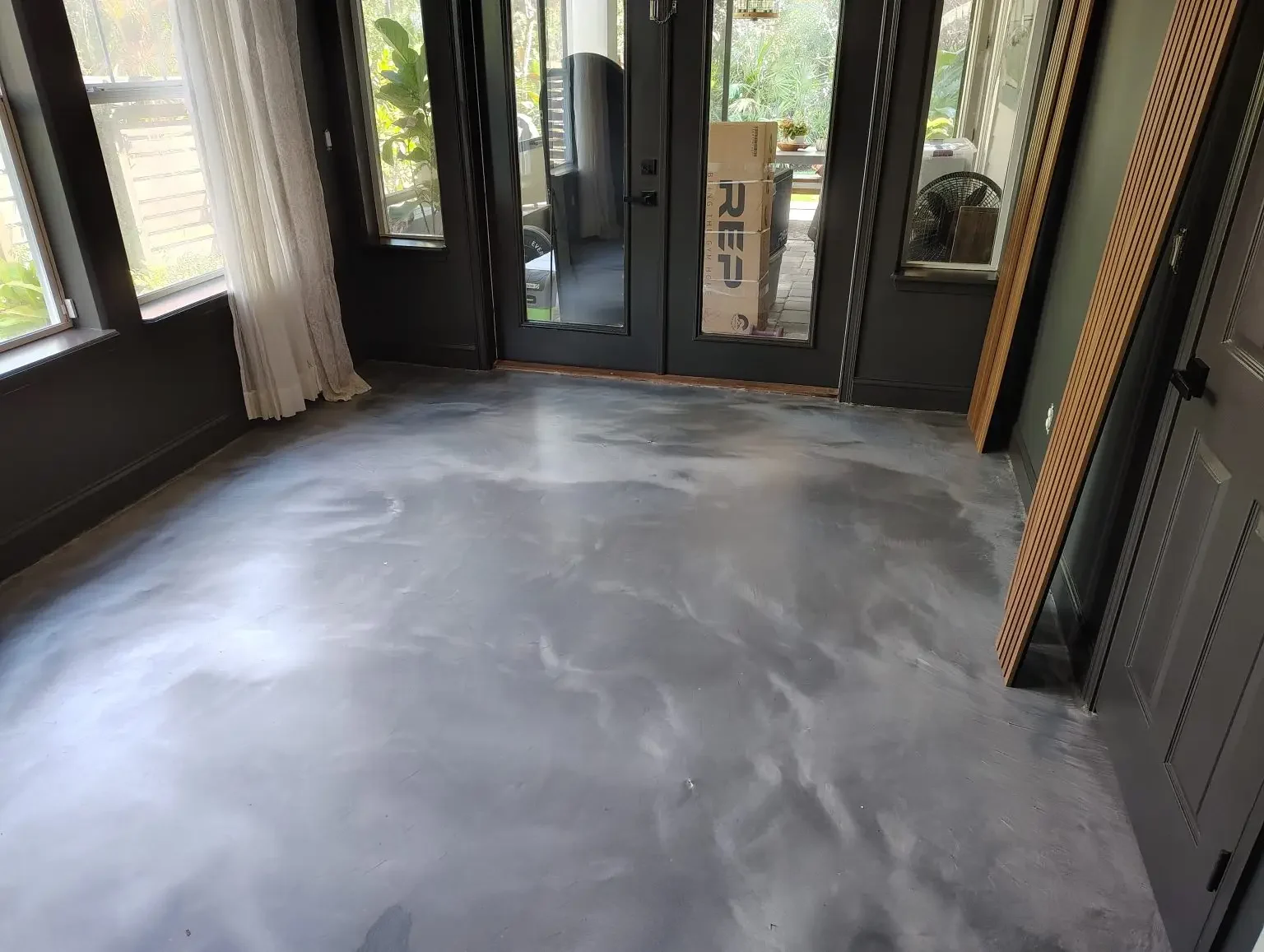
Your floor will not match the picture
Every metallic floor is one of a kind, including yours. The pigments in a metallic coat are tiny reflective particles suspended in clear epoxy. While the epoxy is still wet, they drift, swirl and settle, and where they land decides how light bounces off the floor. No installer can make that happen the same way twice.
That’s the appeal. It’s also the thing to be at peace with before you start. If you saw a floor you loved online, it can steer the colors and the general movement. It can’t be copied. Your floor will have its own clouds, its own lines and its own deep spots, and some of them will land in places you didn’t plan.
If you want a floor that looks exactly like a sample, flake or a solid color is the better pick. If you want something nobody else has, keep reading.
One more expectation to set: the floor looks different at different times of day. Morning light from the east, lamps at night and overhead cans each pull out different depths in the color. That shifting look is a big part of why people choose it.
The look is worked in by hand
A flake floor is built by broadcasting chips until the floor is covered. A metallic floor is closer to painting. The color coat goes down, and then it gets worked while it’s wet: moved with rollers and trowels, sometimes thinned or layered with a second color, sometimes cut with lines or veins. How long it’s worked and where the installer stops is a judgment call made on the spot.
That’s why the person matters as much as the product. Matt has spent years mixing beauty and function on floors like this, and on a metallic job he’s the one working the color. The window to work it is short. Once the epoxy starts to set, whatever is there stays.
Before the pour, we’ll talk through colors, how much movement you want and whether you want a calm, soft look or a bold, high-contrast one. Those choices guide the work. They don’t script it.
The room has to cooperate
Metallic is the least forgiving system we put down. A flake floor hides a lot under the chips. A metallic floor shows everything that happens underneath it and around it while it cures.
The slab has to be dry. Moisture vapor coming up through a Florida slab can cause bubbles, pinholes or a cloudy haze in a clear, glossy coat, and on a metallic floor those flaws sit right in the middle of the look. Matt tests the slab first, and if the reading is high, a moisture vapor barrier primer goes down before anything else. Sometimes the right answer on a new slab is to wait.
The room matters too. Doors stay closed so dust, bugs and pollen don’t land in the wet coat. The air conditioning should be running so the temperature and humidity hold steady through the cure. A garage with the door open to an August afternoon is the wrong place to pour metallic. A garage turned into a room, closed up and cooled, can be a great one.
Where metallic earns its place
Metallic looks its best indoors where people see it up close and the floor gets light from windows or good fixtures. Living rooms and great rooms, especially with French doors throwing light across the floor. Hallways, where the movement of the color pulls you down the length of the house. A garage that’s really a man cave, a gym or a car room more than a place to park.
On the business side, it suits showrooms, salons, offices and anywhere a floor is part of the first impression. It’s a floor that says somebody cared.
It’s a harder sell in a working garage with a daily driver, a shop with rolling tool carts, or anywhere grit gets dragged in all day. It will hold up, but it will show the wear faster than flake would, and that’s worth knowing up front.
Scratches, sand and chair legs
A glossy metallic floor is tough, but it’s honest about scratches. Fine sand under a shoe, a dragged chair or a dog’s claws can leave marks you’ll see when the light hits the floor low. Most of those are in the topcoat, not the color underneath.
A little care goes a long way. Put mats at every door that leads outside, especially if you’re near the beach. Put felt pads under chair and table legs. Dust-mop often, since the grit you can barely see is what does the scratching. Wash with plain water or a mild cleaner and skip anything harsh.
Over the years, a worn topcoat can be lightly sanded and recoated to bring the gloss back without touching the color layer. Ask about it at the walkthrough so you know what that looks like down the road.
Why it is not a one-day floor
Many of our garage and patio jobs finish in one day. Metallic is not one of them. The slab still gets ground, repaired and primed like any other floor, and then the color coat needs time to level and set before the clear top coats go on. Rushing any of that shows in the finished floor.
Plan on the room being out of use for several days, longer if the slab needs moisture work first. Matt will give you the schedule for your floor before the job starts, including when you can walk on it and when the furniture can come back.
Choosing colors for a metallic pour
Color on a metallic floor works differently than paint. You’re picking a base tone and, usually, one or two colors that move through it. The metallic pigment gives every color a shimmer and depth, so a gray isn’t flat gray. It reads as silver in one spot and charcoal in another.
Start with the room. Look at the walls, cabinets, trim and anything that won’t change, like a stone fireplace or a kitchen island. A metallic floor is big and bold by nature, so it usually looks best picking up a color already in the room rather than adding a new one. Grays and silvers sit easily with white walls and dark trim. Blues look great in a hallway or a garage room with white or gray walls. Warmer tones like copper and bronze suit wood furniture and cream walls.
Then decide how much contrast you want. Two colors close together, like a soft gray with a lighter silver, give a calm floor that looks like polished stone. Two colors far apart, like a deep blue with a bright silver or white, give a floor with a lot of movement and drama. Neither is wrong, but the high-contrast floors are the ones people notice from the next room.
Light and dark matter here too. Darker metallic floors look rich and deep, and they show dust and footprints more. Lighter ones brighten a room and hide everyday grit better, but they can look busy in a small space if the colors move too much.
Bring photos of the room, and if you can, a cabinet door or a paint chip. Matt can talk you through how a color will likely behave on your floor before anything gets mixed.
A metallic floor is worth the extra time if you go in knowing what it is: one of a kind, hand-worked and a little particular about the room it lives in. If you’re thinking about one, the first step is finding out whether your slab is ready for it. Have Matt look at your slab.