
Spartan Coatings, St. Augustine, FL
A pool deck has two jobs. It has to stay bearable under bare feet in July, and it has to hold a wet heel without scraping a knee. Most of that gets decided before the first coat goes down.
Color sets the temperature
Put your hand on a black car hood in August and you already know the rule. Dark surfaces soak up the sun and hand it back to the bottom of your feet. Light ones bounce most of it away. A deck coating follows the same rule, and nothing in the can changes the temperature as much as the color you pick.
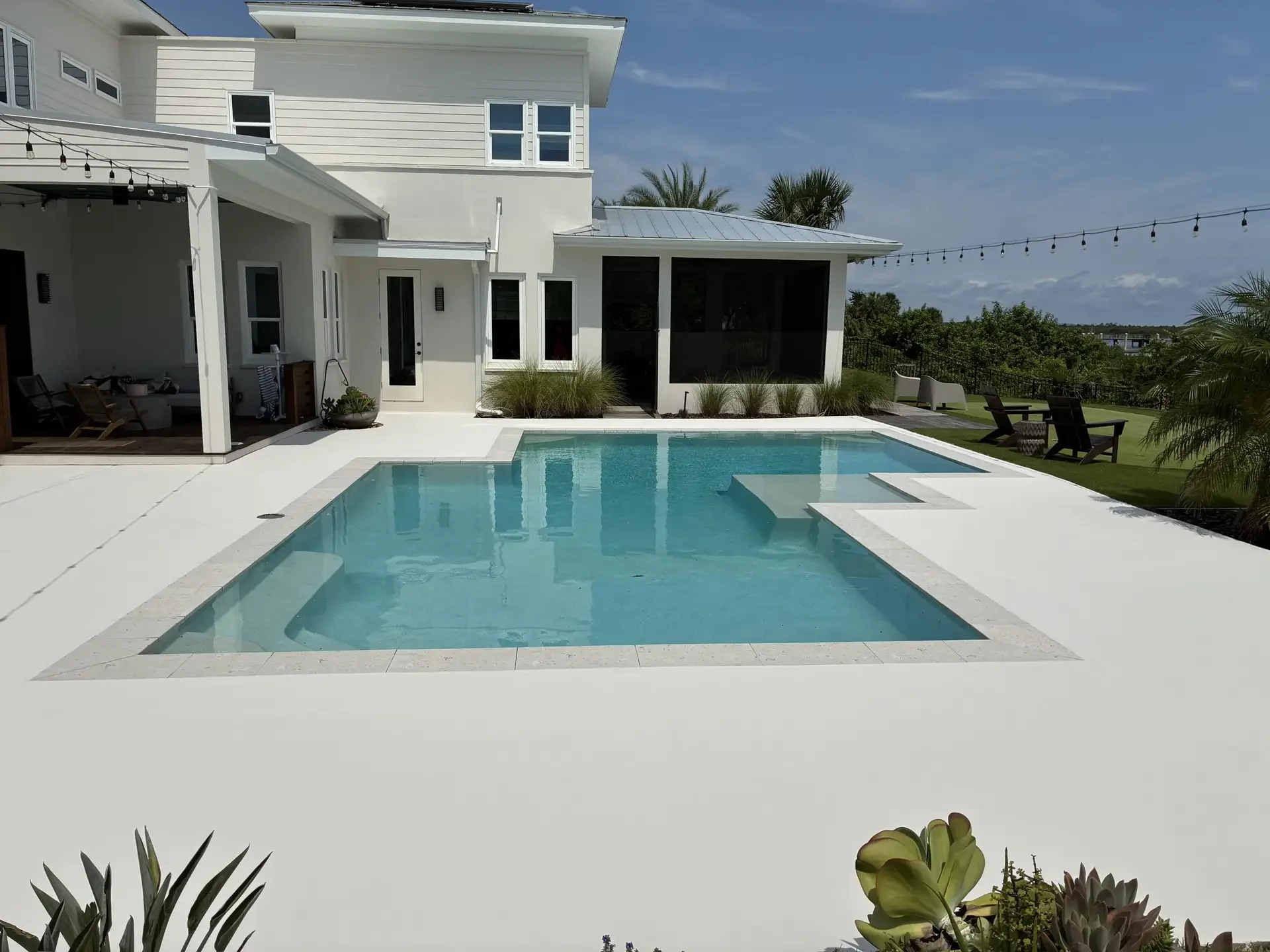
That’s why the coolest decks we put down are light solid colors: white, off-white, pale gray, sand. On a modern house with clean lines, a white deck looks like it was drawn with the building. On an older block home it brightens a backyard that has looked tired ever since the old finish started cracking.
Flake works too, as long as the blend stays light. A mix of tan, cream and a touch of gray hides leaves, sand and wet footprints and still stays comfortable. The trouble starts when somebody falls for a dark blend on a sample board in the kitchen. Out in full sun, that same deck can be too hot to cross without sandals. Matt will set samples out in your yard so you can feel the difference before you decide.
Plenty of older decks around here wear a knockdown spray texture in light tan. People liked it because it stayed cool, and it did. Once it cracks and goes hollow, though, it holds dirt and algae and turns rough on the feet. You can keep the cool color and lose those problems, as long as that old layer is ground off first.
Shade changes the math. A deck under a pool cage or along the shady side of the house can carry a medium tone without much complaint. A deck that faces the afternoon sun with nothing over it should stay light.
Where the grip comes from
A coated deck is smooth and glossy if nobody does anything about it, and smooth and glossy plus pool water is how people get hurt. The grip gets built into the topcoat. While the polyaspartic top is still wet, a fine grit goes into it, so the texture is locked under the clear finish and doesn’t wear away the first summer.
How coarse to go is a real decision. Too fine and a running kid slides. Too coarse and the deck chews up knees, toes and the seat of every swimsuit. Around a pool we aim for the middle: enough bite to hold a wet foot, smooth enough to sit on. The spots where people move fast and drip the most usually get a little extra.
Flake decks carry some grip on their own, since the chips leave a slightly uneven surface. They still get texture in the topcoat. A flake deck with no grit is a good-looking skating rink.
Ask for samples and test them the way your deck really gets used. Hose them down, stand on them barefoot, walk across in flip-flops, kneel on one. Ten seconds of that tells you more than any description we could give you.
- Pool steps and any beach entry
- The path from the back door or outdoor shower
- The ladder and diving board landings
- The first strip of deck along the coping
Chlorine, salt cells and the splash zone
Pool water never stays in the pool. Every splash leaves chlorine on the deck, and the acid used to balance the water lands there too. On bare concrete those chemicals sink into the pores and eat at the surface a little every day. You see it as pitting and a rough, sandy feel in the first few feet from the edge.
Saltwater systems are easier on swimmers and harder on concrete. Splash-out dries, the salt crystallizes just under the surface, and those crystals pry the top of the slab apart from inside. Older saltwater decks often look sandblasted near the water and perfectly fine near the house.
A sealed coating keeps all of it sitting on top, where a hose carries it off. The top layer has to be the right one, though. Plain epoxy outdoors yellows and chalks in the sun. A polyaspartic topcoat stays clear and holds its color, which is why it goes on every deck we do.
One habit helps more than people expect. After you shock the pool or add salt, rinse the edge of the deck with fresh water. It takes two minutes and keeps the strong stuff from drying in place.
Leave the coping joint alone
The line where the deck meets the coping is the busiest joint in the yard. The pool shell and the deck are separate pieces of concrete that heat up, cool down and move on their own schedules. Coat over that joint solid and the coating cracks along it within a season, then water works in behind the crack.
So we keep it working. Old sealant gets cut out, the joint gets cleaned, and after the coating cures a flexible sealant goes back in so it can stretch and squeeze with the deck. Expansion joints out in the middle of the deck get the same care. They show as thin lines in the finished floor, and they’re supposed to.
That sealant is the one part of a coated deck that wears out on its own clock. Look at it every spring for cracks or gaps. Recaulking a joint is a small job. Letting water run under the deck edge for a few summers turns into a big one.
Deck drains get the same care. The slot drains that run through a lot of older decks clog with sand and leaves, and water that can’t get into them sits on the coating and creeps toward the house. We clean them out and coat right up to their edges without bridging the slots, so the deck still sheds an afternoon storm.
Cleaning without wearing the grip away
Most of the upkeep is a hose. Rinse the deck when it looks dusty, after storms, and anytime leaves have sat wet on it. Oak leaves and pollen left to soak will mark a light deck, but because the surface is sealed, the marks come up with a soft brush instead of setting into the concrete.
Sunscreen and tanning oil are the sneaky ones. They build a thin film around the loungers and the steps, and that film gets slick when it’s wet. A mild cleaner and a deck brush every so often takes it off and brings the grip back. Skip harsh solvents and strong bleach mixes.
A pressure washer is fine on a wide fan tip held back from the surface. The pencil tip is another story. It can cut into the topcoat, and over the years it wears the texture smooth in the busiest lanes.
Corners that stay damp and shady can grow a green film. Get it early with a brush before it turns slippery. And put rubber feet on metal chairs and tables, because rust rings show up fast on a light deck.
When the texture on the busiest paths does wear down after years of use, the deck usually needs a clean, a scuff and a fresh textured topcoat, and that’s it. That’s the kind of deck people plan to keep. Dale T. said it about theirs: "Our pool deck turned out wonderful. The crew did a great job installing the new deck, and we will enjoy this for many years to come."
If your deck is hot, slick or pitting along the edge, find out what’s under it before anyone talks color. Matt will walk it with you, tap out the old surface for hollow spots, test the slab for moisture and bring light finishes and grip samples you can stand on wet. Have Matt look at your slab.